

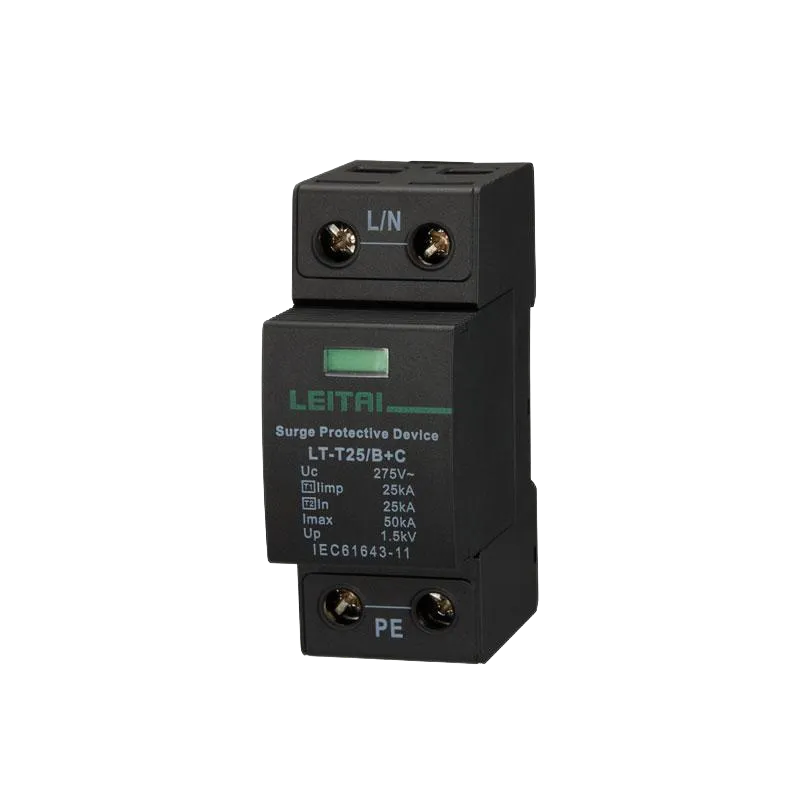
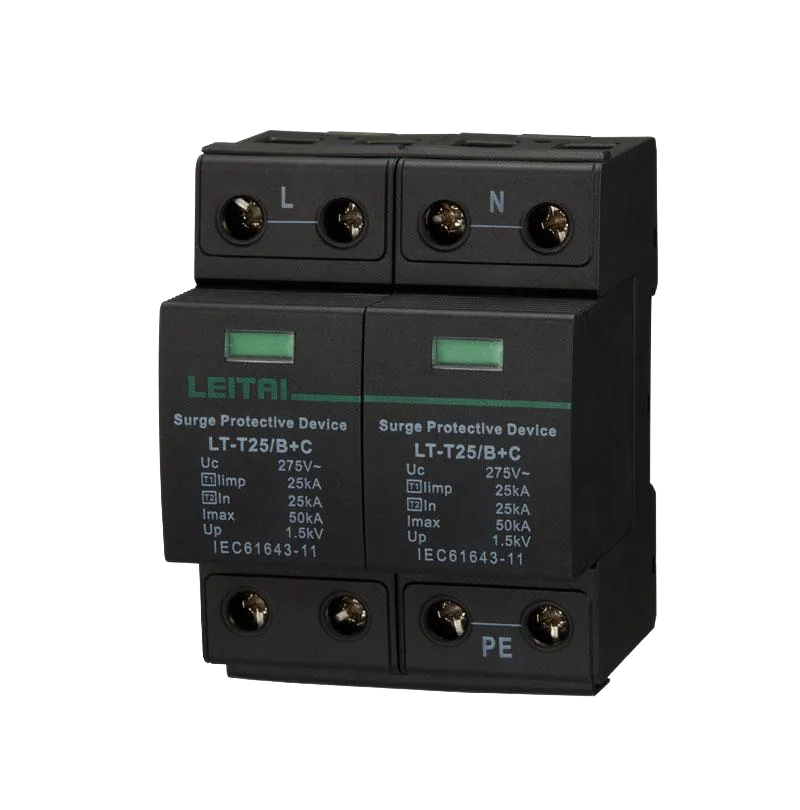
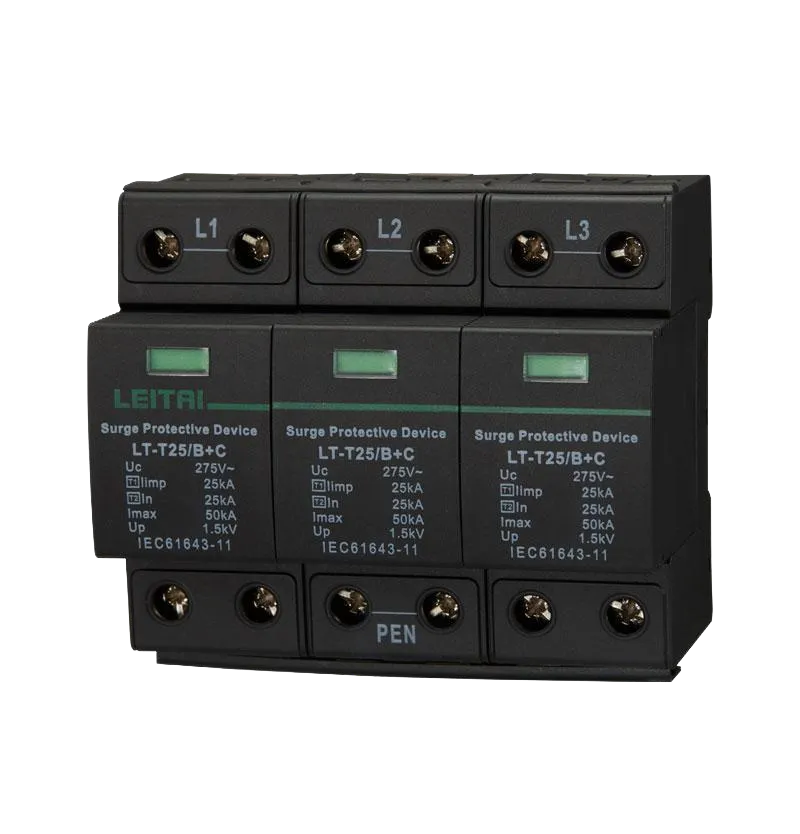
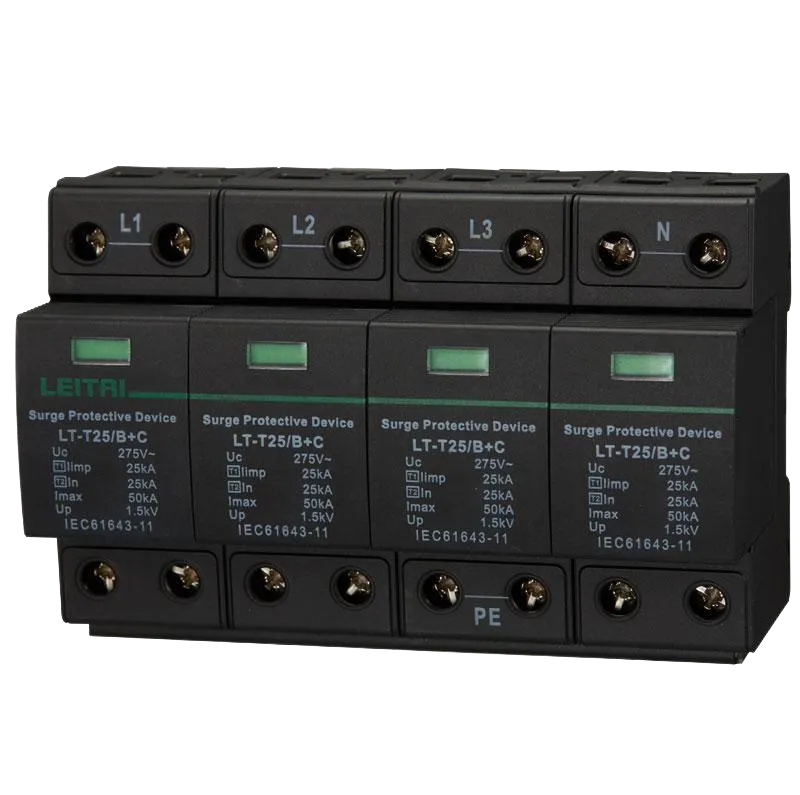
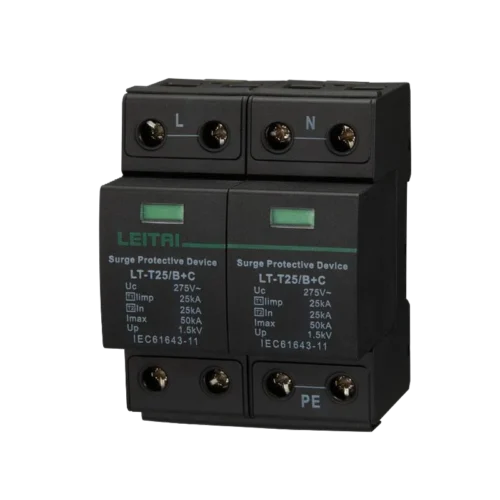
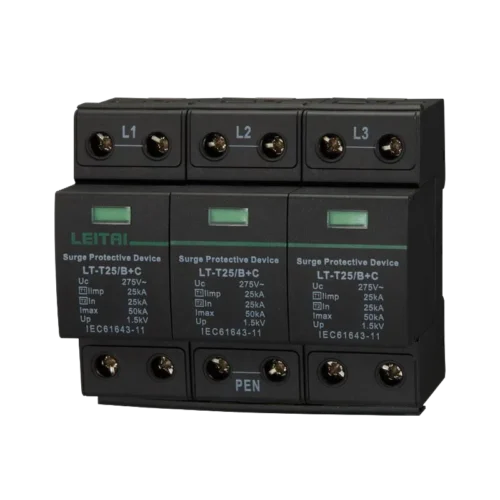
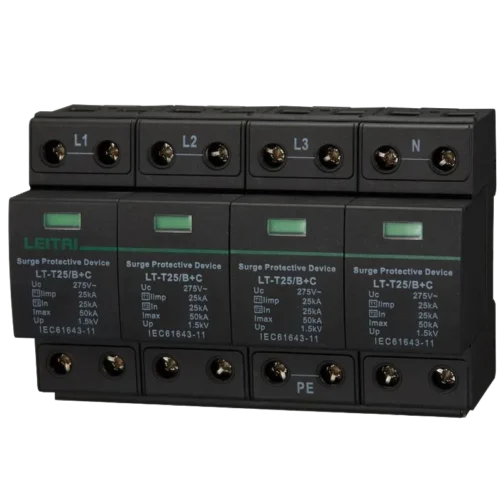
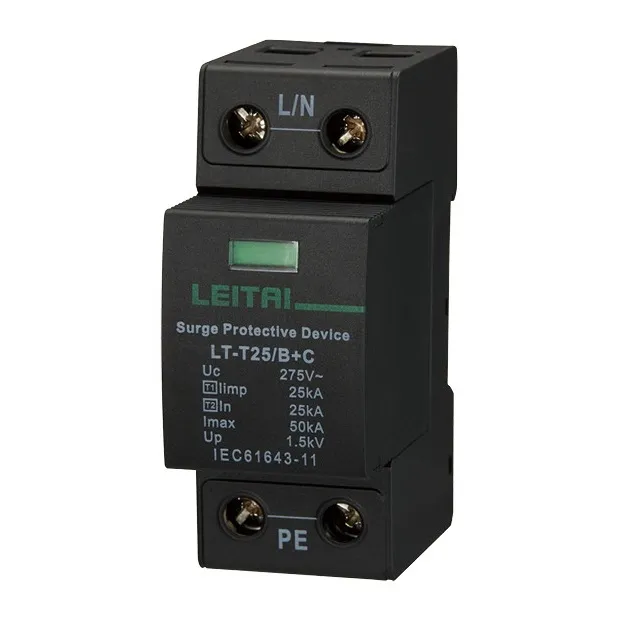
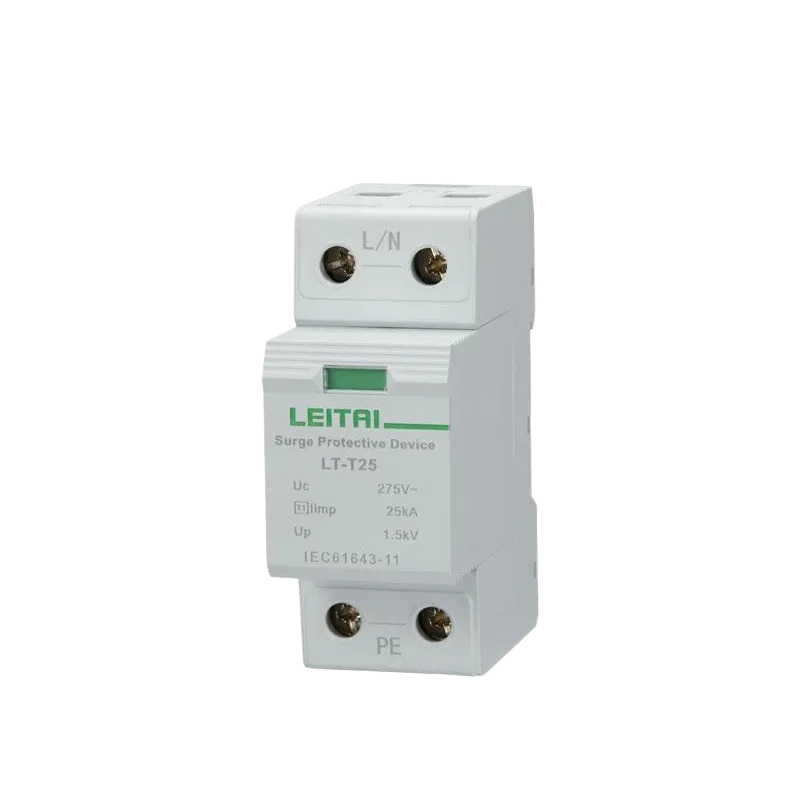
The LT-T25/B+C is a Type 1+2 combined surge arrester rated 25kA Iimp (10/350 µs) with an Imax of 120kA on the higher version. It replaces a Type 1 device and a separate Type 2 device at the same entry point, which is why it is common in main boards where rail space is fixed before the protection is specified.
SPD Type 1+2 Combined 25kA: Key Features
Two Duties, One Entry Device
At a service entrance the argument for a combined unit is space and co-ordination. This device handles the partial lightning current and the induced surge in the same body, so the panel has one assembly at the entry instead of two, and no cable length between stages to argue about.
A 120kA Maximum Figure
The 8/20 discharge capability of 50 or 120kA depending on the version means the device also covers the switching and induced transients that arrive long after the lightning season. That dual capability is what distinguishes a Type 1+2 device from a pure Type 1 gap arrester.
25kA Short-Circuit Withstand
End-of-life failure is a short circuit, and the device has to hold until the backup protection clears. A 25kA withstand covers the fault levels found at most commercial service entrances, and it is stated separately from the discharge ratings because it protects against a different event.
Signalling Fitted as Standard
The remote contact is not an option on this platform. That matters at a service entrance, which is often in a plant room nobody visits: the monitoring system learns that the entry protection has operated before the next inspection rather than after the next failure.
Specifications
| Series | LT-T25/B+C combined Type 1+2 surge protective device |
|---|---|
| IEC classification | Type 1+2 combined, tested to IEC 61643-11 |
| Maximum continuous voltage Uc | 275 / 350 / 440 VAC L-N, 255 VAC N-PE |
| Impulse discharge current Iimp | 25 kA (10/350 µs) |
| Nominal discharge current In | 25 kA or 50 kA depending on version |
| Maximum discharge current Imax | 50 kA or 120 kA depending on version |
| Voltage protection level Up | 1.2 / 1.6 / 2.0 kV, N-PE 1.5 kV |
| Short-circuit withstand Iscwr | 25 kA |
| Configurations | 1P, 1P+NPE, 2P, 3P, 3P+NPE, 4P |
| Signalling | remote contact standard |
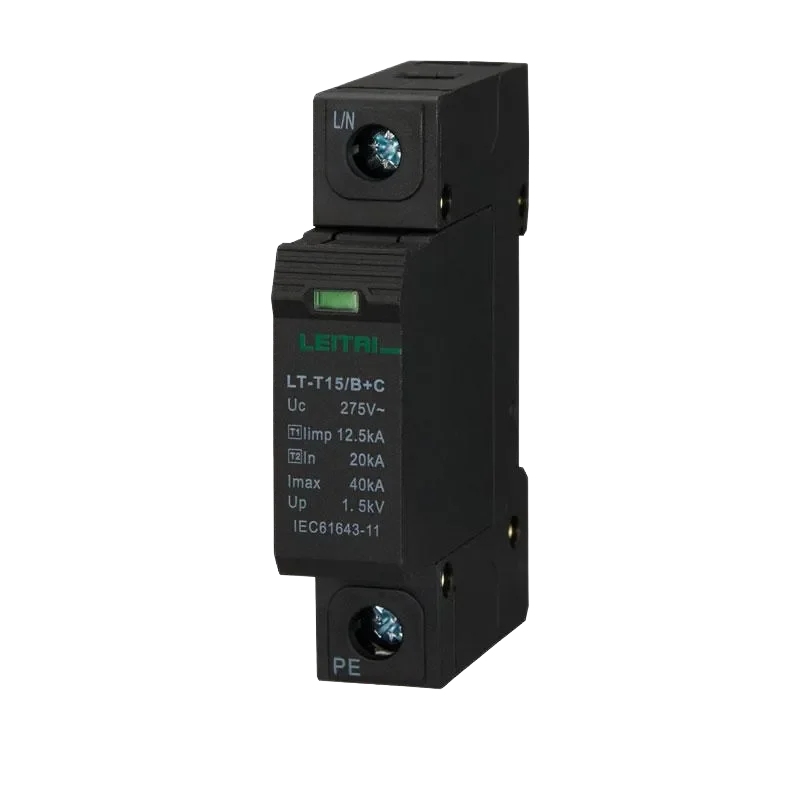
| Related models | LT-T25/B+C 690V high voltage version, LT-T15/B+C (three-class), LT-T25 (pure Type 1) |
Reading the LT-T25/B+C specification
Two figures describe this device and they are often confused. Iimp 25kA is the lightning rating, tested with 10/350 µs. Imax 120kA is the maximum single-shot induced surge, tested with 8/20 µs. A board schedule that quotes only one of the two is incomplete.
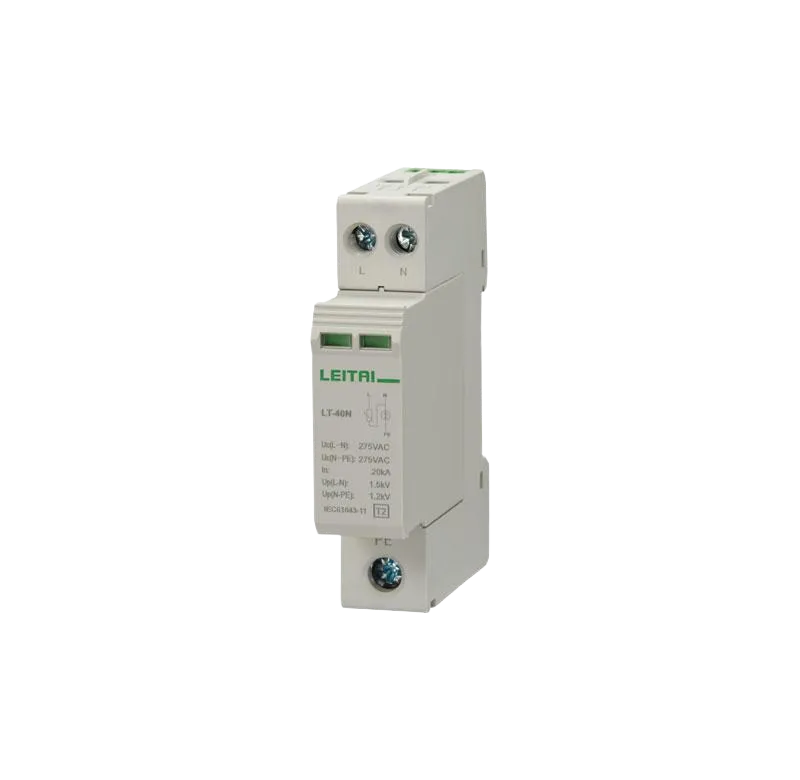
The N-PE path is built into the same assembly, with a clamping level of 1.5kV between neutral and earth. Where the N-PE gap has to be a separate module — some TT arrangements and some enclosure layouts — the LT-40D provides that function alongside the phase modules.
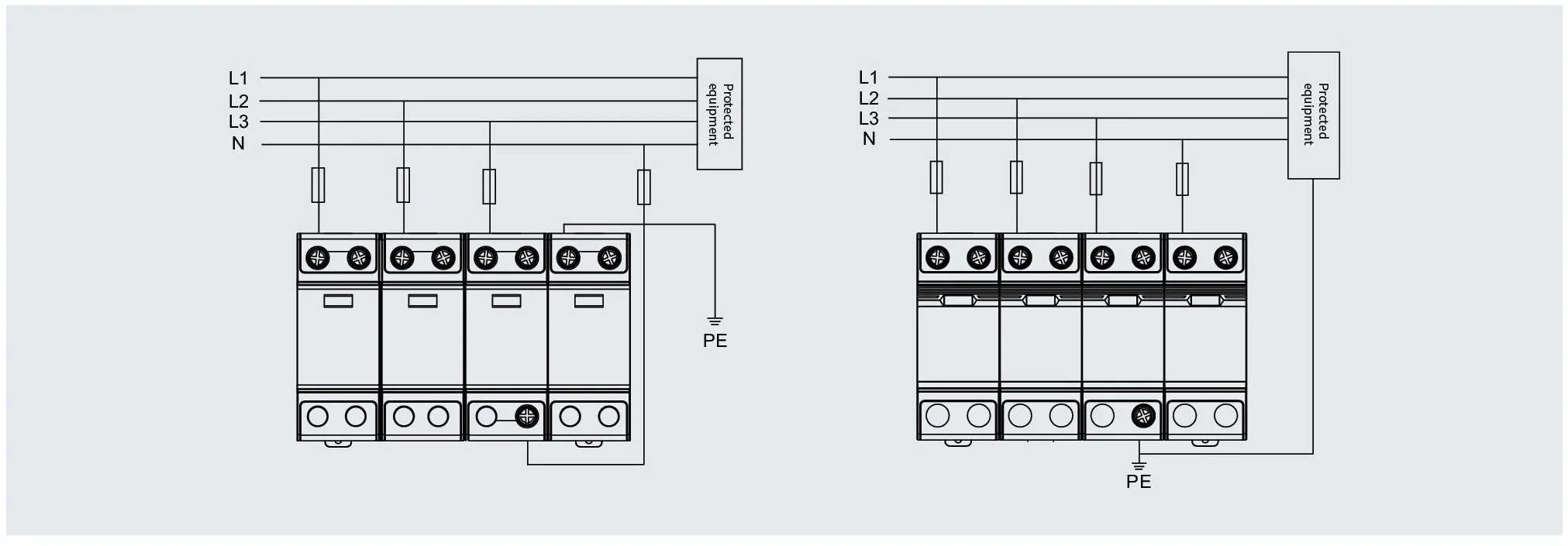
Wiring Diagram & Connection
The low-voltage LT-T25/B+C is wired at the main incomer and is available from 1P up to 3+NPE, so the same diagram covers single-phase and four-wire boards. The signal contact is brought out on separate terminals for remote indication.
LT-T25/B+C — The Service Entrance Device
The service entrance is where the specification is easiest to get wrong, because it is the point at which two different duties meet: the partial lightning current from a direct strike on the structure, and the induced transients that arrive on the supply regardless. A device tested for both removes the need to decide which is more likely.
The 25kA Iimp rating covers buildings with a defined lightning protection system in a moderate exposure zone, which is the majority of commercial and institutional work. Above that, the dedicated gap devices reach 50kA; below it, the 12.5kA combined unit is often enough. This sits where most specifications land once the assessment has been done properly.
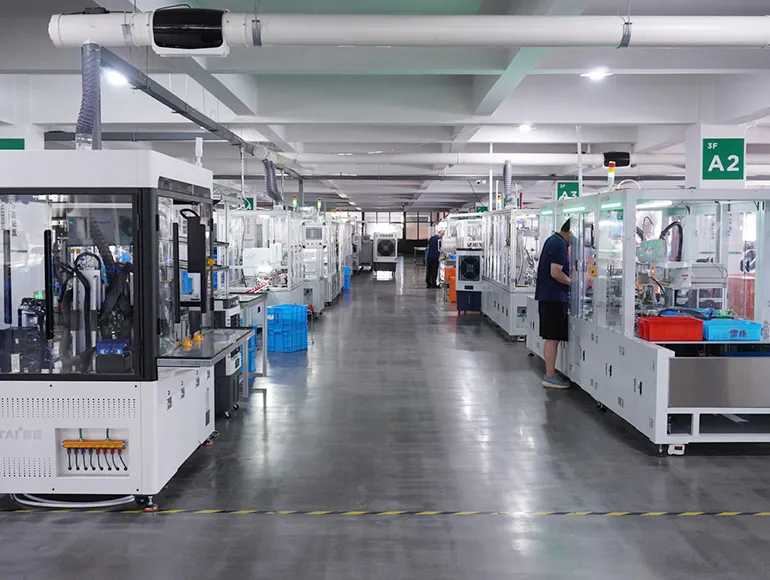
Factory-Direct OEM / ODM Manufacturer
From Mould to Carton, Under One Roof
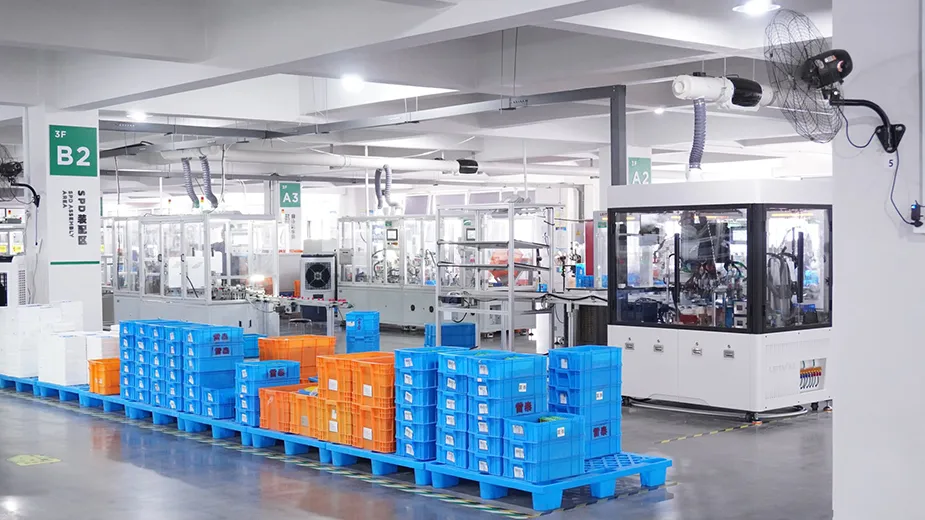
Liushi, Zhejiang · fully automatic SPD line · OEM, ODM and wholesale
Choices that normally need a tooling investment — a different housing colour, an extra pole, a longer terminal shroud — are routine here because the machine shop, the moulding area and the assembly line are on the same site. That is the practical difference between buying from the plant and buying from a catalogue. See AC SPD range for the models this platform covers.
- In-house moulds — new cavities cut and proven without an outside toolmaker.
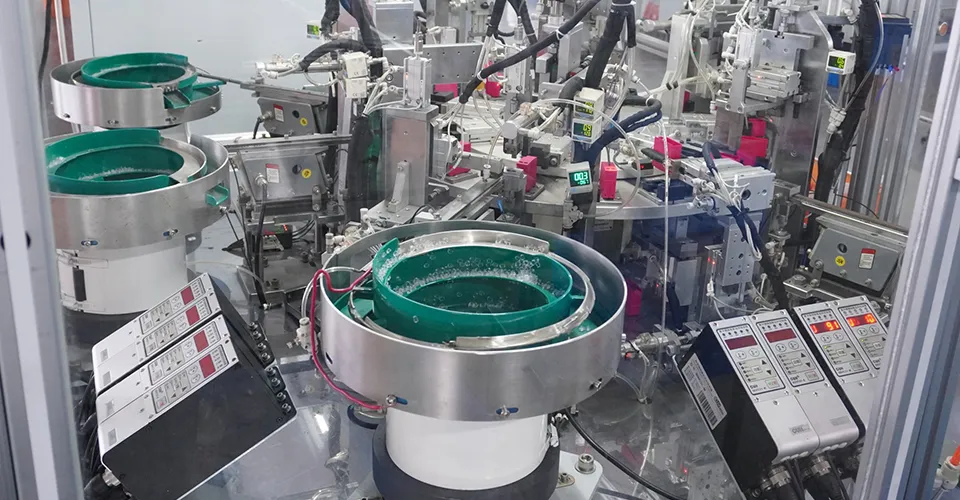
- Assembly — semi-automatic cells keep torque and fit consistent across a batch.
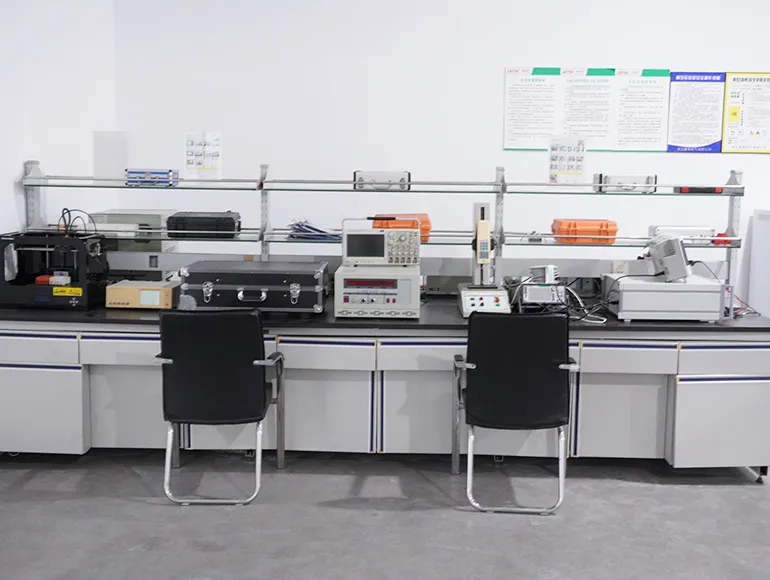
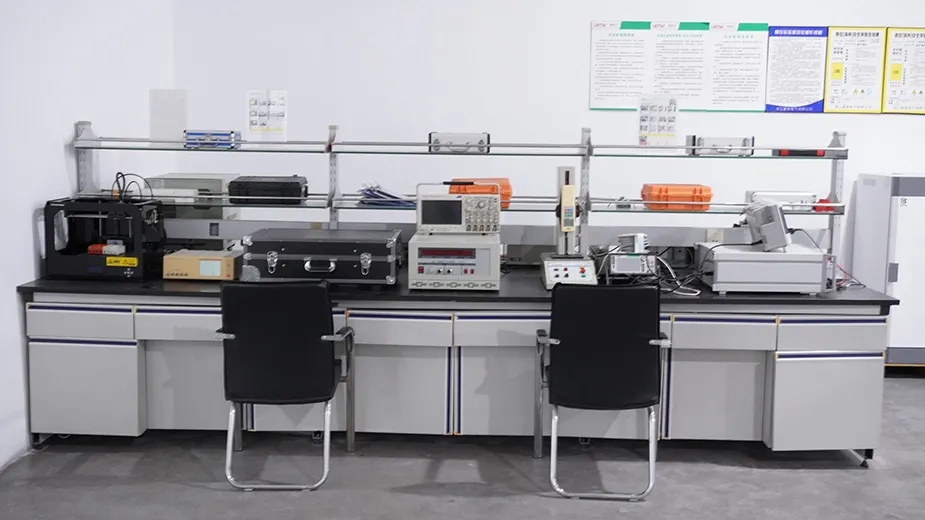
- Quality gate — incoming varistors are graded before they reach the assembly line.
- Export packing — cartons, labels and pallet marks prepared to the destination market.
Buying Guide
- Confirm the required Iimp from the risk assessment, and check whether the 25kA class covers it.
- Select the voltage code for the system; the 440V code covers supplies where a wider window is needed.
- Decide the pole arrangement from the earthing system, with the N-PE path considered separately.
- Confirm the fault level at the entry so the backup protection sits within the SPD’s withstand.
- Wire the remote contact to the monitoring system at commissioning rather than leaving it unused.
Where the LT-T25/B+C is the wrong choice
Where the calculated partial lightning current exceeds 25kA per pole, this device is out of range and a dedicated Type 1 unit such as the LT-X50 is required. It is also not a Type 3 device: the residual voltage at 1.2kV L-N still needs terminal protection where sensitive electronics are connected.
How We Support Your Business
OEM / ODM
Private-label programmes run on the same type-tested platform, so a rebranded unit keeps the ratings, curves and approvals of the original.
Type-tested base · Rebranding · Carton design
Wholesale
Container planning, mixed pallets and consistent batch quality for wholesalers supplying panel builders and contractors.
Container plan · Mixed pallets · Batch records
Distributor Support
Priority production slots and a named account contact for partners promoting the range at trade shows and in tender work.
Priority slots · Named contact · Tender files
Ready to Order the LT-T25/B+C?
Send the risk assessment, the system voltage and the fault level at the entry, and we will quote the LT-T25/B+C configuration with the backup protection and the signal wiring detail.
Frequently Asked Questions
What is the difference between Iimp 25kA and Imax 120kA?
Iimp is the lightning current rating tested with a 10/350 µs waveform; Imax is the maximum induced surge tested with 8/20 µs. They describe different duties and are not interchangeable.
Does a combined Type 1+2 device replace two separate devices?
At the same entry point it does, where the installation standard permits a single protective device. Where physical separation between stages is required, separate units are still needed.
Is the N-PE path included?
Yes, the assembly includes the neutral-to-earth path with a 1.5kV clamping level. Some layouts still prefer a separate N-PE module, which is what the LT-40D provides.
Is the remote contact optional?
No, it is fitted as standard on this platform. That is deliberate for service entrance duty, where the device is often installed out of sight.
Can it be used above 440V?
Not this version. The 690V and 760V codes are a separate product with the same structure but a higher continuous voltage window, intended for wind and box substation supplies.
Does it replace a Type 2 device downstream?
It can, for buildings where a single stage is appropriate. Large installations still benefit from a Type 2 stage at the sub-main to lower the let-through voltage closer to the loads.


Reviews
There are no reviews yet.