

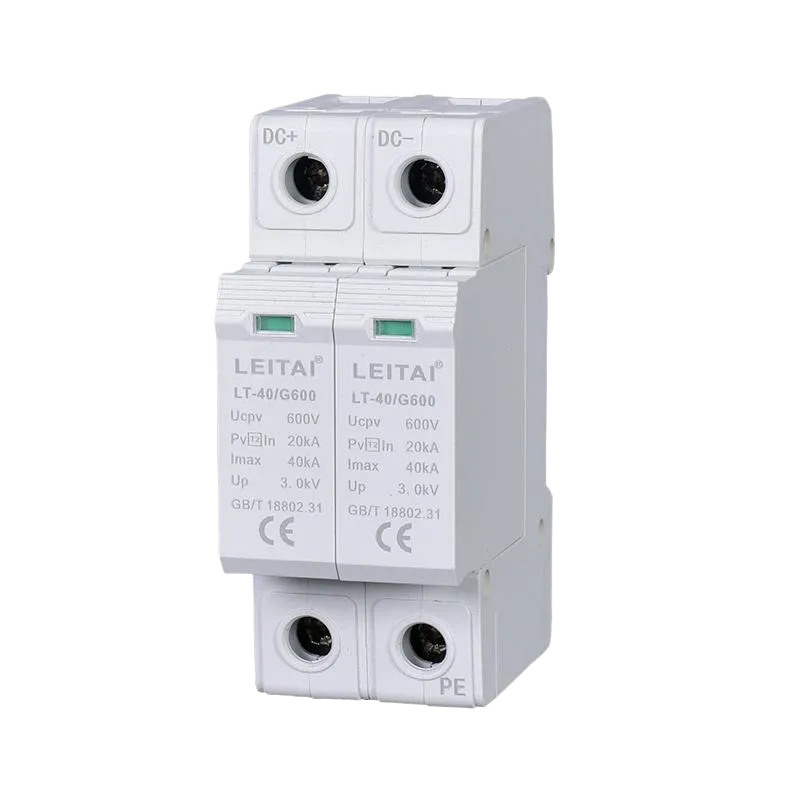
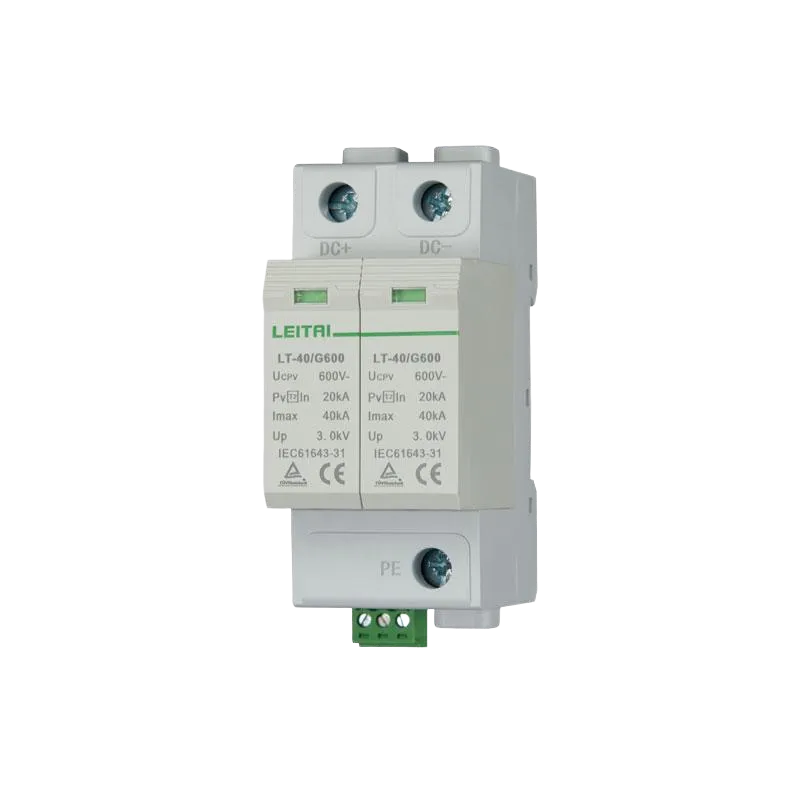
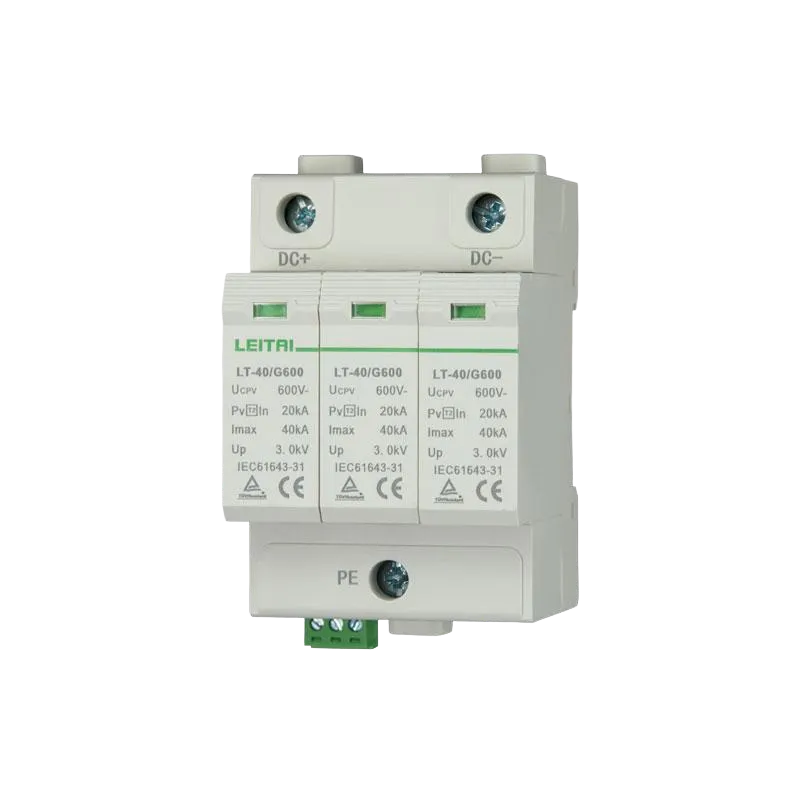
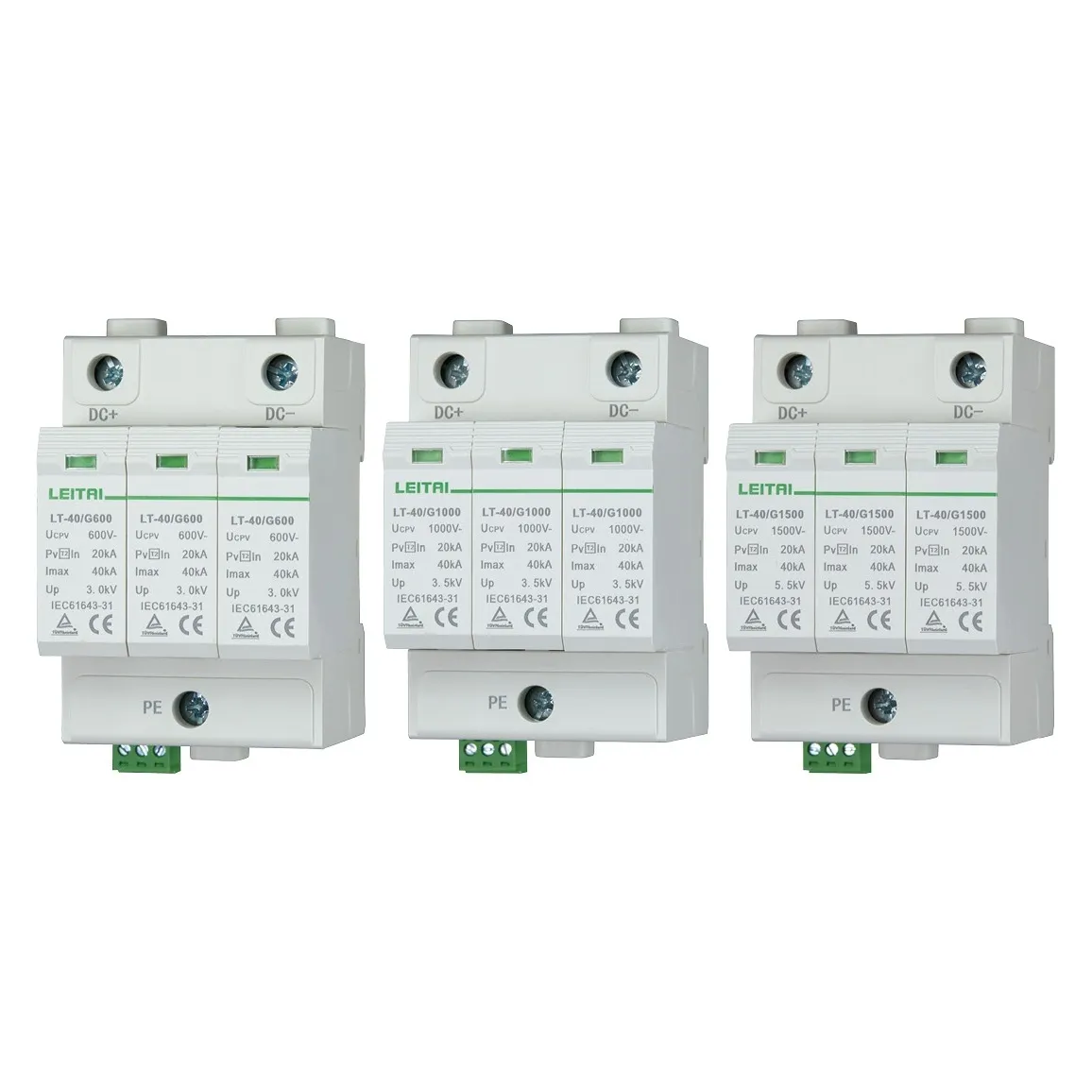
The LT-40/G600 is a 600V DC Type 2 SPD for small rooftop PV strings, rated In 20kA and Imax 40kA with Up ≤3.0kV. The 600V class still covers a large installed base of small commercial and residential arrays, and this device gives that voltage a dedicated unit rather than a 1000V device used below its range.
600V DC Surge Protector for Rooftop PV
The 600V Class Still Matters
Smaller arrays and many retrofit residential systems operate at 600V rather than 1000V. Using a higher-voltage device is safe but wasteful, and the 600V class gives a lower clamping voltage for the same footprint, which is the technical reason this version exists.
U or Y: Two Wiring Choices
The U configuration protects across the positive and negative conductors in a 2P body, and the Y configuration adds the protective earth path in a 3P body. Which applies depends on whether the array is floating or has an earthed pole, and both are available on same platform.
500A of PV Current
The Iscpv rating of 500A suits combiners aggregating several strings, not just a single module circuit. That headroom is what allows the device to sit in the combiner box rather than at the end of each string.
Signalling Available
A remote signalling version allows the combiner to report a failed protector. On a roof array where nobody inspects the DC side, that turns an invisible failure into a maintenance task.
Specifications
| Series | LT-40/G600 PV Type 2 surge protective device |
|---|---|
| Standard | IEC 61643-31, EN 50539-11 |
| Maximum continuous voltage Ucpv | 600 VDC |
| Nominal discharge current In | 20 kA (8/20 µs) |
| Maximum discharge current Imax | 40 kA (8/20 µs) |
| Voltage protection level Up | ≤3.0 kV |
| Configurations | U type 2P and Y type 3P |
| PV short-circuit current Iscpv | 500 A |
| Options | remote signalling version |
| Mounting | 35mm DIN rail in a combiner or junction box |
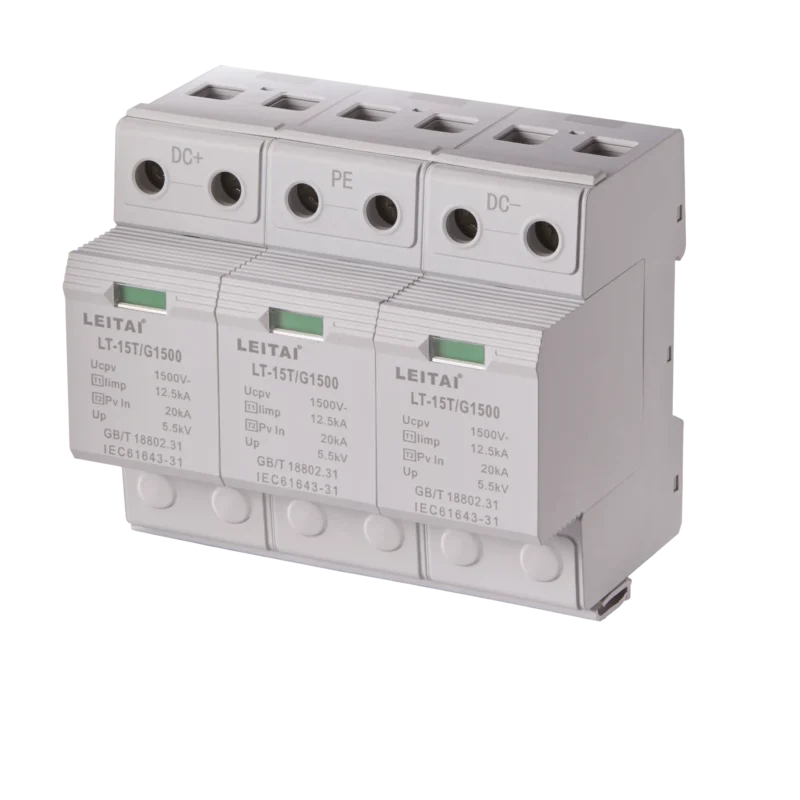
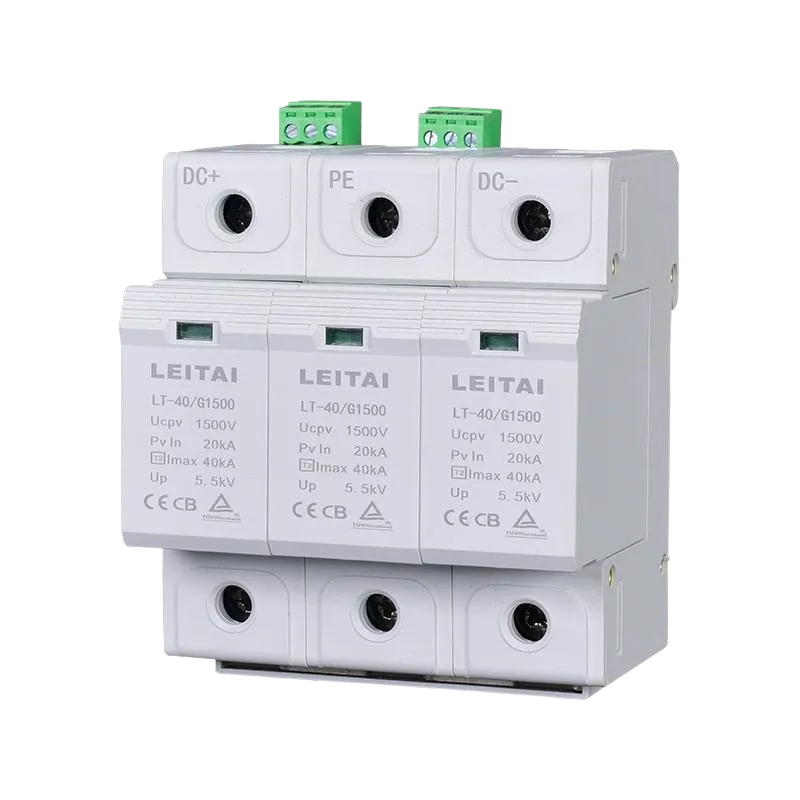
| Related models | LT-40/G1000, G1500 and G2000 for higher array voltages |
Reading the LT-40/G600 specification
Using a 1000V device on a 600V array is not unsafe, but it is not optimal either: the clamping level is set for the higher system voltage, so the residual reaching the inverter is higher than it needs to be. This unit is specified at 600V and clamps at 3.0kV, which is the proportionate figure for that class.
U and Y configurations are both available on the same platform — U for an ungrounded array, Y where the array has a functional earth. The Iscpv rating of 500A matches the combiner sizes typical at this voltage.
Wiring Diagram & Connection
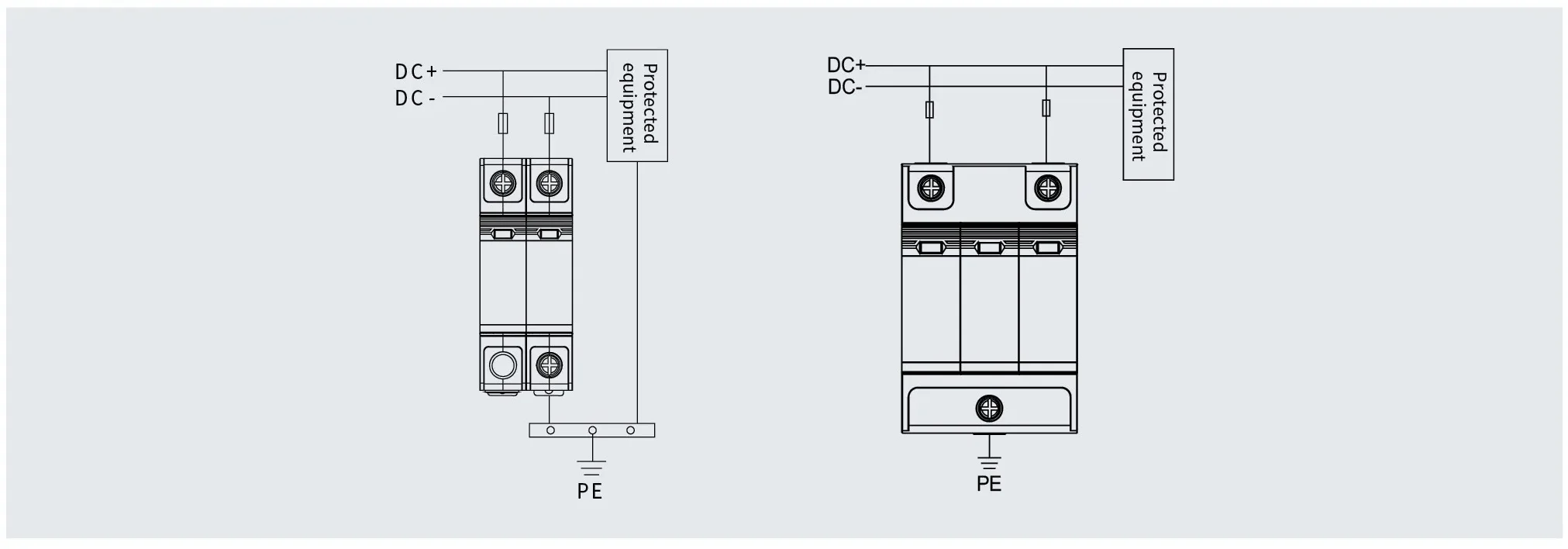
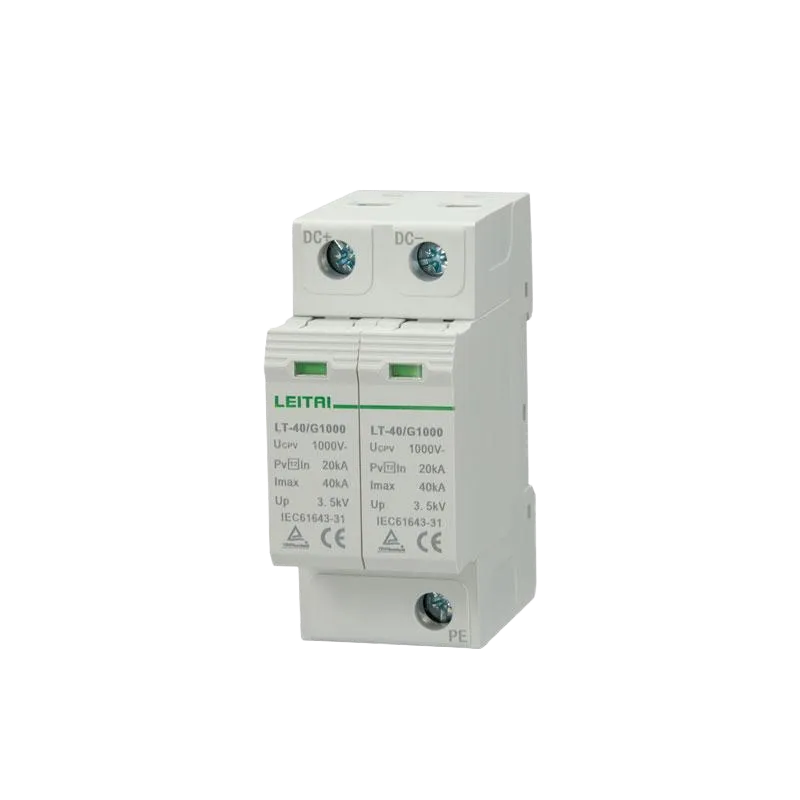
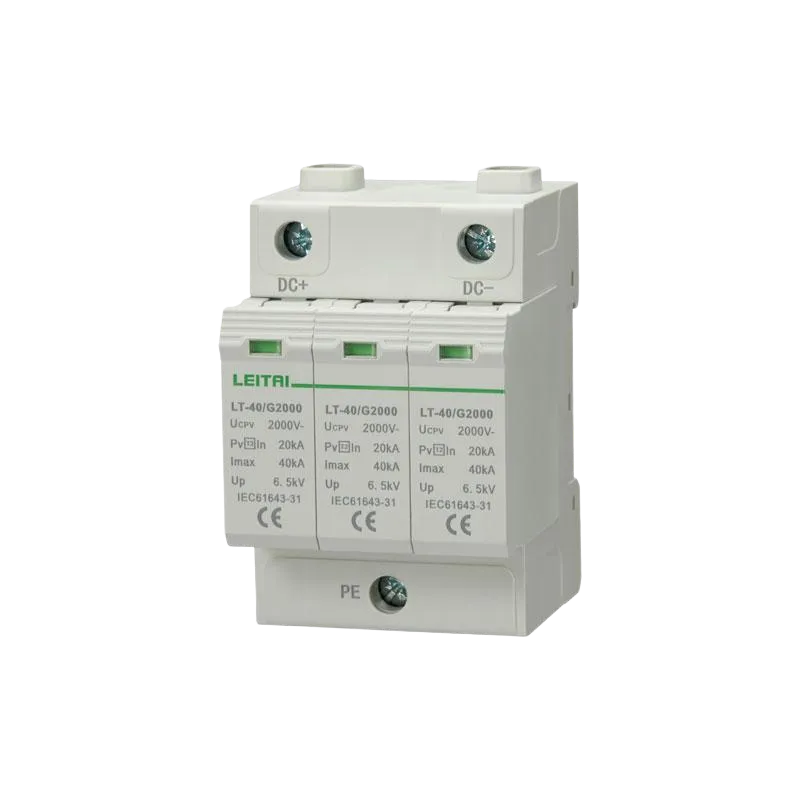
The LT-40/G600 can be wired as a two-pole U type across DC+ and DC-, or as a three-pole Y type with a PE reference. The U arrangement is used inside a string combiner, the Y arrangement at the array entry where an earth reference exists.
LT-40/G600 — The Right Voltage Class for Smaller Arrays
Specifying a 1500V device on a 600V array is not dangerous, but it is a poor use of the available clamping performance: the protection level rises with the voltage class, so the load sees a higher let-through than the system needs. Choosing the class that matches the array is the straightforward way to get the lowest protection level for the money.
The U and Y choice is a system design question rather than a product preference. A floating array with no earthed pole is normally protected with the Y configuration so both conductors have a path to earth, while an array with an earthed pole uses the U configuration across the live conductors. We confirm it against the array drawing rather than assuming.
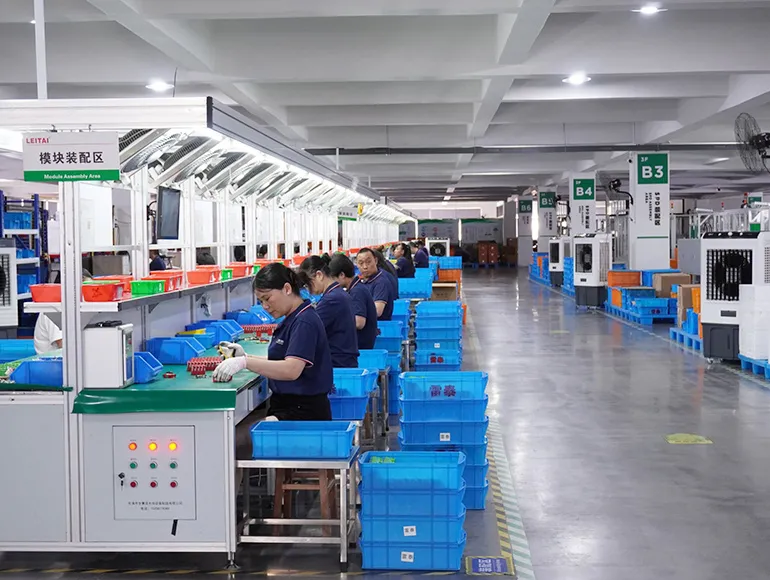
Factory-Direct OEM / ODM Manufacturer
One Line, One Supplier
Own tooling · own test station · 40+ export markets since 2010
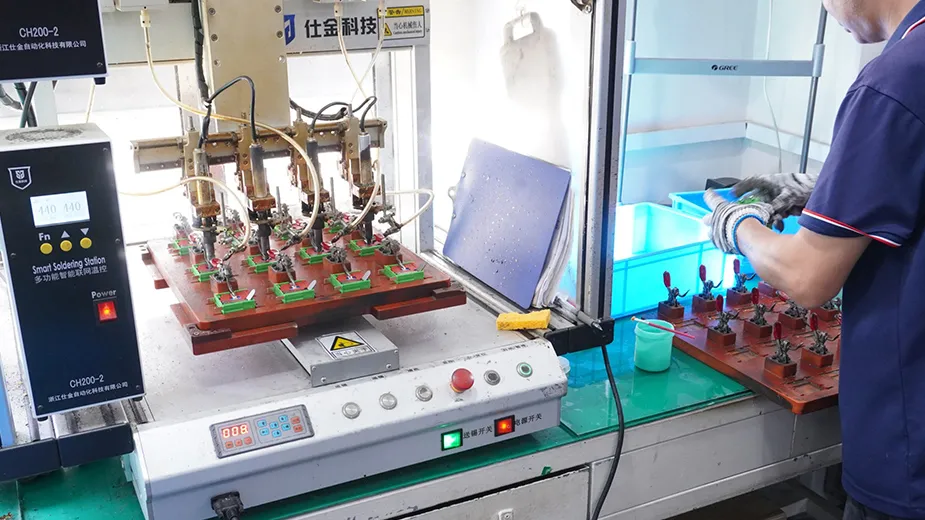
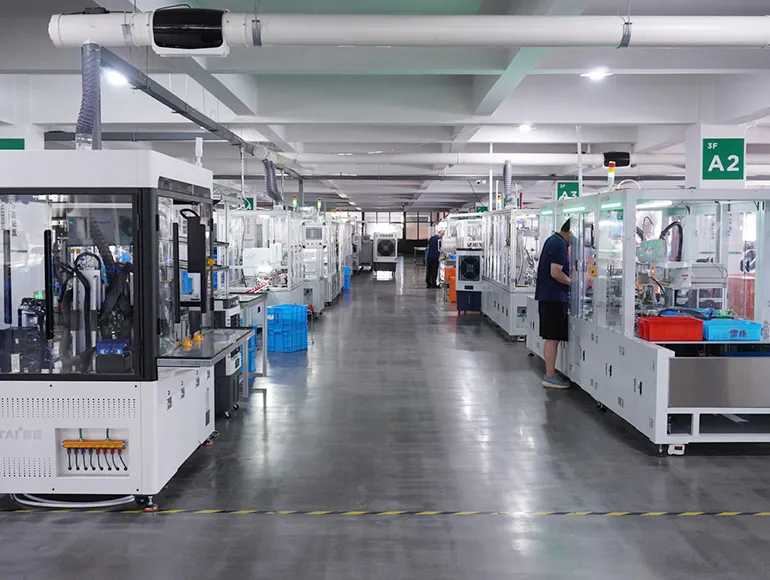
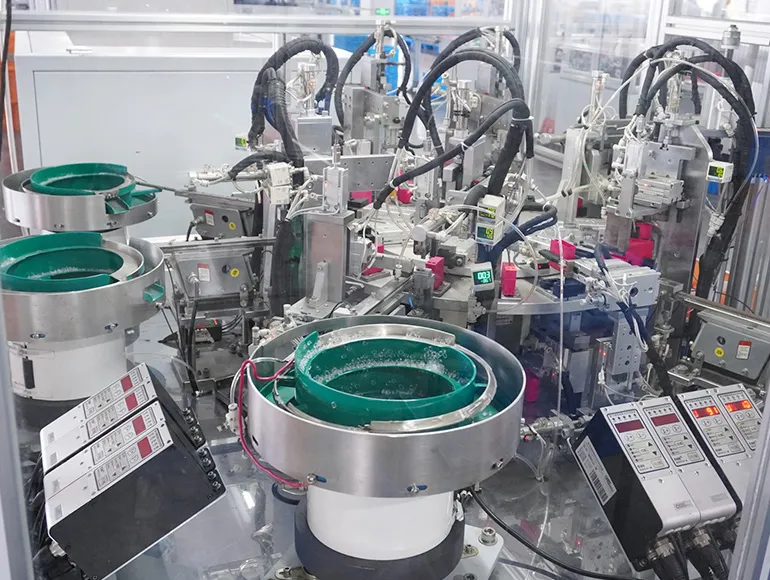
Importers usually buy surge protection from two or three traders and then discover that the modules do not fit the same busbar. We build the whole chain — moulding, assembly, calibration and final test — in one plant, so a mixed order arrives consistent. The series overview is on our DC SPD range page.
- OEM / ODM — design changes handled in house from drawing to first article.
- Mixed containers — several models and accessories loaded together against one PO.
- Documents — test reports, declarations and dimension drawings supplied with the shipment.
- After-sales — replacement modules and spare parts supported for the life of the range.
Buying Guide
- Confirm the maximum array voltage at the coldest expected temperature to establish the correct voltage class.
- Check the combiner short-circuit current against the 500A Iscpv rating.
- Decide between U and Y configuration from the array earthing arrangement.
- Decide whether remote signalling is needed, particularly for roof-mounted arrays.
- Confirm the DC isolation arrangement for maintenance, rated for DC operation.
Where the LT-40/G600 is the wrong choice
It cannot be used above 600V; a 1000V or 1500V array needs the G1000 or G1500. It is also a Type 2 device, so an exposed ground mount or a structure that forms part of a lightning protection system needs the Type 1 version instead.
How We Support Your Business
OEM / ODM
From a printed logo on a standard module to a modified housing and a new rating label — changes are handled on our own tooling, not through a broker.
Logo printing · Modified housing · Own label
Wholesale
Buy the models that move in your market and mix them with accessories in the same shipment; pricing is quoted per configuration.
Per-item MOQ · Mixed shipment · Export packing

Distributor Support
Stock planning, replacement-module supply and market-specific documentation for channel partners who hold inventory.
Stock planning · Spares · Documentation
Ready to Order the LT-40/G600?
Send the array voltage, the combiner current and the earthing arrangement, and we will confirm whether the U or Y configuration applies at 600V or whether a higher voltage class is needed.
Frequently Asked Questions
What is a 600V DC SPD used for?
It protects the DC side of small rooftop and residential PV arrays rated up to 600V, between the strings and the inverter.
Can I use a 1000V SPD on a 600V array?
It will work, but the clamping level is set for the higher voltage, so the residual reaching the inverter is higher than necessary. A 600V device is the proportionate choice.
Does it need a DC-rated backup fuse?
Yes. A faulted varistor on the DC side can sustain an arc the inverter cannot interrupt, so the backup device must be rated for DC voltage and for the array’s Iscpv.
Is remote signalling worth it on a roof array?
It is the only way to know a protector has failed without an inspection visit, so on arrays that are not regularly accessed it is usually justified.
Does this device need a Type 1 rating?
Where the array structure is not part of a lightning protection system and is not especially exposed, Type 2 is the appropriate rating. Exposed or elevated arrays warrant the Type 1+2 devices.
Can it be used on the AC side?
No. It is a DC device rated for photovoltaic circuits, and the AC range covers that side of the inverter.



Reviews
There are no reviews yet.