

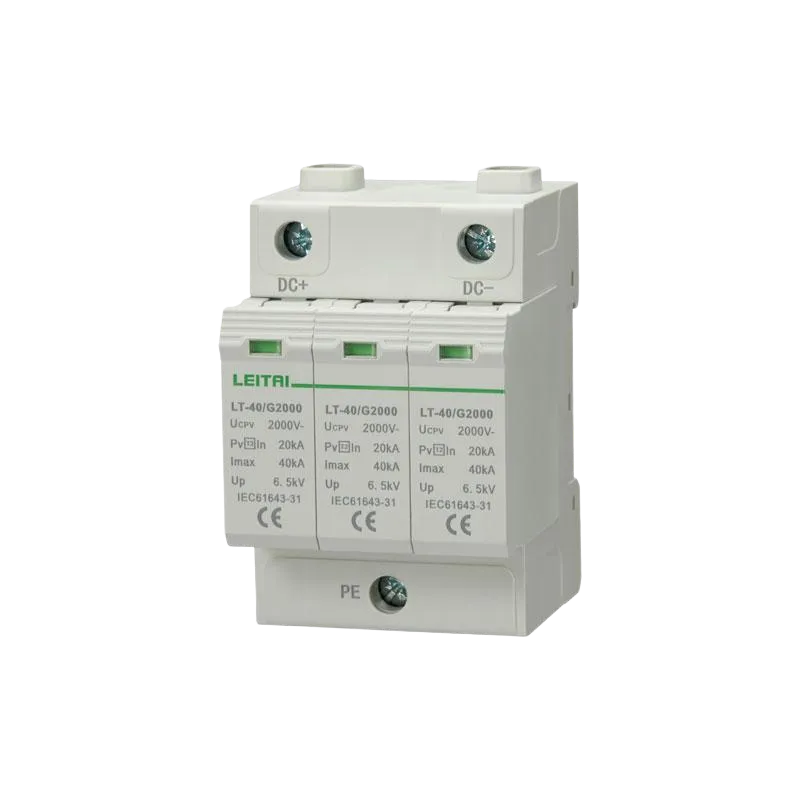
The LT-40/G2000 is a 2000V DC surge protection device for next-generation utility PV plants, rated In 20kA and Imax 40kA with Up ≤6.5kV. It is the highest voltage member of the Type 2 DC range and is supplied in a three-pole Y configuration.
2000V DC Surge Arrester for Utility PV
For the Highest Array Voltages in Service
Modules and string designs have moved beyond 1500V, and a device rated for 1500V cannot be used at 2000V regardless of how much margin it appears to have. This version exists so that the highest-voltage arrays have a Type 2 protector rather than an oversized lower-voltage device.
Proportional Protection Level
The 6.5kV clamping level follows the system voltage. On a 2000V array that is a proportionate let-through, and the inverter input is designed for it; comparing the figure with an AC device’s clamping voltage would be meaningless.
Y Configuration Standard
The three-pole arrangement covers both poles to earth and suits floating arrays, which is the usual design at this voltage class. The configuration keeps the combiner layout consistent with the rest of the PV range.
Signalling Where It Matters Most
At this voltage class the installation is rarely a small retrofit; it is a designed system with monitoring. The signalling version lets the combiner report a failed protector into that system rather than relying on a site walk.
Specifications
| Series | LT-40/G2000 PV Type 2 surge protective device |
|---|---|
| Standard | IEC 61643-31, EN 50539-11 |
| Maximum continuous voltage Ucpv | 2000 VDC |
| Nominal discharge current In | 20 kA (8/20 µs) |
| Maximum discharge current Imax | 40 kA (8/20 µs) |
| Voltage protection level Up | ≤6.5 kV |
| Configuration | Y type 3P |
| PV short-circuit current Iscpv | 500 A |
| Options | remote signalling version |
| Mounting | 35mm DIN rail in a string combiner |
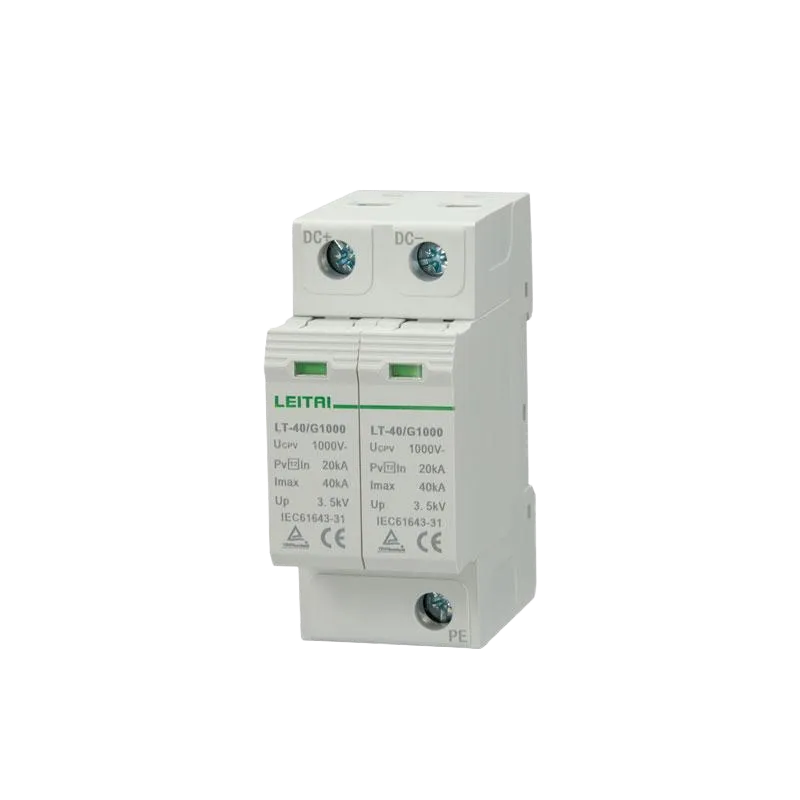
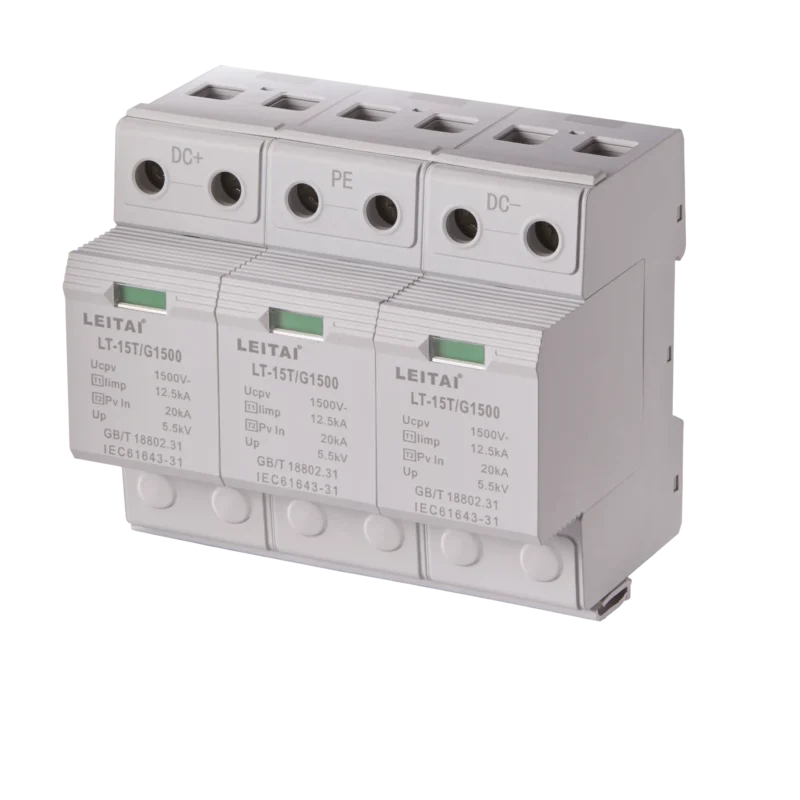
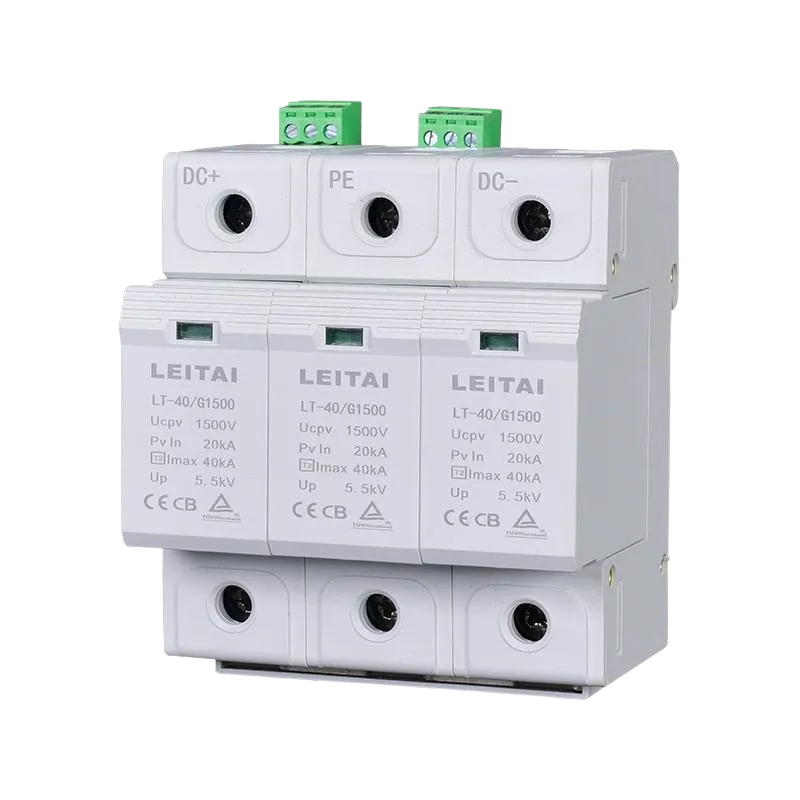
| Related models | LT-40/G1000 and G1500 (lower voltage classes), LT-15T/G1500 (Type 1+2) |
Reading the LT-40/G2000 specification
The 2000V class is arriving because higher string voltages reduce balance-of-system cost per watt. The protection device has to follow: a 1500V unit cannot be applied above its Ucpv, regardless of the current rating. Up at 6.5kV looks large, but it is proportional to the voltage class and is the figure the inverter’s DC input has to tolerate.
Only the Y configuration is offered, since the arrays at this voltage are earth-referenced in practice. Signalling is available where the combiners are remote.
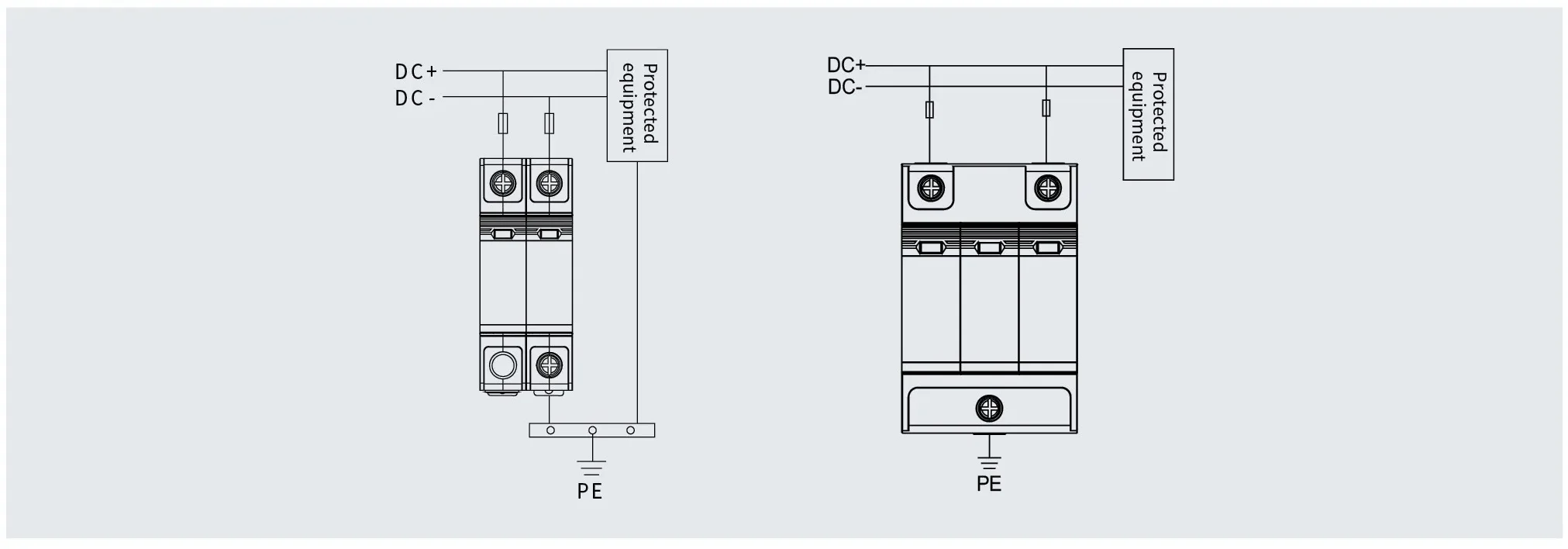
Wiring Diagram & Connection
The 2000 V unit is the highest DC rating in the range and is wired Y type only, since no 2000 V array is designed without an earth reference. The drawing is the one to hand to an installer working to a 2000 V system drawing for the first time.
LT-40/G2000 — Protection That Keeps Pace With Array Voltage
Array voltages rise because higher voltage means less current for the same power, and less current means thinner cable and lower losses across a large site. The consequence for protection is simple: every device on the DC side must be rated for the new continuous voltage, and the clamping level rises with it. There is no free lunch in the transition.
What changes for the buyer is the specification process rather than the product. At 2000V the system is designed rather than assembled from catalogue parts, so the protector is selected against a calculated maximum voltage at the coldest temperature and against the inverter’s documented withstand. We ask for both figures, because either one alone is not enough.
Factory-Direct OEM / ODM Manufacturer
We Manufacture, You Brand
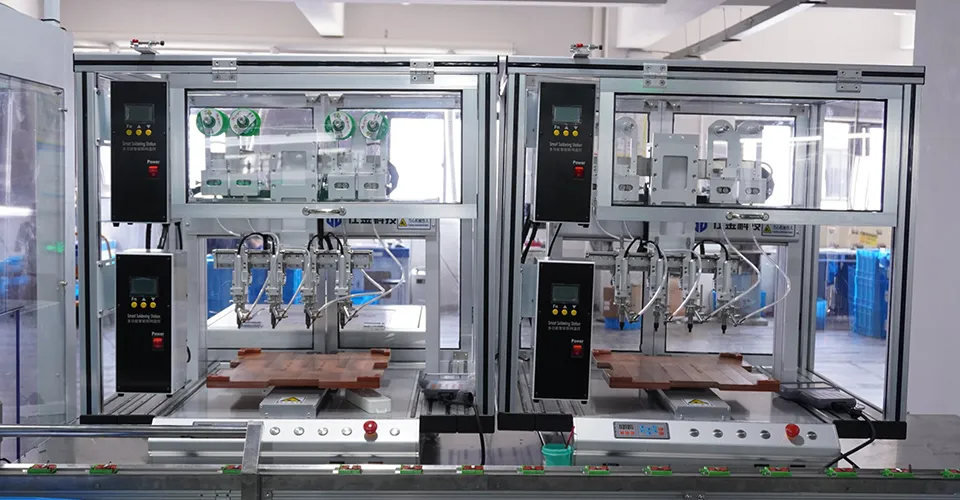
Module moulding in house · MOV selection and thermal parts · OEM branding
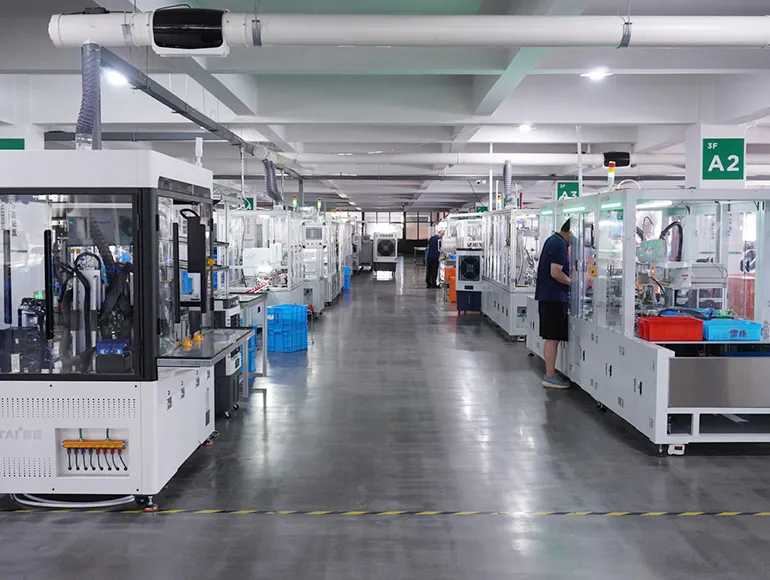
Every LT component on this page — housing, busbar, varistor stack and thermal disconnector — is produced and assembled at our own plant in Liushi, Zhejiang, which is why a special voltage, pole count or marking requirement costs you a production slot rather than a new supplier qualification. The full AC range sits on our DC SPD range page.
- OEM branding — logo, model number and rating text printed on the module front and the carton.
- ODM options — housing colour, pole count, voltage window, remote-signal contact and retail packing.
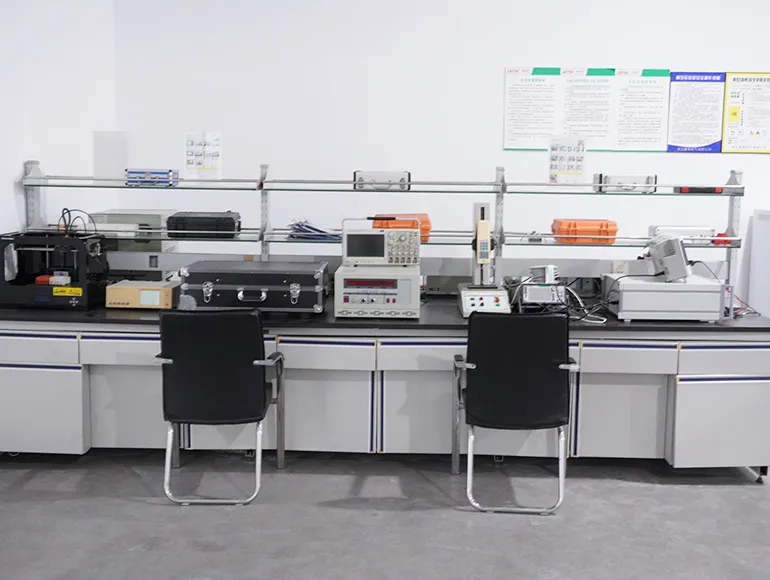
- Testing — residual voltage and thermal trip checked on every unit, records kept per batch.
- MOQ — quoted per configuration — mixed models can share one container.
Buying Guide
- Confirm the maximum array voltage at the lowest expected module temperature, not the nominal string voltage.
- Check the inverter’s documented DC withstand against the 6.5kV protection level.
- Confirm the combiner fault current against the 500A Iscpv rating.
- Specify the signalling version where the plant has a monitoring system, which is usual at this scale.
- Confirm that every DC-side component in the combiner is rated for 2000V, not only the SPD.
Where the LT-40/G2000 is the wrong choice
It is not a 1500V device with a higher label — applying it on a lower-voltage array gives away clamping margin for no benefit, and the G1500 is the correct choice there. It is also a Type 2 unit and does not cover direct-strike duty.
How We Support Your Business
OEM / ODM
We print your brand on the module front and pack to your carton design; ODM covers new pole layouts, alternative voltage windows and signalling options.
Tooling in house · Branded packing · ODM design

Wholesale
Volume pricing on the whole LT range, with sample lots for tender packages and full containers for stock orders.
Bulk pricing · Samples · Firm lead times

Distributor Support
Technical files, selection curves and local standard guidance so your sales team can specify the right type on the first visit.
Datasheets · Selection help · Training
Ready to Order the LT-40/G2000?
Send the calculated array voltage, the inverter datasheet and the combiner specification, and we will confirm the G2000 configuration and the signalling requirement.
Frequently Asked Questions
What is a 2000V DC SPD?
It protects the DC side of PV plants designed for 2000V string voltages, a class that is entering service as system voltages rise.
Can it be used on a 1500V array?
Technically yes, but the clamping level is set for 2000V, so the residual is higher than necessary. The G1500 is the proportionate device.
Why only Y configuration?
Because 2000V arrays in practice are earth-referenced, so the third pole is required rather than optional.
What is the Iscpv rating for?
It defines the maximum PV short-circuit current the device can carry. At 500A it suits combiners aggregating multiple strings.
Does it need a special enclosure?
It mounts on standard 35mm DIN rail, but the combiner must be rated for the system voltage and the DC isolation requirement.
Is monitoring available?
Yes, a signalling version reports a failed cartridge. At this scale that is normally specified from the start.



Reviews
There are no reviews yet.