

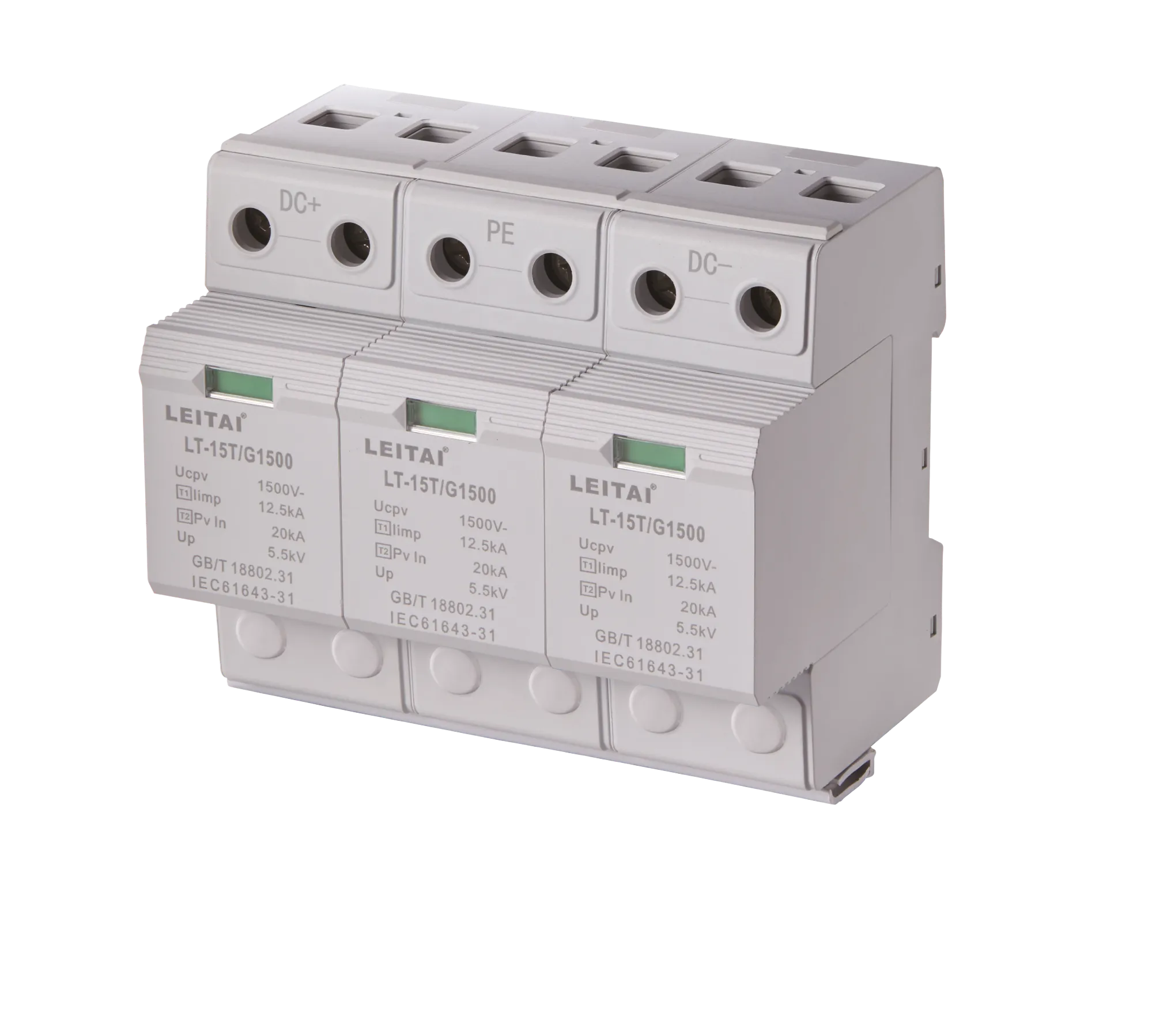
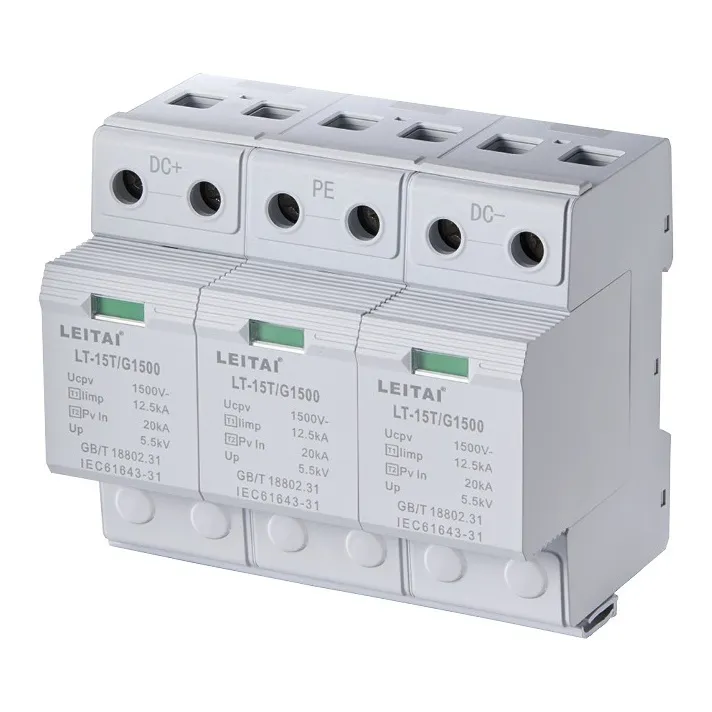
The LT-15T/G1000 is a 1000V DC Type 1+2 solar SPD with a 6.25kA Iimp (10/350 µs) rating, In 20kA and Imax 40kA. It is specified where the array cannot rely on being shielded — exposed roofs and structures that form part of a lightning protection system — and the DC side has to survive a partial lightning current.
Solar SPD 1000V DC Type 1 for PV Arrays
DC Is a Different Problem
A photovoltaic circuit has no natural current zero, so an arc once struck does not extinguish on its own. That single fact governs every design decision in a PV surge protector, from the disconnector to the terminal spacing, and it is why a DC device cannot be derived from an AC one by relabelling the front.
Type 1 Capability at the Array
Arrays mounted on a roof or on open ground are exposed structures, and a lightning strike to the frame or the mounting system can drive partial current into the DC conductors. The 6.25kA 10/350 rating is the entry-level capability for that condition, which is why the device carries a Type 1 claim rather than only Type 2.
Y Configuration Covers Both Paths
With DC positive, protective earth and DC negative terminals, the device protects the positive-to-earth and negative-to-earth paths as well as across the string. That arrangement is the practical one for a floating array, where either pole can rise above earth potential.
Rated for Real Array Currents
An Iscpv rating of 100A means the device suits string and small combiner applications rather than only a single module. Undersizing this figure is a common error, and it shows up as a device that runs hot rather than one that fails immediately.
Specifications
| Series | LT-15T/G1000 photovoltaic surge protective device |
|---|---|
| Standard | IEC 61643-31, EN 50539-11 |
| Maximum continuous voltage Ucpv | 1000 VDC |
| Impulse discharge current Iimp | 6.25 kA (10/350 µs) |
| Nominal discharge current In | 20 kA (8/20 µs) |
| Maximum discharge current Imax | 40 kA (8/20 µs) |
| Voltage protection level Up | ≤3.5 kV |
| Configuration | Y type, 3 poles, DC+ / PE / DC- |
| PV short-circuit current Iscpv | 100 A |
| Mounting | 35mm DIN rail in a combiner or inverter enclosure |
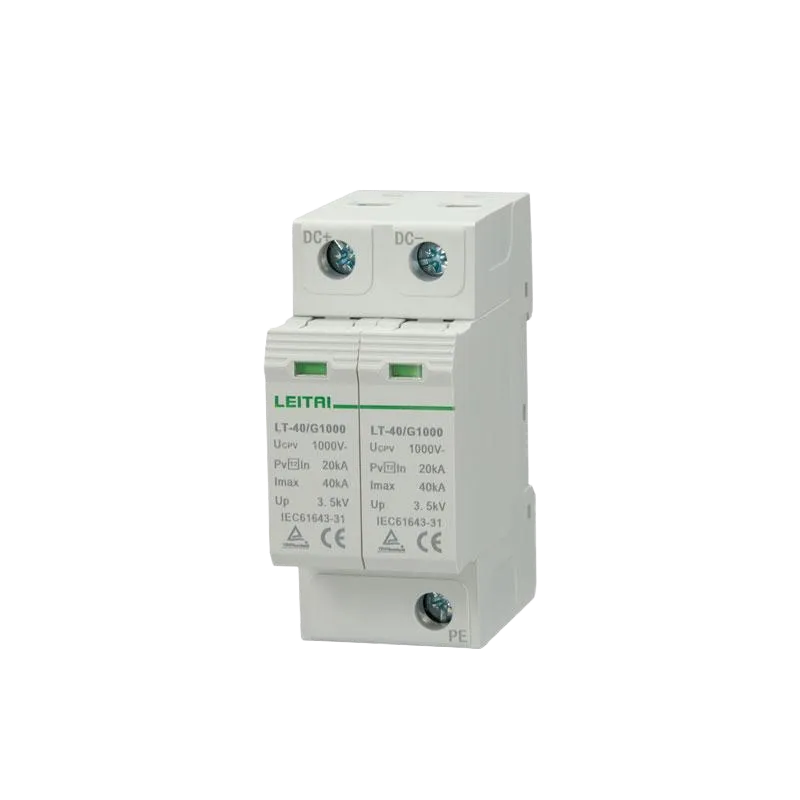
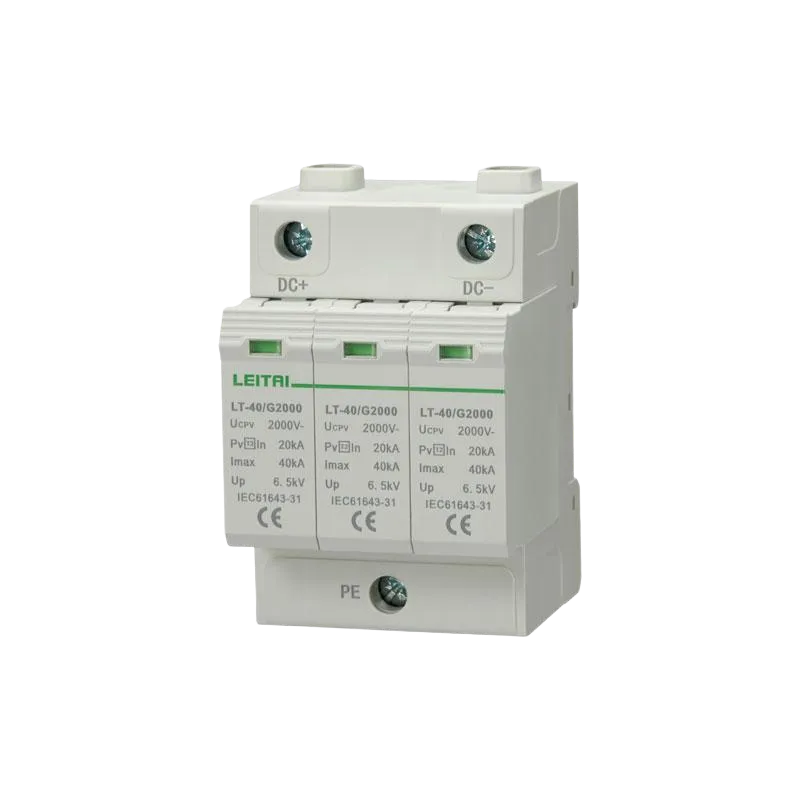
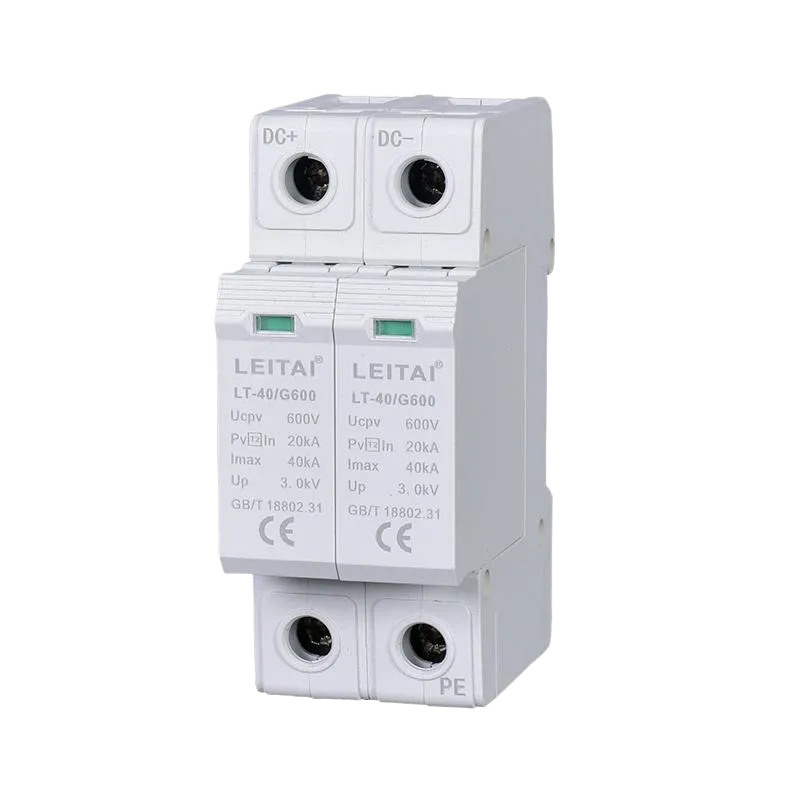
| Related models | LT-15T/G1500 (1500V), LT-40/G600 to G2000 (Type 2 range) |
Reading the LT-15T/G1000 specification
A Type 2 device protects against induced surges; it does not carry a 10/350 rating. Once the array is exposed, or the mounting structure is bonded as part of an LPS, part of the lightning current reaches the DC conductors and the entry device has to be rated for it. That is what the 6.25kA Iimp figure describes.
The device is a Y configuration with three poles, DC+ / PE / DC−, because at this voltage the earth reference is part of the protection path. In and Imax remain 20kA and 40kA, so the induced-surge duty is covered by the same unit.
Wiring Diagram & Connection
The LT-15T/G1000 is a three-pole Y configuration for photovoltaic circuits: DC+, PE and DC-. Both poles are protected against the same earth reference, which is why the unit cannot be replaced by two AC modules.
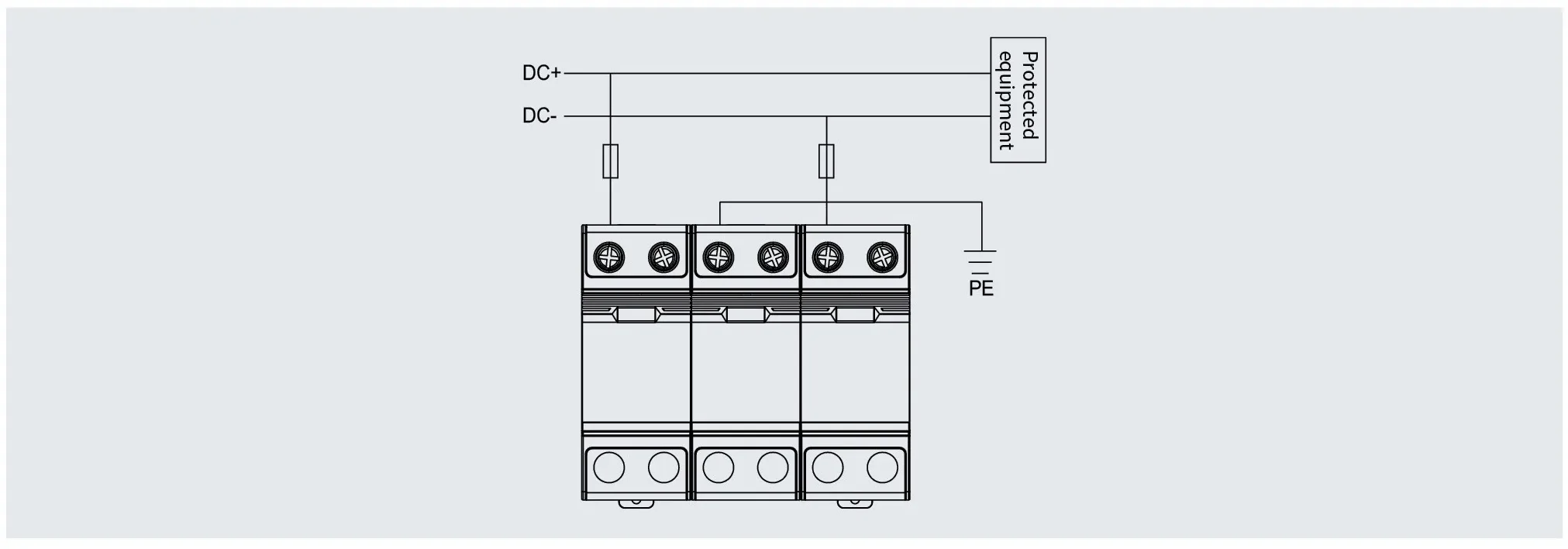
LT-15T/G1000 — Protection for the Array Side of the Inverter
On the DC side of a photovoltaic system the surge protector is protecting two things at once: the modules and their connectors, which have limited withstand, and the inverter input, which is the most expensive component on the roof-to-grid path. A device at the array or in the combiner box keeps the transient from travelling the length of the DC cable to reach the inverter.
The choice between a Type 1+2 device and a plain Type 2 device on the DC side follows the same logic as on the AC side: exposure. An array on an exposed roof or an open field structure is part of the lightning protection system whether it was designed that way or not, and the mounting framework provides a path. Where the array is heavily shaded by taller structures, a Type 2 device is the proportionate choice.
Factory-Direct OEM / ODM Manufacturer
Built Here, Labelled for You
Injection moulding · varistor grading · 100% routine test · private label
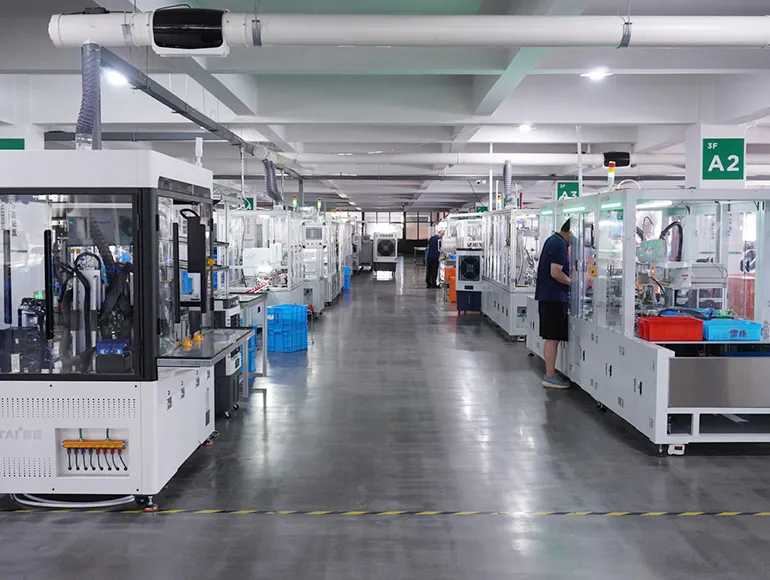
Because the mould, the varistor grading bench and the impulse generator all belong to the same company, a private-label run does not depend on a third party agreeing to change a tool. Tell us the model designation you sell under and we print, pack and test to that name. More configurations are listed under DC SPD range.
- Private label — your brand on the front, your reference on the side, your language in the manual.
- Custom build — voltage window, pole layout, alarm contact and packaging format are open to change.
- Traceability — each carton carries the batch number that links back to its test record.
- Lead time — confirmed against the actual production schedule when the order is placed.

Buying Guide
- Confirm the maximum system voltage of the array, since 1000V and 1500V systems use different devices.
- Check the array short-circuit current against the Iscpv rating, allowing for bifacial gain and module tolerance.
- Decide where the device is installed: array junction box, combiner box or inverter DC input.
- Confirm the earthing arrangement of the array frame and whether the Y configuration suits it.
- Verify the inverter’s DC surge withstand against the 3.5kV protection level and add a device closer to the inverter if the cable is long.
Where the LT-15T/G1000 is the wrong choice
It is not needed on a shielded urban rooftop, where a Type 2 device gives the same protection at lower cost — the G1000 covers that case. It also cannot be used on a 1500V array; the LT-15T/G1500 is the correct voltage class.
How We Support Your Business
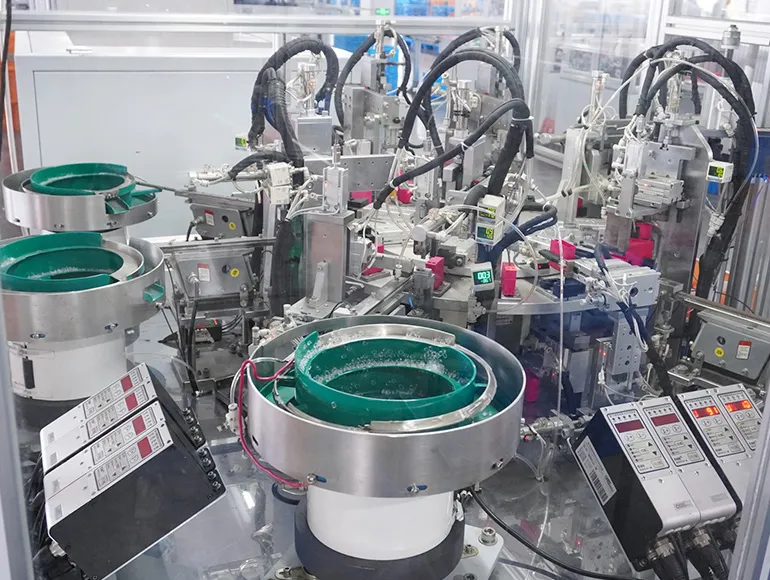
OEM / ODM
Send a drawing and we return a sample: pole count, voltage window, terminal style, marking and packaging are all open to change.
Sample first · Drawing to part · Own marking
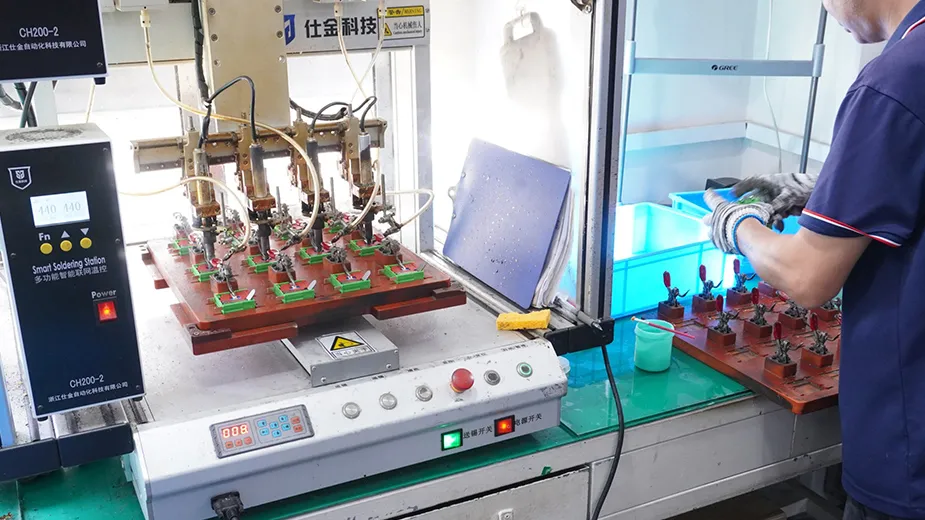
Wholesale
Tiered pricing across the SPD range with flexible quantities per model, so a wholesaler can test a market before committing to a container.
Tiered pricing · Flexible qty · Test orders
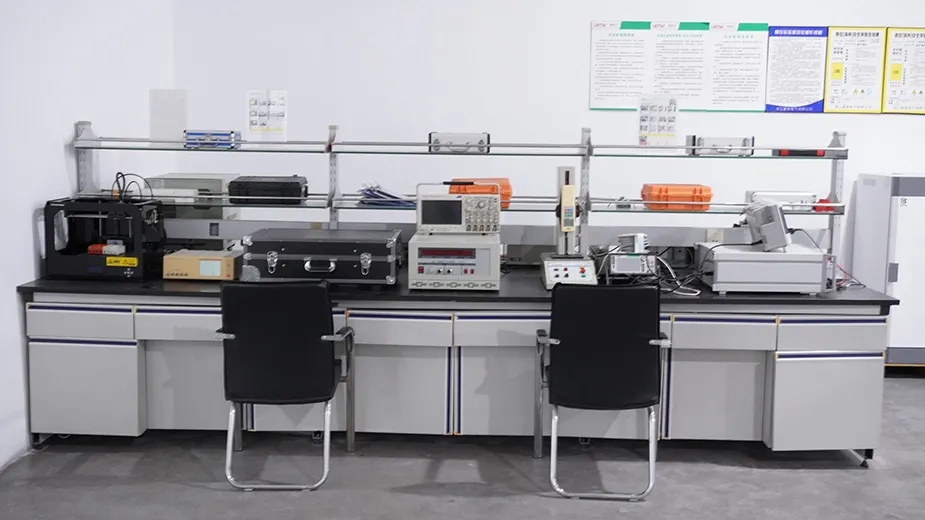
Distributor Support
Application advice for local earthing systems, plus the test evidence needed to satisfy inspectors and consultants.
Application help · Test evidence · Inspections
Ready to Order the LT-15T/G1000?
Send the array voltage, the string current and the inverter model, and we will confirm whether the 1000V device is correct and where it should be installed on the DC side.
Frequently Asked Questions
What is a Type 1 DC SPD?
It is a DC-side device rated for the 10/350 µs lightning waveform, used where part of a direct strike current can reach the array conductors rather than only an induced surge.
When does a PV array need Type 1 rather than Type 2?
When the array is exposed, mounted on an open structure, or bonded as part of a lightning protection system. Shielded rooftops normally stay with Type 2.
Does a DC SPD need a backup fuse?
Yes, and it is more critical than on AC because a faulted varistor can sustain an arc the inverter cannot interrupt. The fuse must be DC-rated and matched to Iscpv.
Do I need a device at both the array and the inverter?
Where the DC cable run is long, a device at each end is common practice. The array device protects the modules and connectors, the inverter device protects the input, and the cable between them carries the transient.
Does the Y configuration require a specific earthing arrangement?
It suits floating arrays where neither pole is deliberately earthed, which is the usual configuration. Confirm the array earthing with the system designer.
Is a disconnector required?
PV circuits need a means of isolation for maintenance, and a DC-rated device is required because there is no natural current zero. We confirm the arrangement with the combiner design.



Reviews
There are no reviews yet.