

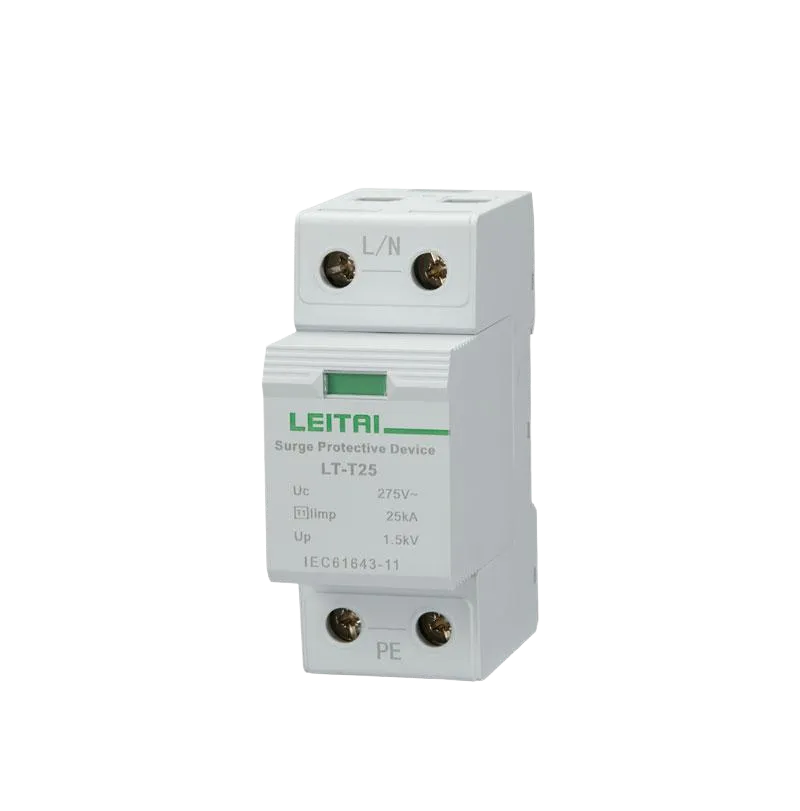
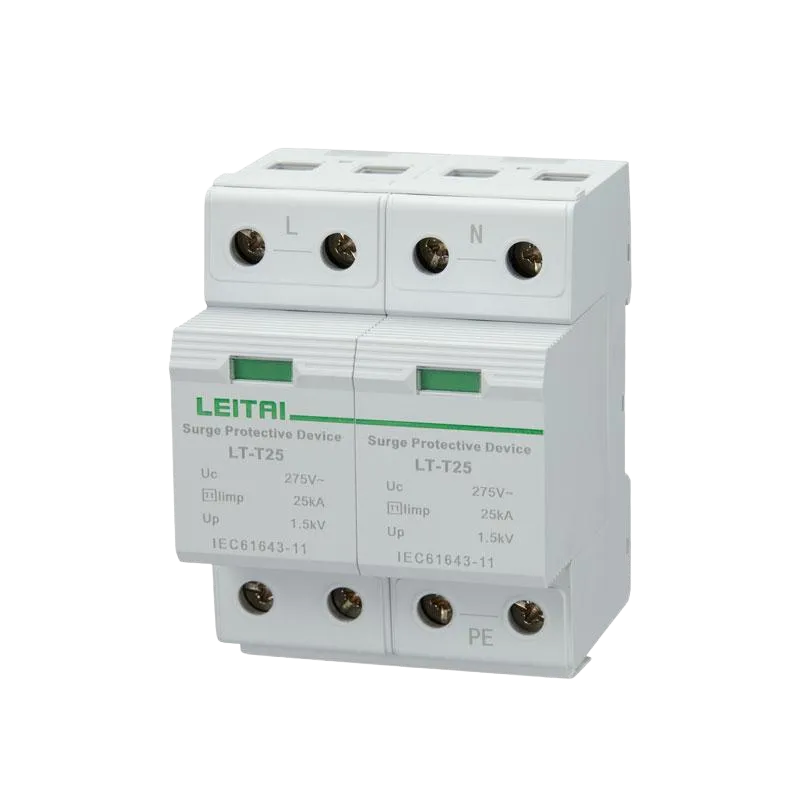
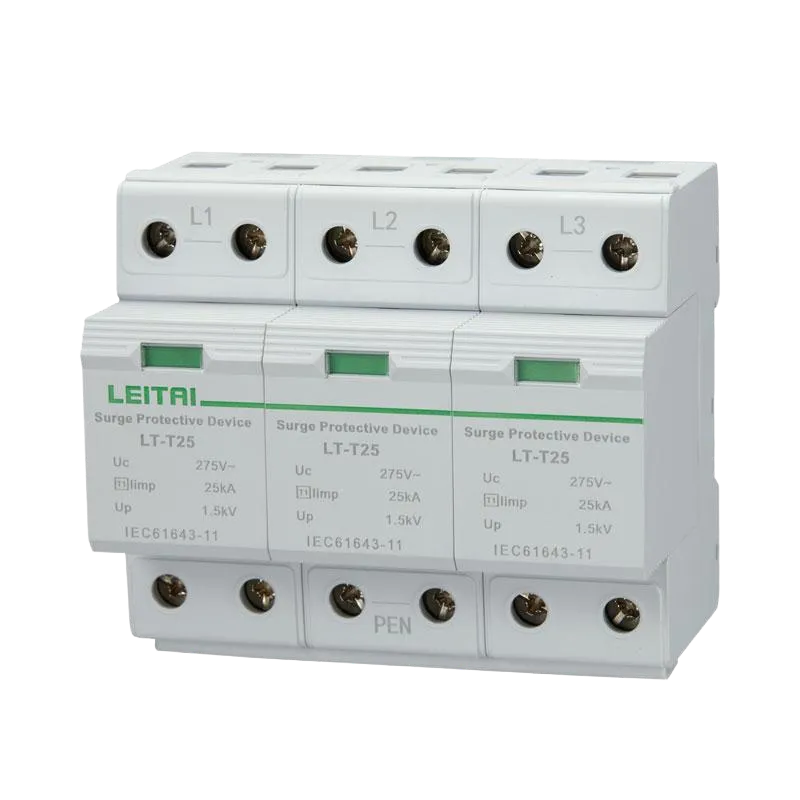
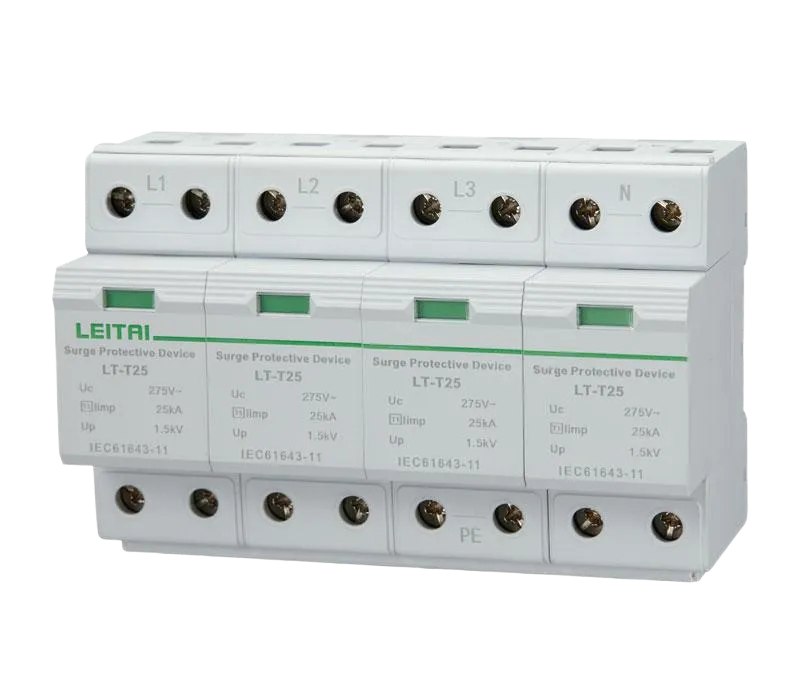
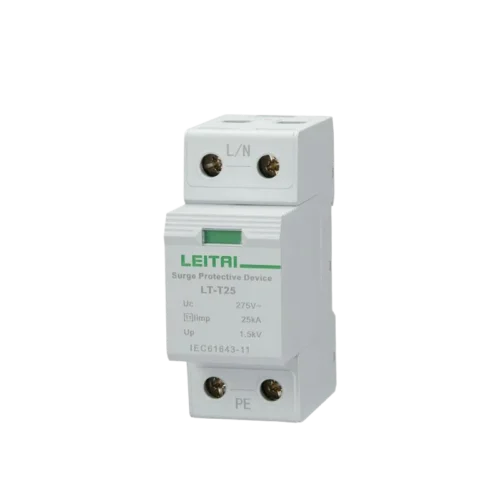
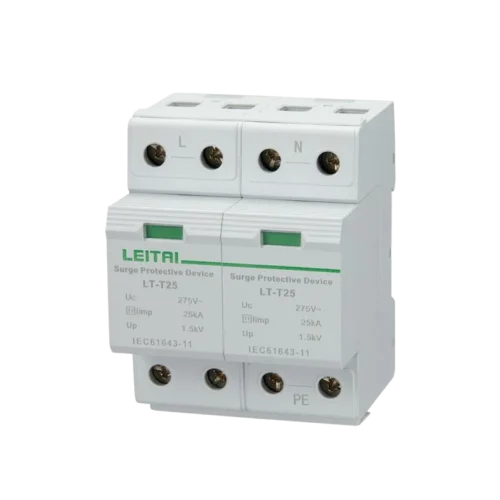
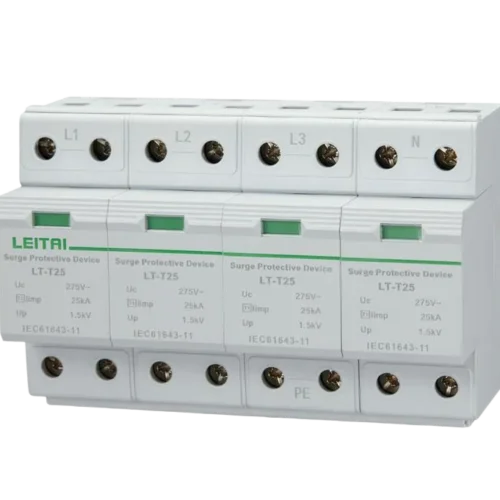
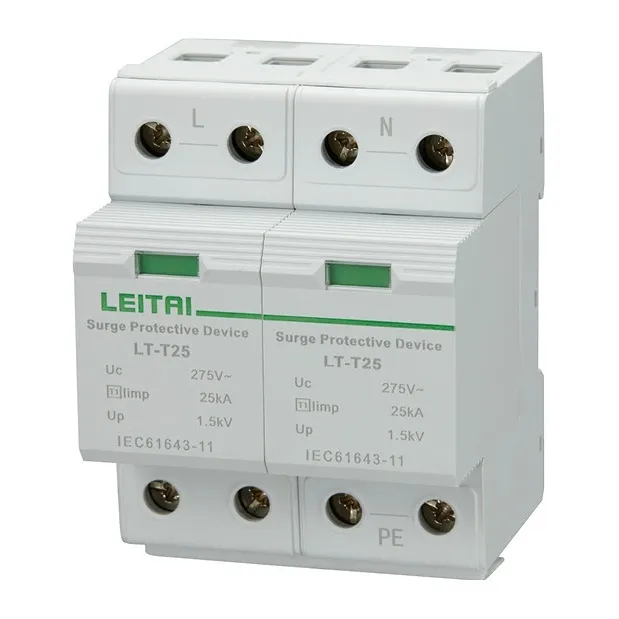
The LT-T25 is a pure Type 1 surge arrester rated 25kA Iimp (10/350 µs), built for direct-strike protection without any Type 2 claim. Unlike the gap models it uses a hybrid element, so the residual voltage is lower at 1.4kV on the 275V code — useful where the entry device also has to reduce the let-through level rather than only discharge current.
Surge Arrester Type 1 25kA for Direct Strikes
A Type 1 Device Without a Type 2 Claim
Devices that carry both ratings are convenient but their Type 1 performance is a compromise. This unit does one job: it handles the partial lightning current at the entrance, and it does so with a 25kA rating, a 1200V temporary overvoltage withstand and a 50kA short-circuit withstand that a combined device cannot match at the same size.
Built to Ride Through Abnormal Supply
The 1200V TOV withstand is the specification that keeps the device in service during a lost neutral or a transformer fault. Those events last long enough to destroy a device that cannot tolerate them, and they are more common than lightning in many networks.
Designed for a Staged Design
Because the Type 2 duty is delegated, the design is explicit about where each function sits: this device at the entrance, a lower-clamping Type 2 device at the sub-main, and optionally a Type 3 device at the equipment. That structure is easier to calculate and easier to defend in a design review than a single combined unit.
Fifty kA of Fault Withstand
At the entrance, fault levels are at their highest. A 50kA withstand means the device survives an end-of-life short circuit long enough for the incoming protection to operate, which is the scenario that actually destroys panels.
Specifications
| Series | LT-T25 pure Type 1 surge protective device |
|---|---|
| IEC classification | Type 1 / Class I, tested to IEC 61643-11 |
| Maximum continuous voltage Uc | 275 / 320 / 385 / 440 VAC |
| Impulse discharge current Iimp | 25 kA (10/350 µs) |
| Voltage protection level Up | 1.4 / 1.6 / 1.8 / 2.0 kV by code |
| Temporary overvoltage TOV | 1200V withstand |
| Short-circuit withstand Iscwr | 50 kA |
| Configurations | 1P, 1P+NPE, 2P, 3P, 3P+NPE, 4P |
| Signalling | remote contact standard |
| Related models | LT-T25/B+C (combined Type 1+2), LT-X50 (gap type, 50kA) |
Reading the LT-T25 specification
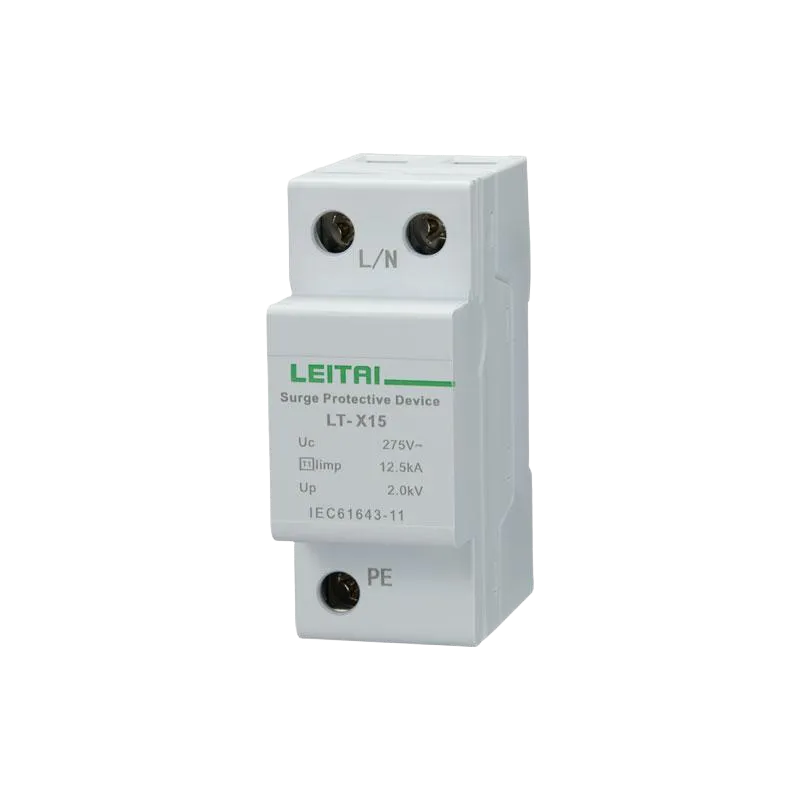
The distinction from the X range is the element. A graphite gap has no leakage and no follow current but clamps high; a hybrid stack brings Up down to 1.4kV on the 275V code, which shortens the gap that the downstream Type 2 device has to close. The 25kA Iimp rating places it between the LT-X15 and the LT-X30 in charge capacity.
It is a Type 1 device only. That matters at specification stage: a schedule that asks for Type 1+2 in one unit should use the LT-T25/B+C instead, while a staged design with a separate Type 2 device downstream is what this model is built for.
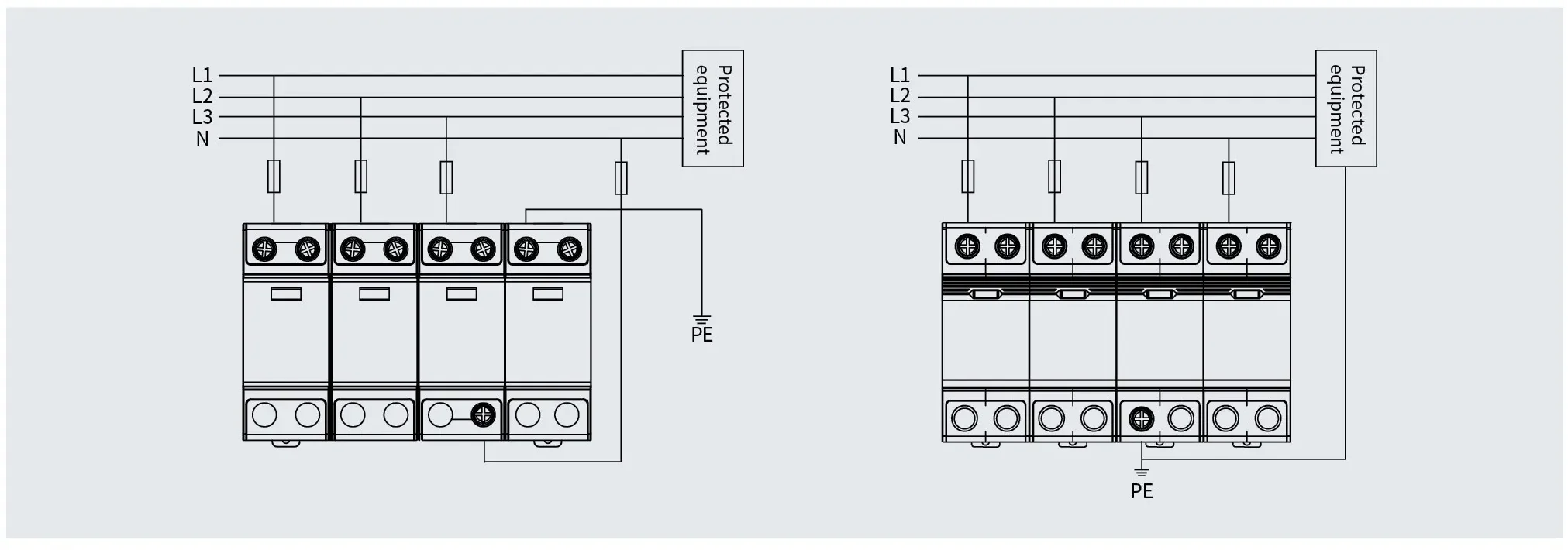
Wiring Diagram & Connection
The LT-T25 is a pure Type 1 voltage-switching device: no In or Imax figure applies, so the wiring only has to carry the lightning impulse and the follow current that the gap quenches. Terminals and signal contact are shown at the right of the diagram.
LT-T25 — One Duty, Done Properly
There is a design philosophy argument buried in the choice between this device and the combined version beside it. A combined unit is compact and hard to misapply; a dedicated unit is more capable at its own job and makes the staging of the design explicit. Neither is wrong, and the selection usually follows the competence of whoever will install and inspect the panel.
The figures that justify the dedicated device are the withstand values. Twenty-five kiloamps of 10/350 lightning current, 1200V of temporary overvoltage tolerance and 50kA of short-circuit withstand, all in one body, are the marks of an entrance device built for an entrance rather than for a catalogue page that needs to cover two categories at once.
Factory-Direct OEM / ODM Manufacturer
We Manufacture, You Brand
Module moulding in house · MOV selection and thermal parts · OEM branding
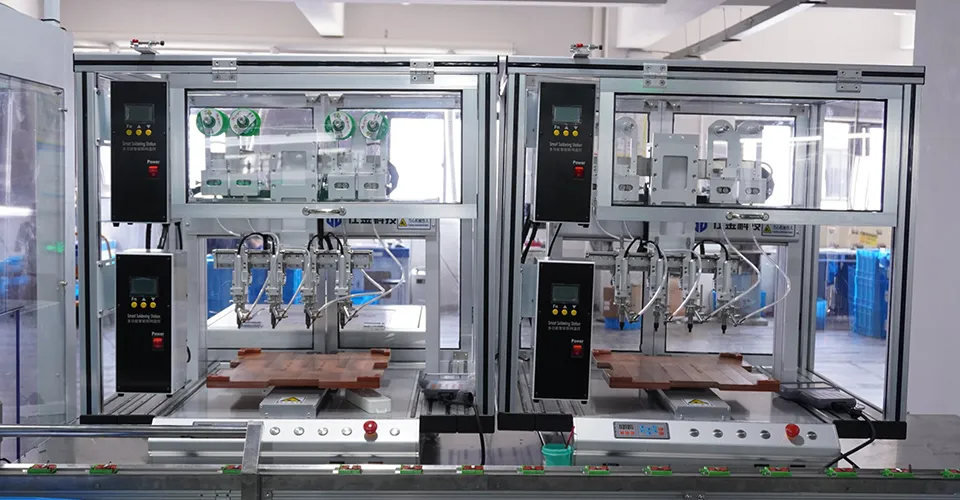
Every LT component on this page — housing, busbar, varistor stack and thermal disconnector — is produced and assembled at our own plant in Liushi, Zhejiang, which is why a special voltage, pole count or marking requirement costs you a production slot rather than a new supplier qualification. The full AC range sits on our Type 1 SPD range page.
- OEM branding — logo, model number and rating text printed on the module front and the carton.
- ODM options — housing colour, pole count, voltage window, remote-signal contact and retail packing.
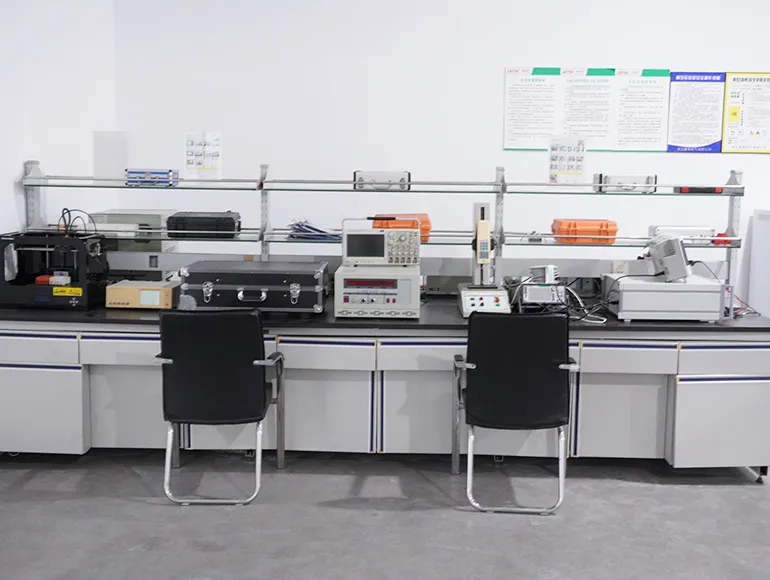
- Testing — residual voltage and thermal trip checked on every unit, records kept per batch.
- MOQ — quoted per configuration — mixed models can share one container.

Buying Guide
- Confirm the required Iimp from the risk assessment and check the 25kA rating covers it.
- Establish where the Type 2 stage will sit and confirm the cable length between the two devices.
- Select the voltage code, noting that the protection level rises from 1.4kV at 275V to 2.0kV at 440V.
- Confirm the fault level at the entrance against the 50kA withstand.
- Wire the remote contact into the monitoring system and record the device in the maintenance schedule.
Where the LT-T25 is the wrong choice
Do not use it as the only device in an installation. Its Type 1 rating covers the entry position, and the residual voltage still has to be reduced by a Type 2 stage before equipment. Where the risk assessment calls for a gap rather than a hybrid — typically where follow current must be avoided entirely — the LT-X30 is the correct choice.
How We Support Your Business
OEM / ODM
We print your brand on the module front and pack to your carton design; ODM covers new pole layouts, alternative voltage windows and signalling options.
Tooling in house · Branded packing · ODM design

Wholesale
Volume pricing on the whole LT range, with sample lots for tender packages and full containers for stock orders.
Bulk pricing · Samples · Firm lead times

Distributor Support
Technical files, selection curves and local standard guidance so your sales team can specify the right type on the first visit.
Datasheets · Selection help · Training
Ready to Order the LT-T25?
If your design separates the Type 1 and Type 2 duties, send us the entrance details and the position of the second stage, and we will confirm the LT-T25 code and the co-ordination.
Frequently Asked Questions
What does pure Type 1 mean?
It means the device is tested and rated only for the 10/350 µs lightning waveform, with no Type 2 (8/20 µs) rating claimed. It is intended as the first stage, with a Type 2 device downstream.
Is a hybrid Type 1 better than a spark gap?
It depends on the position. A hybrid clamps lower, which helps the downstream stage; a gap has no leakage and no follow current, which suits entries where those properties matter. Neither is universally better.
What is the difference between 25kA and 30kA Iimp?
Both are Type 1 ratings; the difference is charge capacity per pole. The right figure comes from the risk assessment, and the two models share the same panel footprint, so changing rating does not change the layout.
Why is the short-circuit withstand important?
If the element fails, it fails as a short circuit. The device must contain that fault until the backup protection clears it, and 50kA covers the fault levels found at service entrances.
Is the remote contact optional?
It is fitted as standard. At an entrance device that is often out of sight, the signal is the difference between knowing and assuming.
Which codes are available?
275, 320, 385 and 440V, with protection levels from 1.4kV to 2.0kV. The code is chosen from the system voltage and the equipment withstand.



Reviews
There are no reviews yet.