

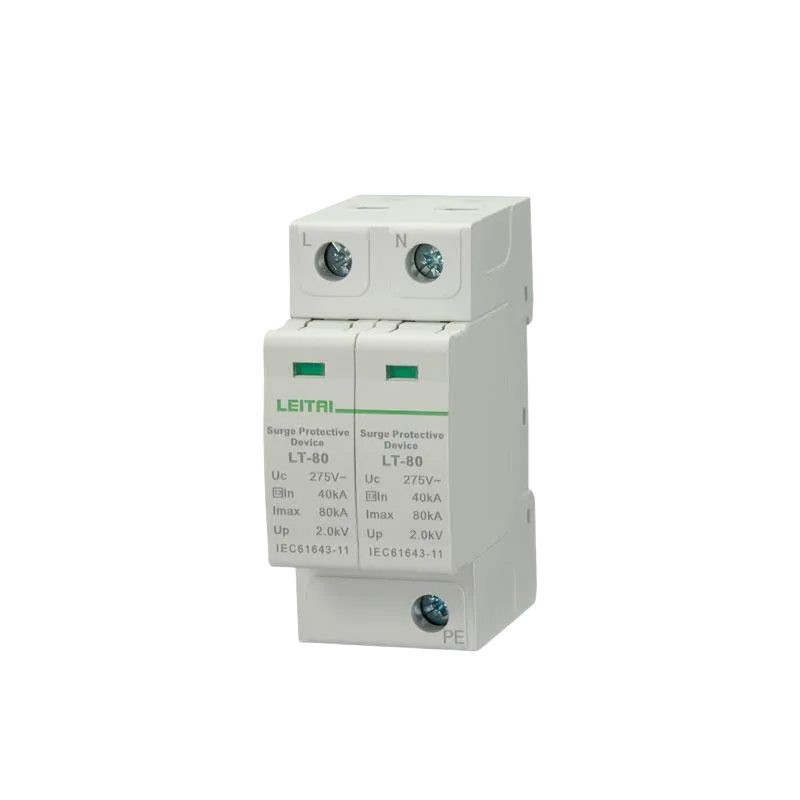
The LT-80 is an 80kA Type 2 surge protector for riser and sub-main panels, rated In 40kA and Imax 80kA. It is one width step above the LT-60 with the same clamping level, and it is specified where a vertical riser serves several floors and the protection point sits partway up the building.
Type 2 Surge Protector 80kA for Riser Panels
A Riser Panel Is Not a Final Board
Vertical distribution in a multi-storey building concentrates many downstream circuits behind one panel, and the cable run from the intake is long enough to pick up induced transients along the way. Forty kiloamps nominal gives that panel a discharge path proportionate to what it actually collects.
One Width Step, Everything Else Unchanged
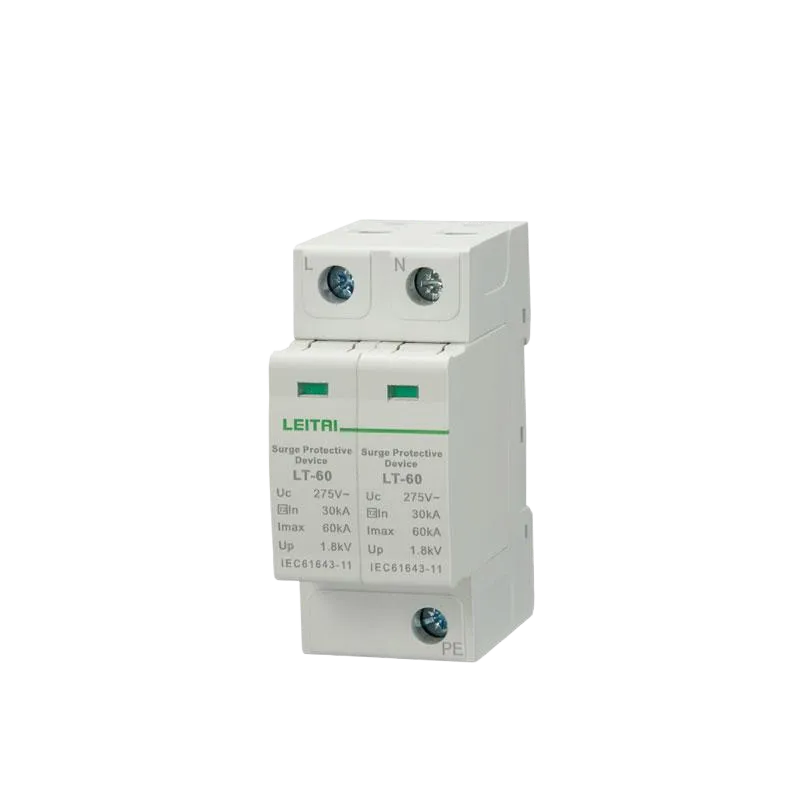
The LT-80 is built in the same body as the LT-60, so a specification that moves from 60kA to 80kA does not change the cut-out, the comb length or the distance to the earth bar. For a consultant issuing a generic drawing across several buildings, that is the property that keeps the detail drawing reusable.
Cooler Operation at Continuous Load
The larger stack runs at a lower current density for the same leakage, which is why these devices are often chosen in plant rooms where ambient temperature is already elevated. The electrical benefit is a longer service interval rather than a lower clamping voltage.
Paired With a Low-Up Device Downstream
At 2.5kV this unit is the energy absorber, not the last word in clamping. In a riser application it is normally followed at floor level by a 20kA or 40kA device with a lower protection level, and the two are selected together rather than separately.
Specifications
| Series | LT-80 heavy duty AC surge protective device |
|---|---|
| IEC classification | Type 2 / Class II, tested to IEC 61643-11 |
| Maximum continuous voltage Uc | 385 / 440 VAC |
| Nominal discharge current In | 40 kA (8/20 µs) |
| Maximum discharge current Imax | 80 kA (8/20 µs) |
| Voltage protection level Up | ≤2.5 kV |
| Configurations | 2P and 4P standard, other layouts on request |
| Module width | 18mm per pole, identical body to LT-60 |
| Mounting | 35mm DIN rail to EN 60715 |
| Status | indicator per pole, thermal disconnector |
| Positioning | sub-main and riser level, upstream of floor boards |
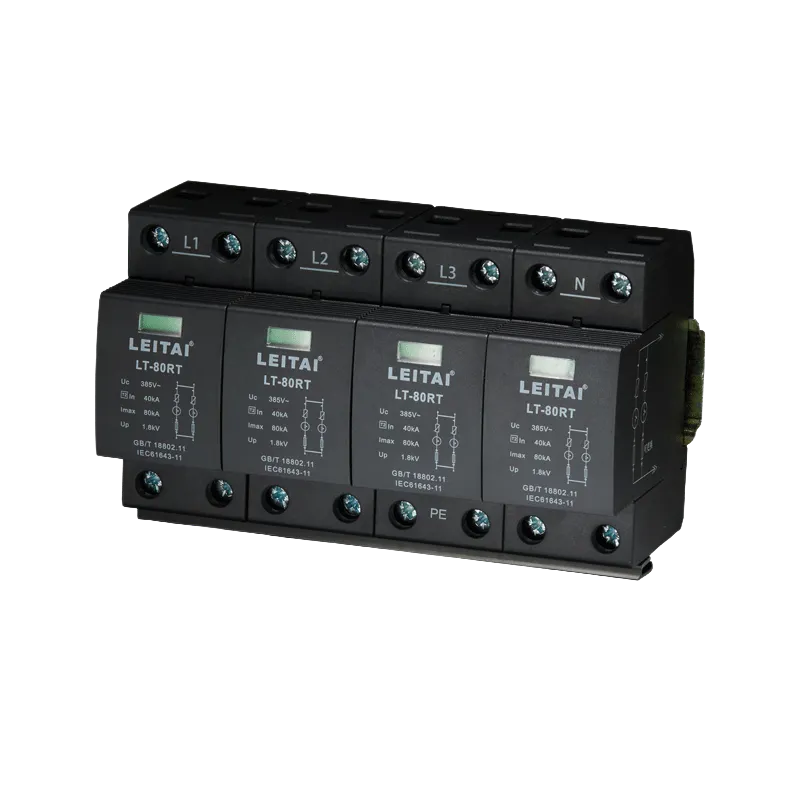
| Related models | LT-60 (30/60kA), LT-100 and LT-160 (wider body), LT-80RT plug-in version |
Reading the LT-80 specification
A riser panel is not a final board. The cable run from the main intake is long enough to add inductance, and the panels above it see a surge that has already been partly attenuated but is still above what a final-circuit device should take. The 80kA rating covers that middle position, and the 40kA In figure is what allows it to operate repeatedly without drifting.
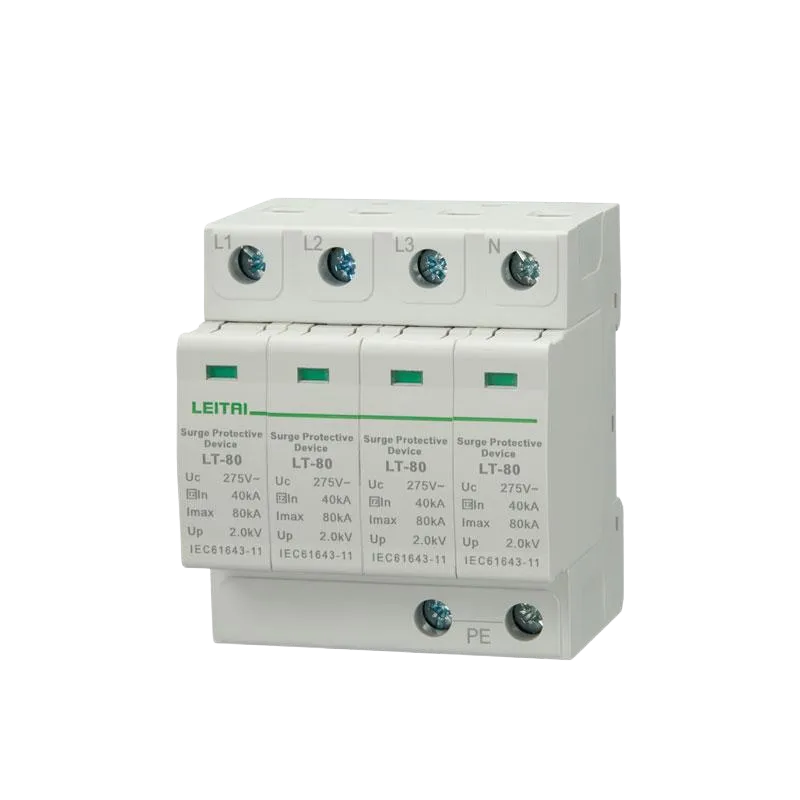
Width grows by one step over the LT-60 but the terminal arrangement and the 2.5kV clamping level stay the same, so a riser design can be standardised across both ratings without changing the enclosure.
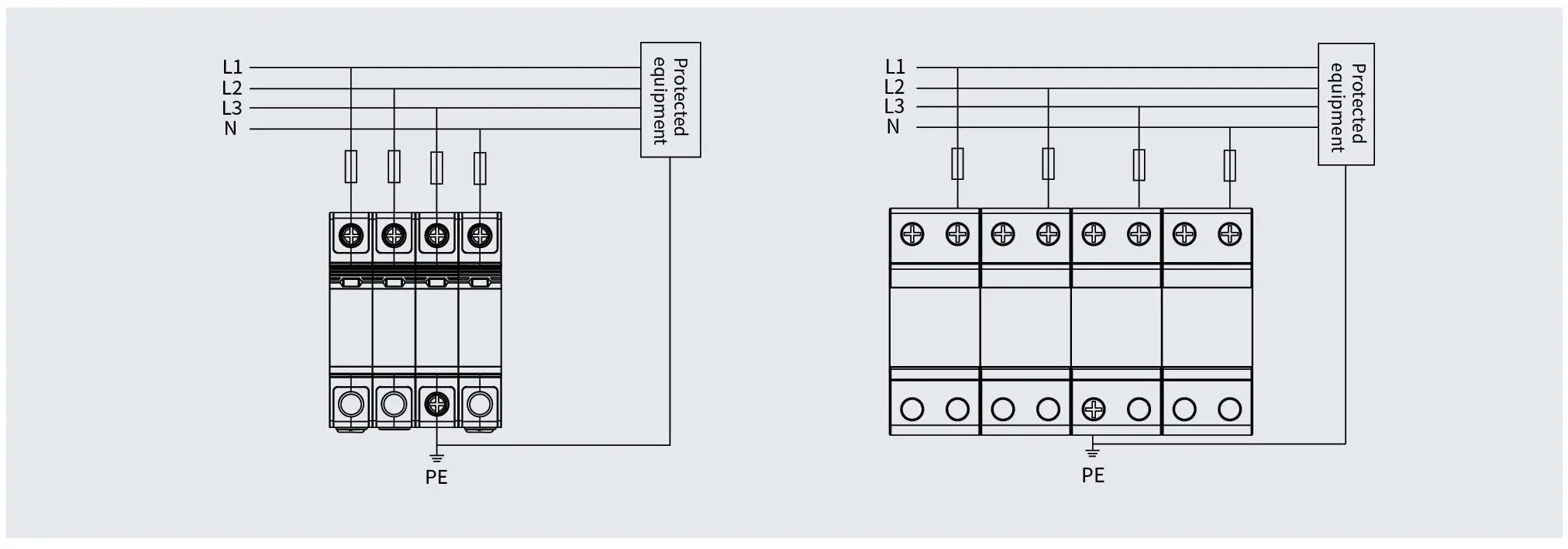
Wiring Diagram & Connection
The LT-80 shares the LT-60 housing, so a panel already drilled for LT-60 drops the 80 kA unit into the same footprint. The only adjustment is the feeder tail: it has to carry the higher Imax without adding loop length.
LT-80 — Sizing a Riser Without Oversizing the Building
A riser panel collects the transients of every floor it serves, which is why the same 40kA device that looks generous in a small plant room looks marginal at the bottom of a twelve-storey riser. The 80kA maximum figure exists for that accumulation, and it comes without the width penalty that the 100kA class carries.
The choice between LT-80 and the wider LT-100 is usually made on fault level and on how much of the building sits downstream, not on the surge current alone. Where the incoming feeder is long, the transformer is close by, or the panel also feeds lift and pump loads, the next step up is justified. Where the riser serves ordinary lighting and socket circuits, this rating is the economical and technically sound stopping point.
Factory-Direct OEM / ODM Manufacturer
We Manufacture, You Brand
Module moulding in house · MOV selection and thermal parts · OEM branding
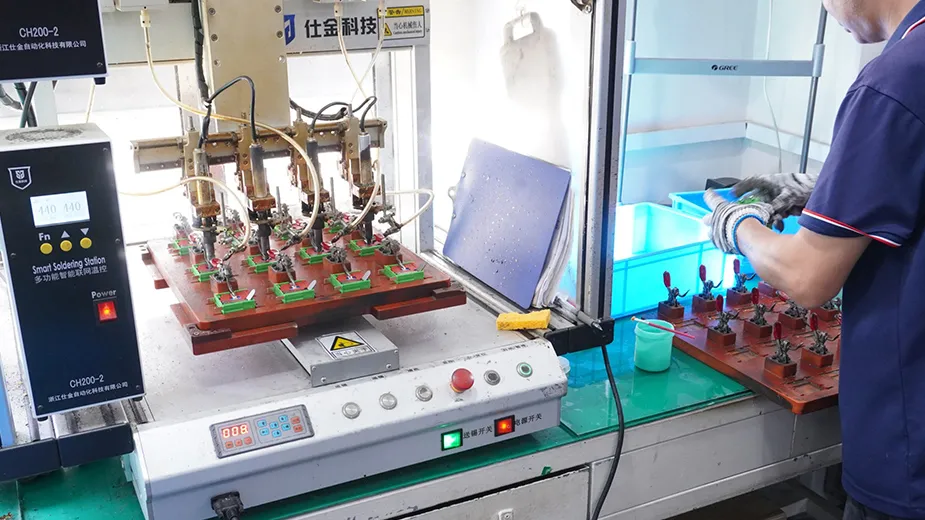
Every LT component on this page — housing, busbar, varistor stack and thermal disconnector — is produced and assembled at our own plant in Liushi, Zhejiang, which is why a special voltage, pole count or marking requirement costs you a production slot rather than a new supplier qualification. The full AC range sits on our Type 2 SPD range page.
- OEM branding — logo, model number and rating text printed on the module front and the carton.
- ODM options — housing colour, pole count, voltage window, remote-signal contact and retail packing.
- Testing — residual voltage and thermal trip checked on every unit, records kept per batch.
- MOQ — quoted per configuration — mixed models can share one container.
Buying Guide
- Count the downstream boards the panel serves and note their individual protection ratings.
- Check the fault level at the panel; high fault currents push the backup protection choice, not the SPD rating.
- Confirm the pole arrangement matches the earthing system, particularly whether a neutral conductor is distributed.
- Decide the second stage at floor level and check the cable length between the two devices supports co-ordination.
- Confirm the enclosure depth suits the SPD plus its backup device before the panel is fabricated.
Where the LT-80 is the wrong choice
It is not a main-board device: at the intake, the fault level and the energy normally call for the LT-100 or LT-160. It is also not a substitute for final-board protection — a floor board still needs its own Type 2 or Type 3 device.
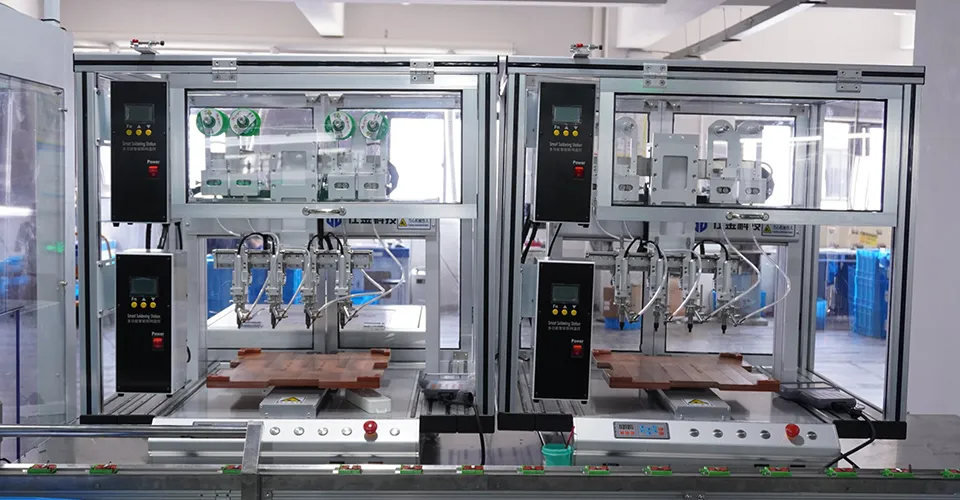
How We Support Your Business
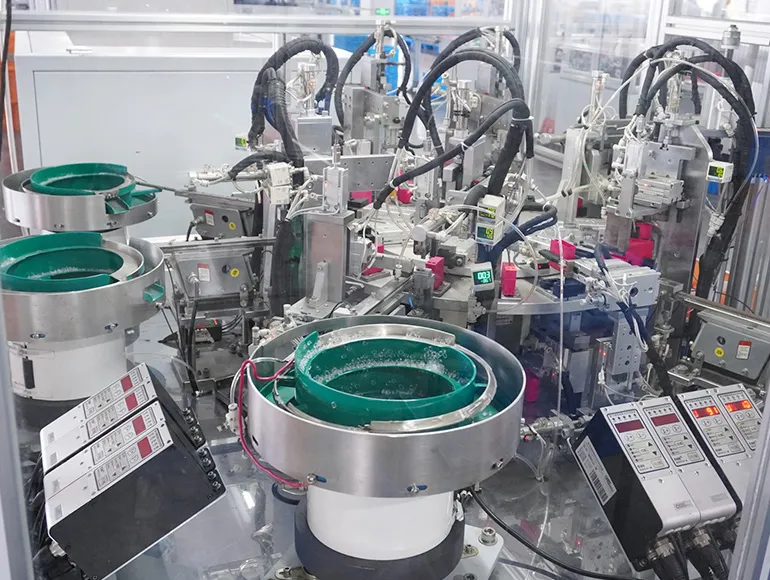
OEM / ODM
We print your brand on the module front and pack to your carton design; ODM covers new pole layouts, alternative voltage windows and signalling options.
Tooling in house · Branded packing · ODM design
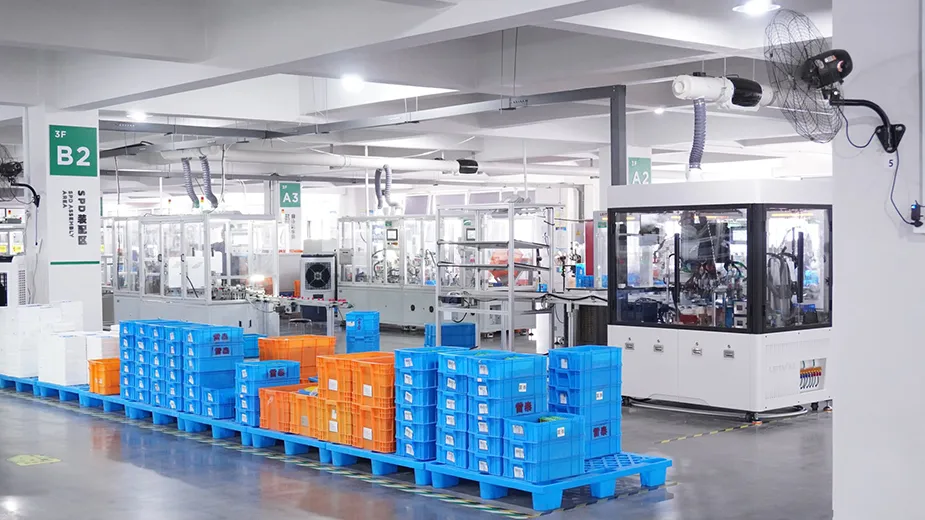
Wholesale
Volume pricing on the whole LT range, with sample lots for tender packages and full containers for stock orders.
Bulk pricing · Samples · Firm lead times

Distributor Support
Technical files, selection curves and local standard guidance so your sales team can specify the right type on the first visit.
Datasheets · Selection help · Training
Ready to Order the LT-80?
Share the riser diagram and the fault level at the panel, and we will confirm whether the LT-80 or the wide-body LT-100 is the better fit, with the backup protection sized for your board.
Frequently Asked Questions
What is a riser panel SPD?
It protects the distribution point on a vertical riser serving several floors, where the surge has been partly attenuated by cable length but is still above final-circuit levels.
80kA Imax or 40kA In, which matters?
Both, for different reasons. In 40kA is the repeated-duty rating that specifications use; Imax 80kA is the single-shot limit.
Can it replace a main-board device?
No. At the intake the energy and fault level are higher, and the 100kA or 160kA units are the correct ratings.
What happens at end of life?
The thermal disconnector opens and the status indicator on the affected pole changes. The device is then replaced as a module; it does not reset and must not be left in service with an open indicator.
Which backup device do you recommend?
A fuse or breaker rated to the SPD’s stated maximum backup protection for the prospective fault current at the panel, or a dedicated SPD disconnector from the LT-SSD range. We state the recommendation on the quotation for the specific board.
Is a plug-in version available at this rating?
Yes — the LT-80RT uses plug-in cartridges on a common base, which is preferred where maintenance staff replace cartridges without isolating the panel.


Reviews
There are no reviews yet.