

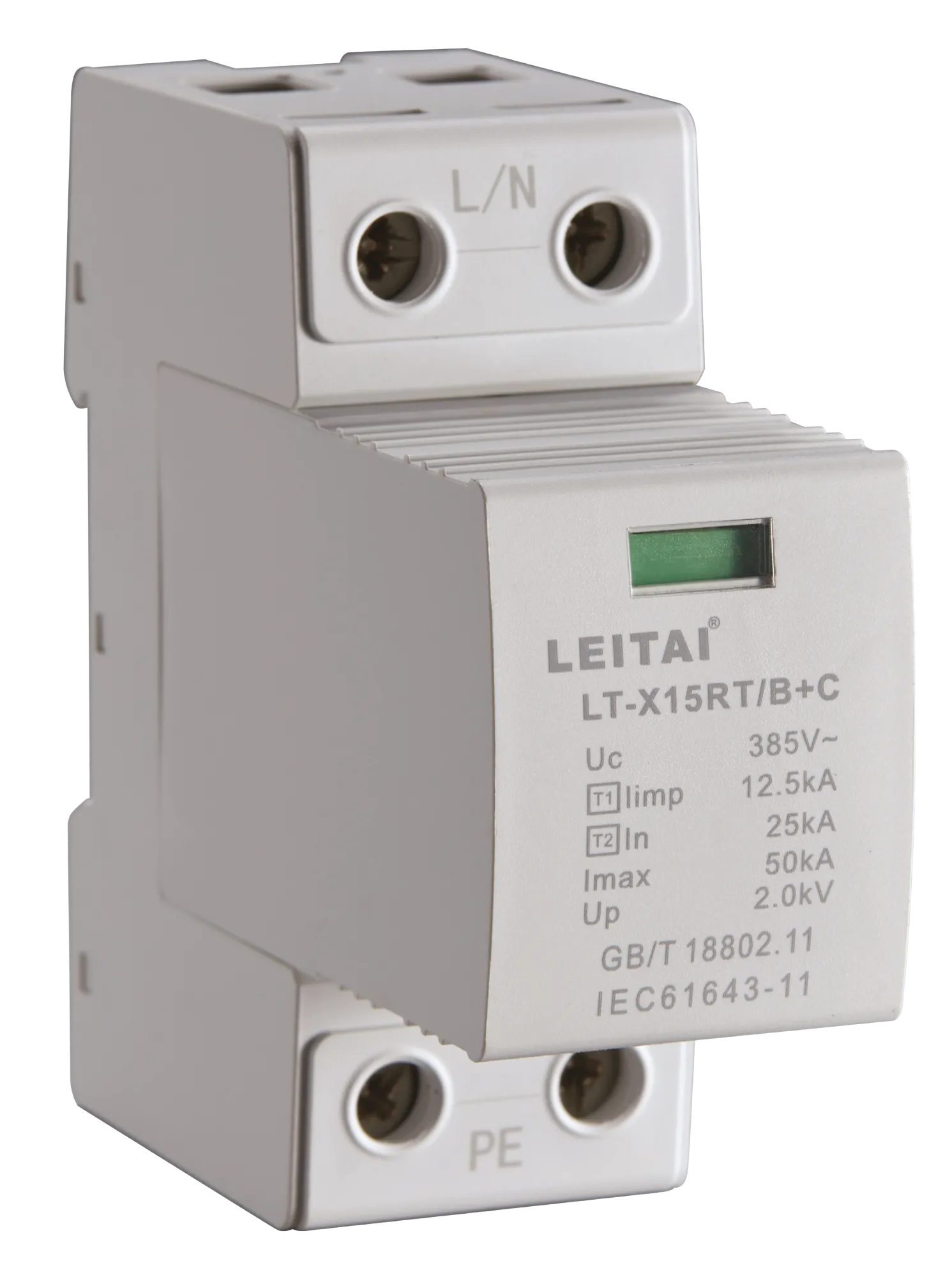
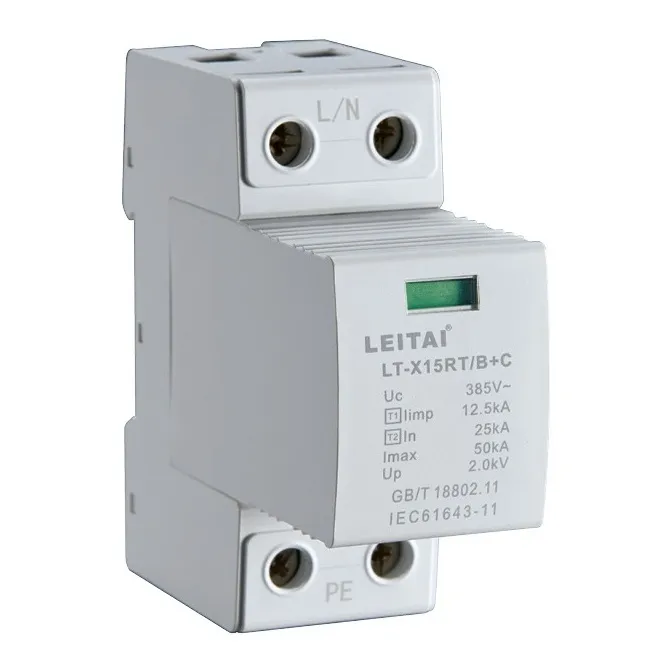
The LT-X15RT is a Type 1+2 combined surge arrester for rail traction cabinets, rated 12.5kA Iimp (10/350 µs) and 40kA Imax (8/20 µs). It is built around two requirements that building devices do not face: continuous vibration, and the need to replace the protective element during service without dismantling the cabinet wiring.
Type 1+2 Surge Arrester for Rail Traction
One Device, Two Test Waveforms
A combined B+C device is tested with both the 10/350 lightning waveform and the 8/20 surge waveform, which means one module replaces the two that a staged design would otherwise need. On a rail vehicle, where every kilogram and every cubic centimetre of cabinet is contested, that consolidation is the main reason the product exists.
Built for Vibration, Not Just Voltage
Rolling stock imposes a mechanical duty that a static panel never sees: continuous vibration, thermal cycling and shock at coupling. The internal fuse carrier and terminal design are arranged so that neither the element nor its connection can migrate under that treatment, which is the usual failure mode of general-purpose devices in traction service.
Fuse You Can Change in Service
The replaceable fuse is accessible without dismantling the terminal wiring, so a maintenance depot can restore protection at the next exam rather than at the next overhaul. That changes the spares policy: cartridges and fuses on the shelf instead of complete assemblies.
Traction and Station Duties Differ
On a vehicle the device protects control electronics from the traction supply and from transients coupled through the rails. In a traction substation or a station board the duty is closer to an industrial installation. Both are served by the same product, but the voltage code and the pole arrangement differ, and we confirm them per application.
Specifications
| Series | LT-X15RT combined B+C surge protective device |
|---|---|
| IEC classification | Type 1+2 combined, tested to IEC 61643-11 |
| Maximum continuous voltage Uc | 275 / 385 VAC |
| Impulse discharge current Iimp | 12.5 kA (10/350 µs) |
| Nominal discharge current In | 20 kA (8/20 µs) |
| Maximum discharge current Imax | 40 kA (8/20 µs) |
| Voltage protection level Up | ≤2.0 kV |
| Internal protection | thermal trip with replaceable fuse |
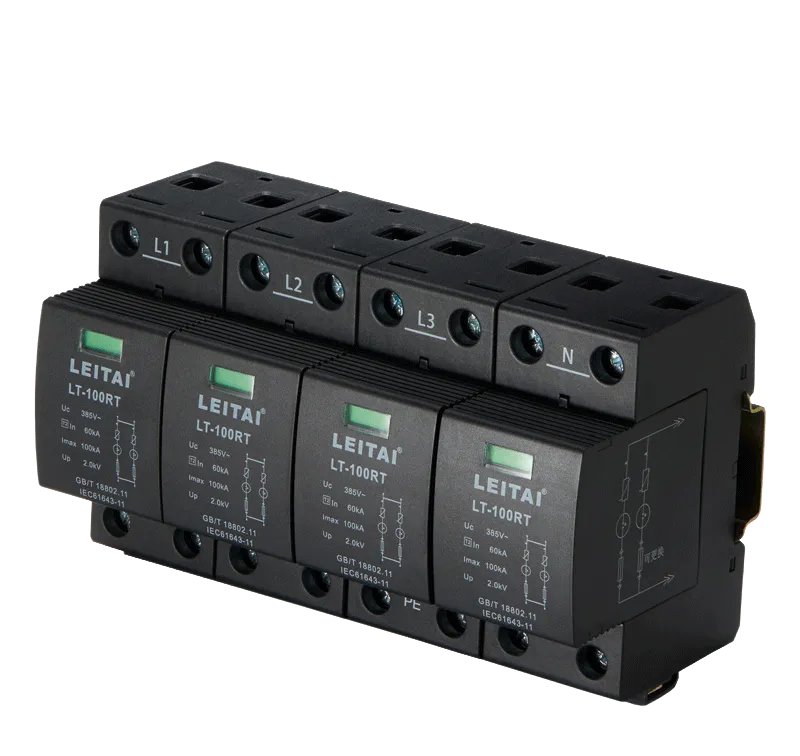
| Configurations | 1P, 2P, 3P, 4P |
| Mounting | 35mm DIN rail, rail vehicle or cabinet |
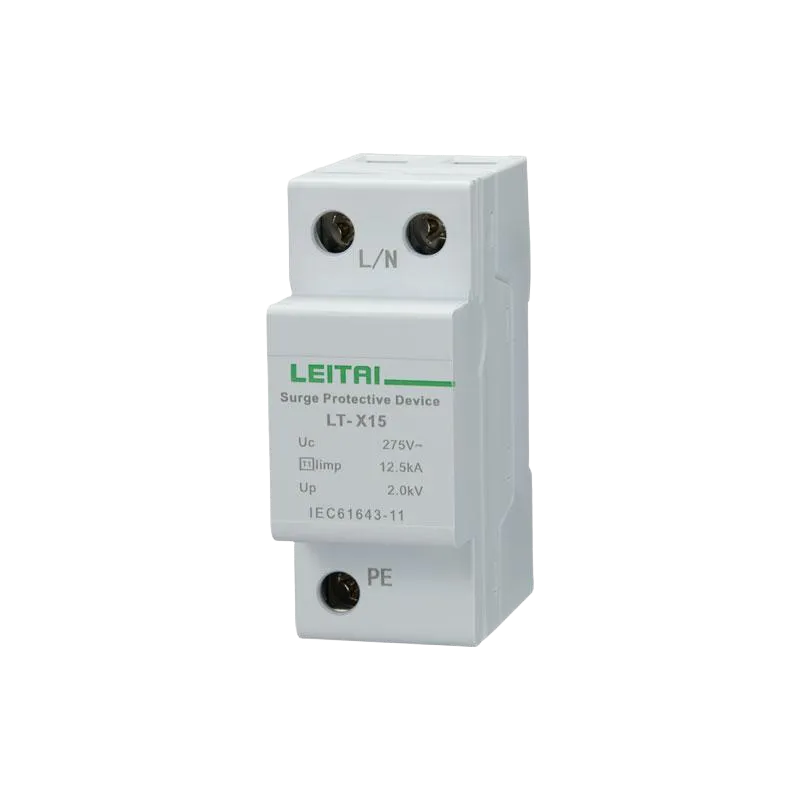
| Related models | LT-20RT (Type 2 with fuse), LT-X15 (separate Type 1 stage) |
Reading the LT-X15RT specification
The combined rating matters in traction because both waveforms arrive at the same point. A lightning strike on the overhead line produces a 10/350 component, while switching in the traction converter produces repeated 8/20 surges. A device rated for only one of the two is underspecified for the position.
The fuse is serviceable from the front, and the housing is restrained against vibration rather than relying on the DIN rail clip alone. Both details are what separate a traction cabinet device from a building SPD mounted in the same enclosure.
Wiring Diagram & Connection
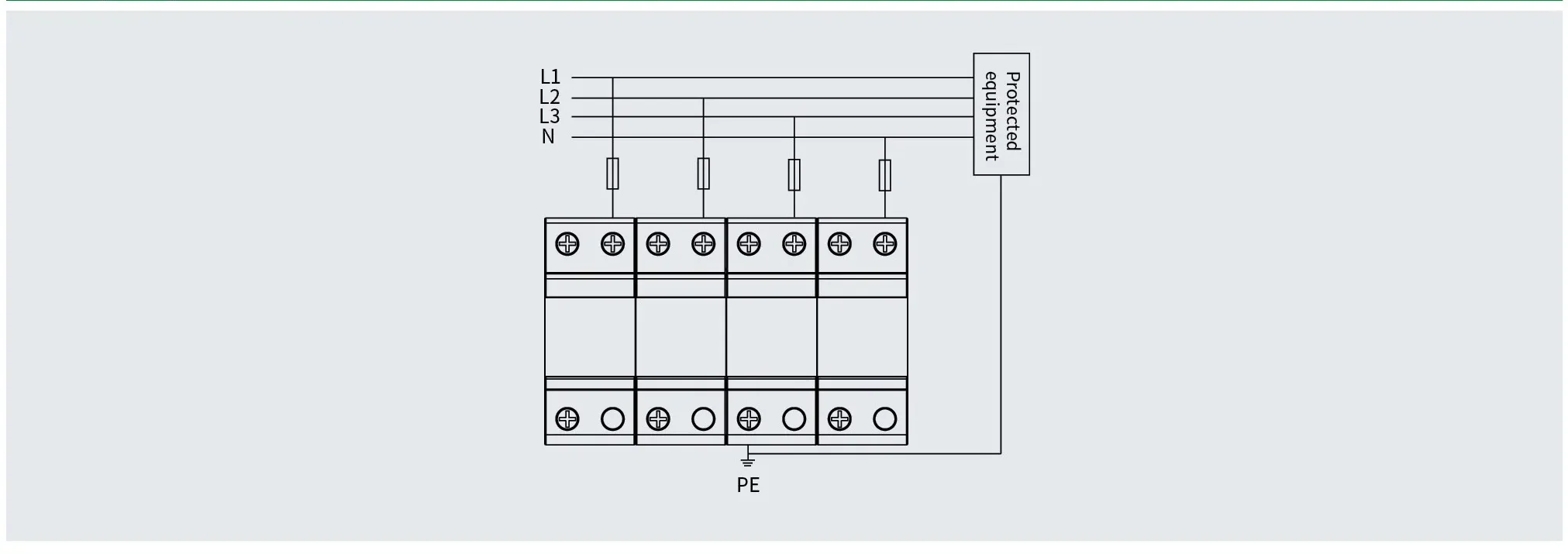
The LT-X15RT combines a Type 1 gap and a Type 2 varistor in one housing with a thermal disconnector and a replaceable fuse built in. The diagram shows the series fuse in the line side, which is what allows it to be fitted without an external back-up device.
LT-X15RT — Two Stages in the Space of One
A conventional design puts a Type 1 device at the entry and a Type 2 device downstream, which is correct but expensive in cabinet space. On a rail vehicle the cabinet is already full, and the cable run between the two devices is short enough that co-ordination becomes an argument rather than a calculation. A combined device removes that argument.
The trade is that a combined unit cannot be optimised for either duty as sharply as a dedicated one: its clamping voltage sits at 2.0kV, which is adequate for vehicle control electronics but higher than a purpose-built Type 2 stage would give. Where the load is unusually sensitive, a Type 3 device at the equipment end still has a role, which is why this product is normally specified as part of a small chain rather than on its own.
Factory-Direct OEM / ODM Manufacturer
Your Specification, Our Production Line
Type-tested platform · private-label marking · batch test records
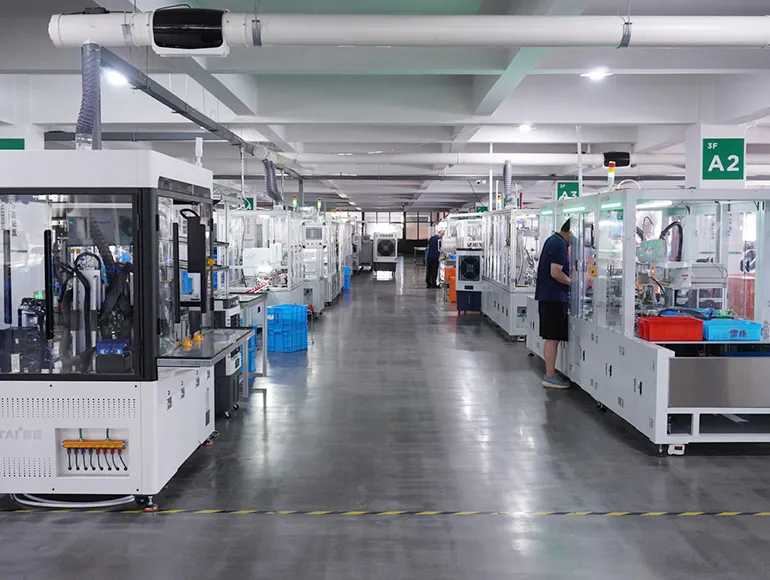
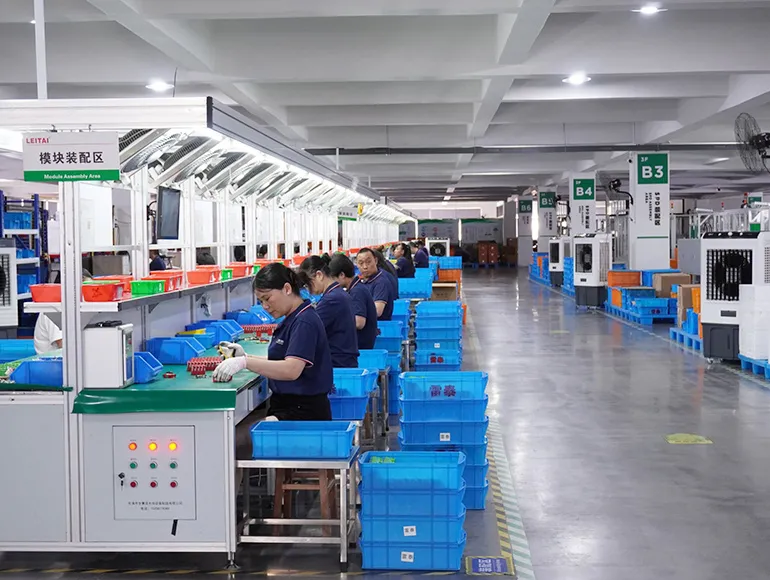
We quote from a real production schedule, not from a stock list, which is why a customer changing from a competitor’s module to ours usually keeps the same panel layout and only changes the label. Everything needed for that switch — drawings, curves and test sheets — is available before the order. The wider family is on AC SPD range.
- Pre-order pack — datasheet, dimension drawing and declaration for your technical file.
- Branding — printed fronts, side references and instruction sheets in your language.
- Consistency — same platform across the range keeps panel stock simple for your customers.
- Support — a named contact for repeat orders and technical questions.
Buying Guide
- Confirm the supply voltage on the vehicle or at the station board; 275V and 385V codes cover the usual traction-derived auxiliary supplies.
- Check the applicable railway standards and the vibration and shock class the equipment must meet.
- Decide the pole arrangement from the earthing arrangement of the auxiliary supply.
- Plan the fuse and cartridge spares for the depot, since these are service items.
- Review whether a Type 3 device is needed at the electronics end when the withstand is low.
Where the LT-X15RT is the wrong choice
It is not the cheapest way to protect a building entry, and it is not intended for one. Where vibration and service access are not constraints, the LT-X15 plus a Type 2 stage covers the same electrical duty at lower cost. The 275/385V codes also mean it cannot be applied to a 690V traction supply without checking the system voltage first.
How We Support Your Business
OEM / ODM
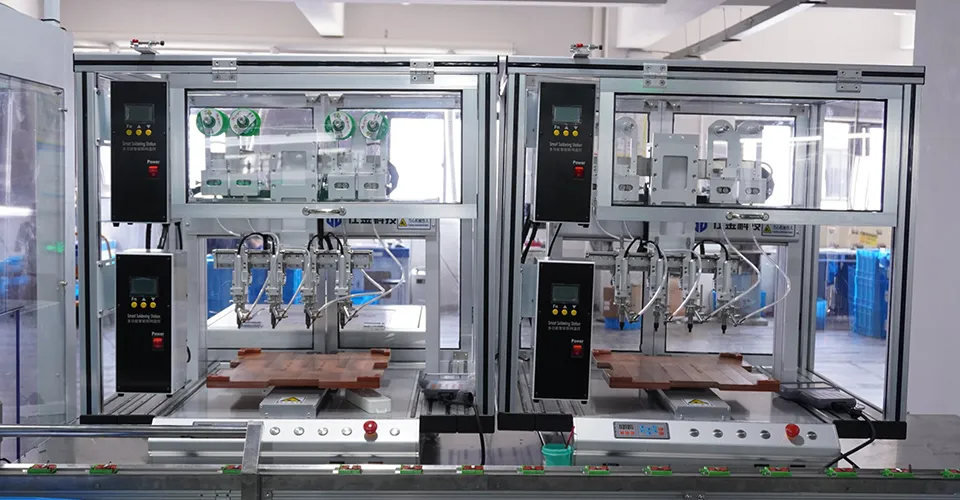
We print your brand on the module front and pack to your carton design; ODM covers new pole layouts, alternative voltage windows and signalling options.
Tooling in house · Branded packing · ODM design
Wholesale
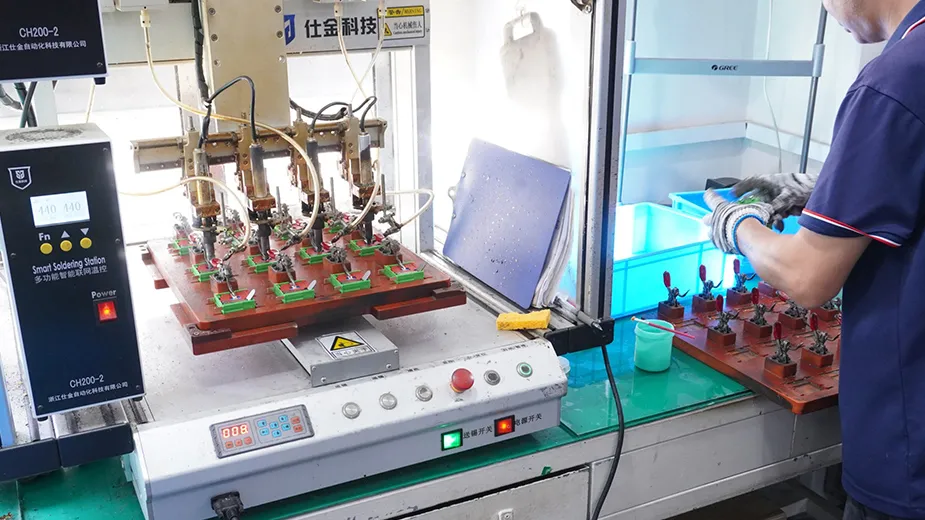
Volume pricing on the whole LT range, with sample lots for tender packages and full containers for stock orders.
Bulk pricing · Samples · Firm lead times
Distributor Support
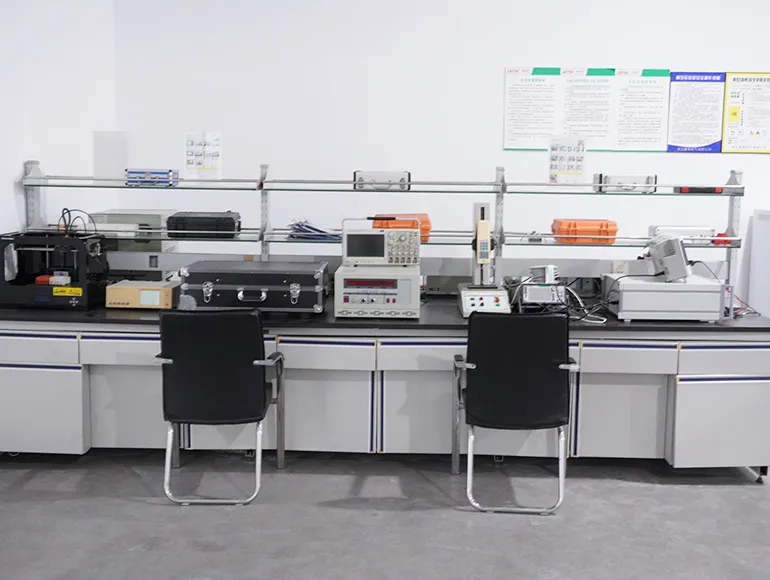
Technical files, selection curves and local standard guidance so your sales team can specify the right type on the first visit.
Datasheets · Selection help · Training
Ready to Order the LT-X15RT/B+C?
Tell us the auxiliary supply voltage, the earthing arrangement and the standard the vehicle or station must meet, and we will confirm the LT-X15RT configuration and the spares list.
Frequently Asked Questions
What is a traction surge arrester?
It is a combined Type 1+2 device for rail vehicles and station cabinets, rated for both the lightning waveform on the overhead line and the repeated switching surges produced by traction converters.
Why does a traction SPD need a serviceable fuse?
Because the cabinet is often inaccessible and the whole assembly cannot be removed for a single failed element. A front-access fuse allows the protective part to be replaced during a service window.
Can it be used in a normal building board?
It can, but the vibration and service-access features are unnecessary there. A standard Type 1 device with a separate Type 2 stage is the more economical specification.
Can it be used in a traction substation?
Yes, in the station and auxiliary boards. The same product serves both, but the voltage code and pole arrangement are confirmed per application.
Which standards apply?
The device is type tested to IEC 61643-11. Rail projects often add mechanical and environmental requirements from their own standards, and we confirm those against the project specification.
Does it need an external backup protection?
The internal fuse provides the protection function, and the upstream device is selected for the installation’s fault level. We state the requirement per application.


Reviews
There are no reviews yet.