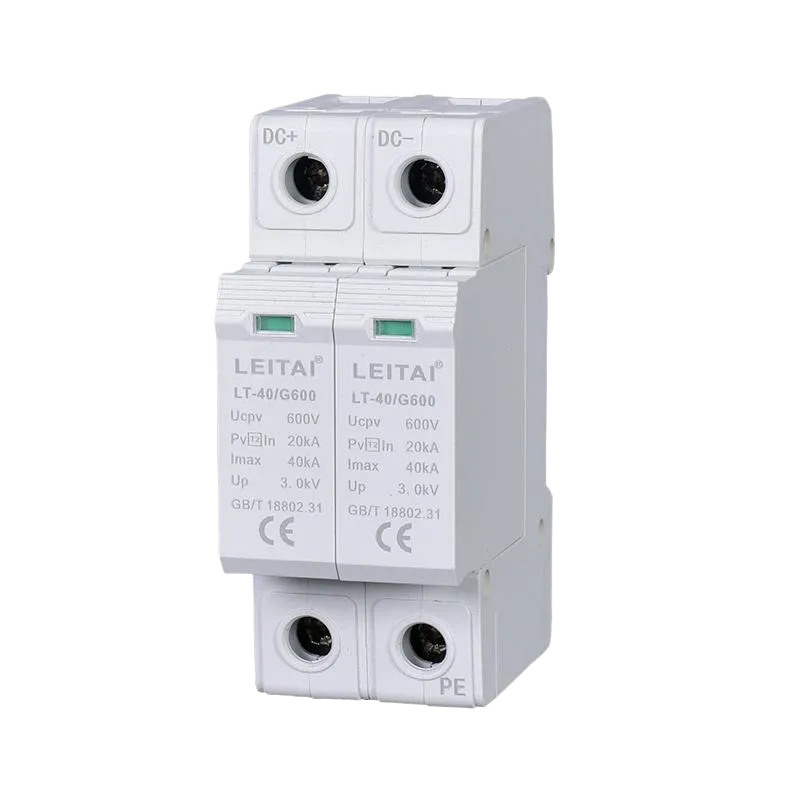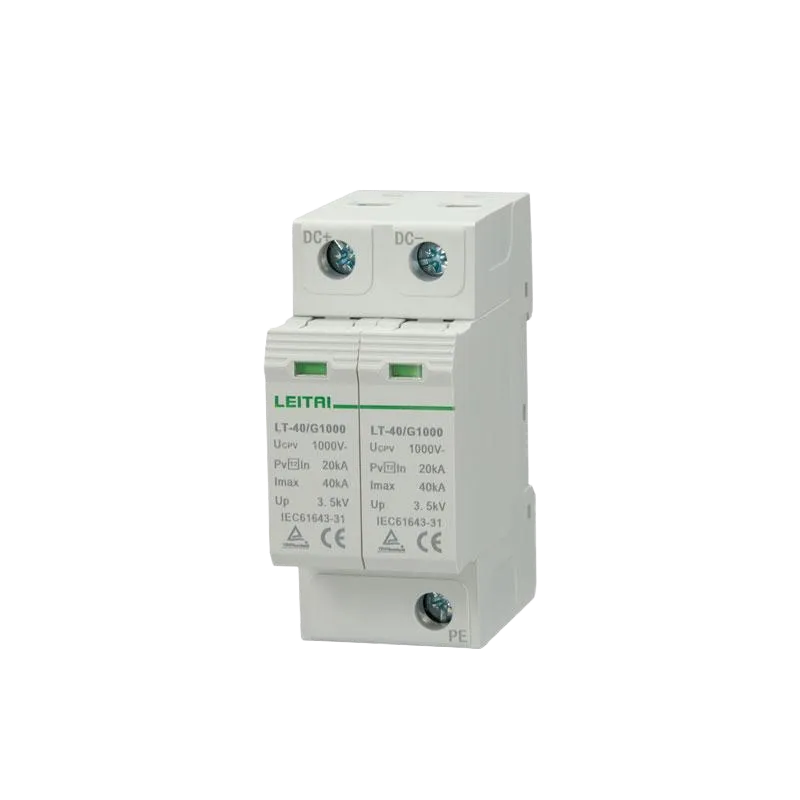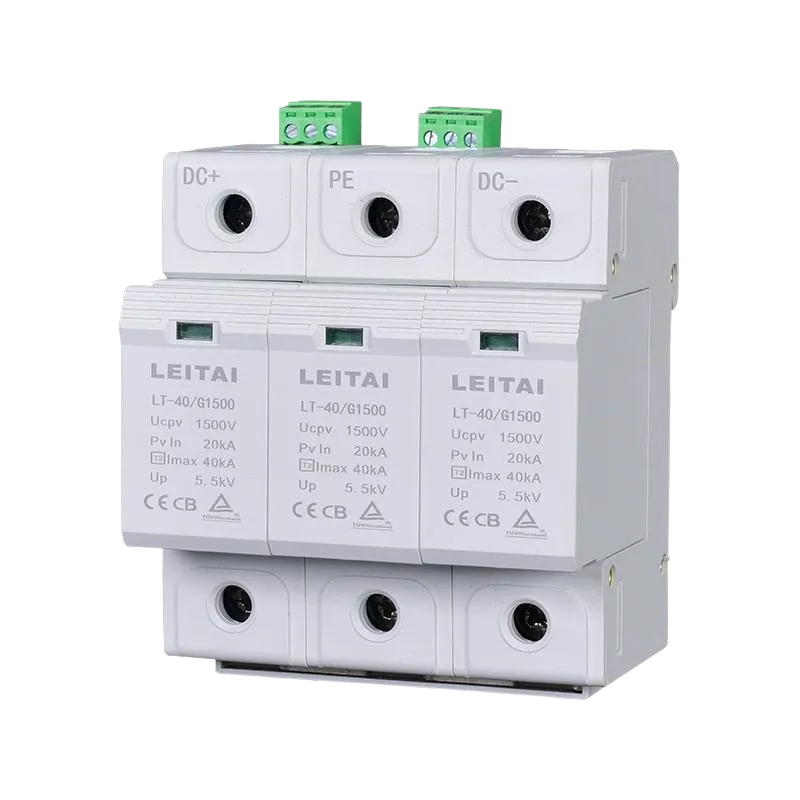

MidNite Solar offers four primary models of its Surge Protective Device (MNSPD). Two of these models include “300” in their names; while they share the same enclosure dimensions, NEMA 4X ingress protection rating, and a 300V maximum nominal voltage rating, they differ significantly in their internal circuit design, clamping voltage, and intended applications. They are absolutely not interchangeable. Consequently, it is easy to confuse these models when replacing existing units or selecting equipment for a new solar power system. Please first determine the specific type of circuit you need to protect.
In short: The MNSPD-115 is the typical choice for a 12, 24, or 48 V battery circuit. The MNSPD-300-AC is the usual choice for a 120 V or 120/240 V AC circuit. The MNSPD-300-DC is intended for PV circuits up to 300 V DC, and the MNSPD-600 covers compatible PV circuits up to 600 V DC. For PV, check the string’s maximum open-circuit voltage in cold weather before choosing a model.
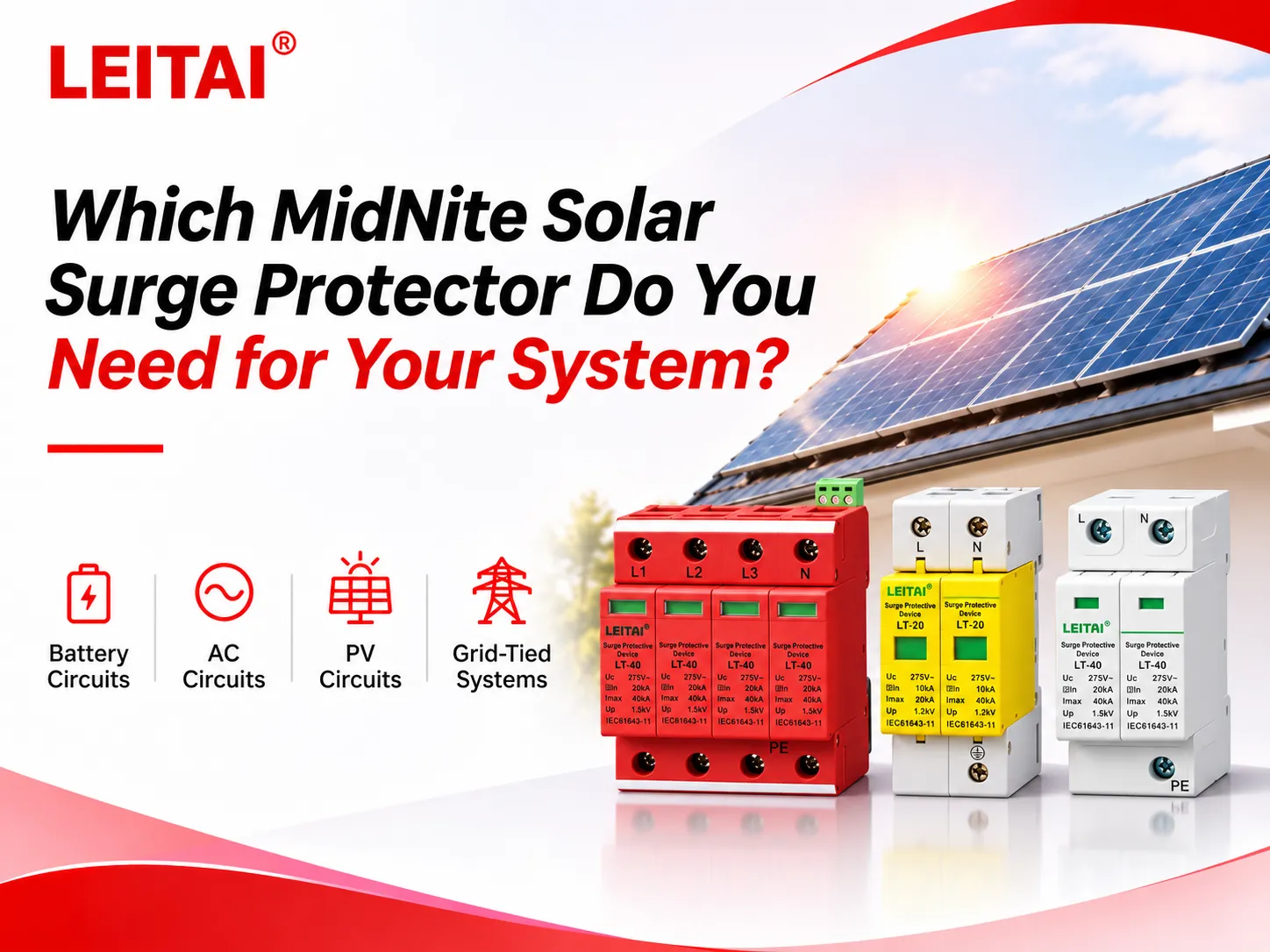
Overview of MidNite Solar Surge Protector Models
MidNite categorizes the following four wired models as UL 1449 Type 1 surge protectors. The following table shows some common uses. Please verify the specifics of the model you are interested in.
| Model | Typical circuit | Where it is used |
|---|---|---|
| MNSPD-115 | 12, 24, or 48 V DC battery circuit | Battery-side distribution in an off-grid or battery backup system |
| MNSPD-300-AC | 120 V or 120/240 V AC | AC load center or a compatible inverter AC circuit |
| MNSPD-300-DC | PV circuit up to 300 V DC | Off-grid PV combiner or the PV input of a charge controller |
| MNSPD-600 | PV circuit up to 600 V DC | Compatible grid-tied PV combiner or inverter PV input. MidNite also lists AC applications for this model. |
Comparison: MNSPD-300-AC vs MNSPD-300-DC
According to MidNite, both 300 models utilize the same surge protection technology. The principal distinction lies in the method of powering the blue indicator lights. With MNSPD-300-AC, each LED operates based on the voltage between the line and the ground. With MNSPD-300-DC, the LED indicator lights work based on voltage across both installation leads, i.e. PV +” and PV -.
120 V only AC: MidNite mentions the 300-AC in its 120 V inverter usage example. The indicator circuit is designed to work based on line-ground voltage.
120/240 V split single-phase AC: 300-AC model is usually selected for its operation. MidNite also shows that 300-DC model can also be used in its split-phase operation example because there is a voltage of 240 V between both hot wires.
PV DC: For a photovoltaic circuit not exceeding 300 DC volts, the 300-DC model allows the LED to work as intended. MidNite states that in its 300-AC usage example the LED can stay dark when the negative voltage and earth are the same.
If you notice an inactive LED indicator check both the model and the circuit. Dark LED in MidNite’s case reflects the voltage seen by the indicator. Use the MidNite Solar LED explanation and circuit diagrams to see how the indicators behave in each configuration.
What Replaces the Older MNSPD-300?
The old lightning protection unit, known as the MNSPD-300, has been split by the manufacturer into two separate versions: one for your home’s electrical system and one for your rooftop solar panels.
When purchasing a replacement, be careful not to mix them up. You can easily tell which one you need by looking at the wires connected to the back of the unit:
If it is installed in your home’s electrical panel (the box containing the main switches for your lights, refrigerator, air conditioner, etc.), choose the version with “AC” in its name (MNSPD-300-AC). Think of this as a “lightning shield” for your home’s electrical outlets, protecting your appliances from lightning strikes.
If it is installed in the enclosure connected to your rooftop solar panels (or positioned before the inverter), choose the version with “DC” in its name (MNSPD-300-DC). Think of this as a “safety helmet” for your solar panels, preventing them from being damaged or burned out by lightning.
Both units look identical and are the same size; once you have the correct one, you can simply screw it into place without needing to drill any new holes. If you are still unsure, you can take a photo of the unit’s current location with your phone and send it to the seller’s customer service team—they will be able to help you select the right one.
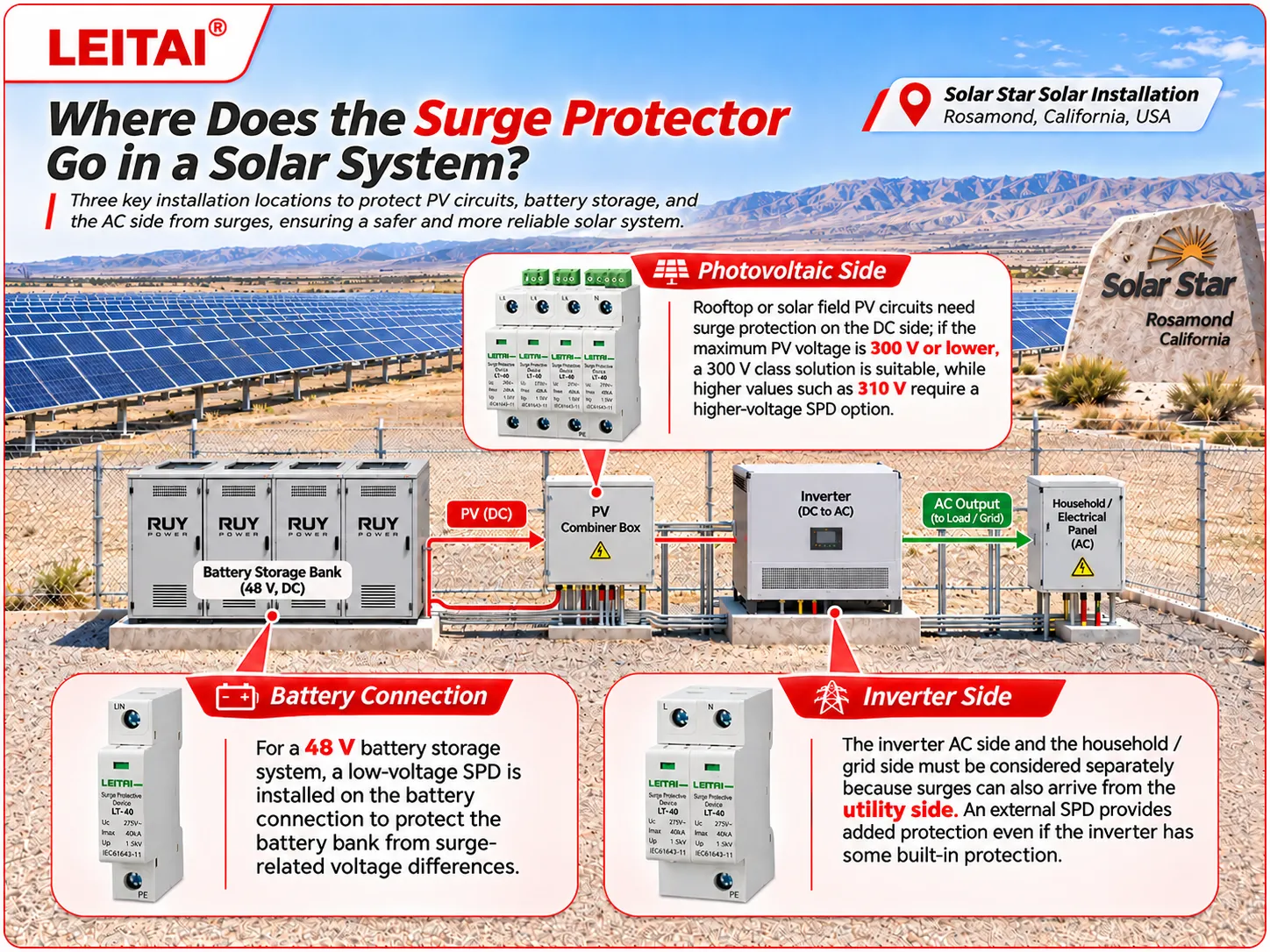
Where Does the Surge Protector Go in a Solar System?
Battery Connection
For homeowners using a 48-volt battery storage system, it is advisable to install a low voltage surge protective device such as the MNSPD-115 on the battery connection. Since there is a considerable difference in potential between the operating voltage of the solar panels and that of the battery bank, a protection device needs to be installed to prevent complications that can arise due to voltage surges in the solar energy system.
Photovoltaic Side
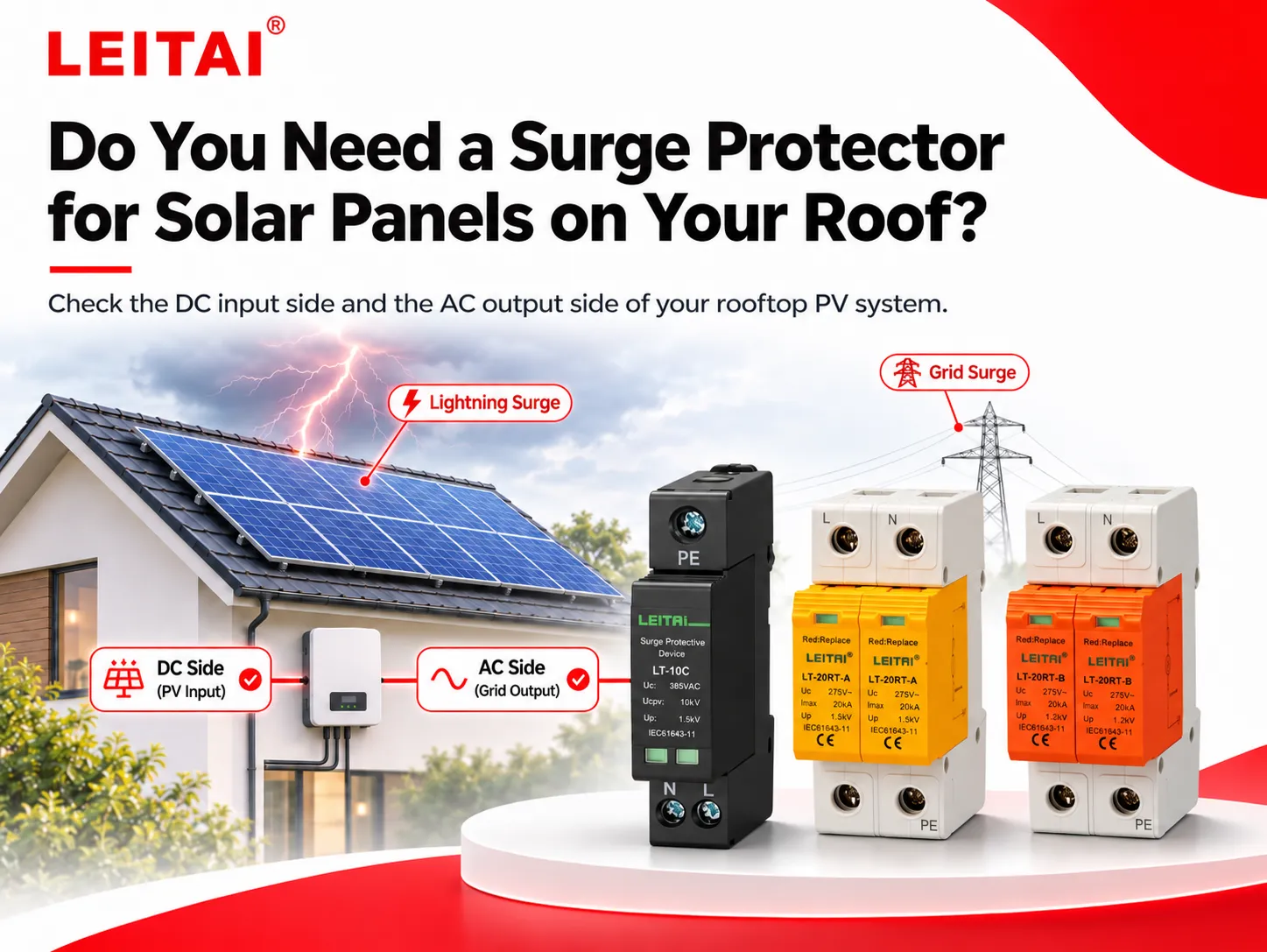
Rooftop solar panels are vulnerable to lightning strikes, and the protection against electrical surges should be executed depending on the system layout. Moveover, surge protection is essential in different areas such as the rooftop combination box, input terminals of the charge controller, or the input side of the inverter installation. The electrician will evaluate and define what would be the maximum voltage of solar panels and, if the maximum is 300 volts or lower, it can be assumed that the installation of the MNSPD-300-DC will be appropriate. Otherwise, for instance, if the calculated figure is 310 volts, the installation of MNSPD-600 should be provided.
Inverter Side
The inverter side of a solar energy system is also prone to lightning strikes since electrical surges from the utility pole may travel through the electric grid and damage electrical appliances in the household. That is why the solar input side and the AC output side of the inverter need to be considered separately in terms of surge protection. The MNSPD-300-AC is used to protect the electrical panel and household appliances from electrical surges. Although the inverter might have built-in lightning protection, an external device would be helpful to provide additional safety.
FAQ
How to connect solar surge protection device?
Key points: Connect in parallel to the PV DC-side circuit, rather than in series with the load. Keep lead lengths within 0.5 meters. Install a circuit breaker or fuse in series upstream for protection.
What are the downsides of using a surge protector?
The primary concern lies in potential safety hazards; improper selection or inadequate maintenance can actually create new points of failure. Furthermore, long-term exposure to DC voltage, combined with harsh outdoor environmental conditions, can compromise the device’s lifespan.
What is the best surge protection device for a home?
For a residential setting, the most appropriate approach is to install a Type 2 surge protective device (SPD) within the distribution board, supplemented by lightning-protected power strips to provide fine-level protection at the point of use.
In most countries, for the sake of cost-effectiveness, the standard practice is to install a voltage-limiting SPD in the main household distribution board. This device typically features a discharge capacity of approximately 40kA (8/20μs waveform) and a protection level (Up) of ≤1.5kV. Such a setup is generally sufficient to mitigate most induced surges from lightning strikes as well as overvoltages caused by power grid switching operations.
Do solar panels need a surge protector?
Yes, it must be installed. Since solar panels are outdoor installations, they are constantly exposed to the risks of lightning strikes and transient overvoltages from the power grid. However, the specific class of surge protective device (SPD) required depends on factors such as the scale of the system, the risk of thunderstorms, and the level of protection already built into the solar panels themselves.
References
- MidNite Solar – MNSPD Product Brochure and Model Specifications
- MidNite Solar – MNSPD-300-DC Product and AC/DC Comparison
- MidNite Solar – SPD LED Operation and Circuit Examples
- MidNite Solar – Surge Protective Device Installation Manual
- NAZ Solar Electric – MNSPD-300-DC and Legacy MNSPD-300 Replacement Note
- VeraSol – Off-Grid Solar Design Guidelines and Cold-Weather PV String Voltage
- CITEL – Surge Protection for Residential PV
- Eaton – UL 1449 Type 1 and Type 2 Surge Protection
- Benlong Automation – Surge Protection Device (SPD) Automatic Production Line
Conclusion
To swap out your MidNite Solar surge protector, first either snap a snap a photo or note down the model number printed on the sticker and check what it is connected to. Finding out if it is wired to the main breaker box in your property or the solar panels will help you decide whether to get the AC replacement or a DC version of an older MNSPD-300 model.
If you’re purchasing a new surge protector with a new solar panel system, then ask your installer to verify the cold-weather power rating of your solar panels so that you get the correct size of the protector.