

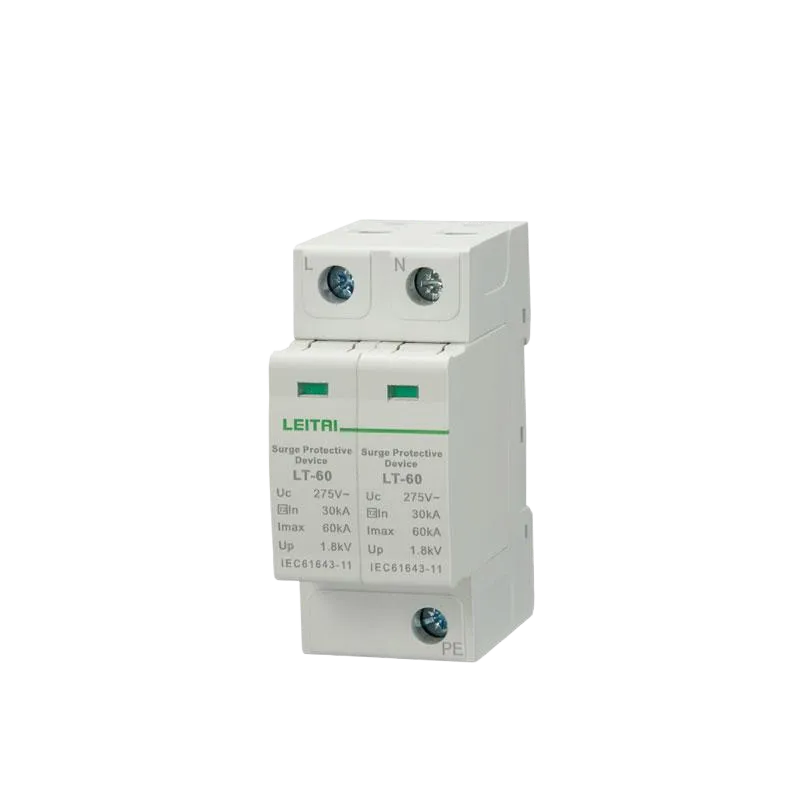
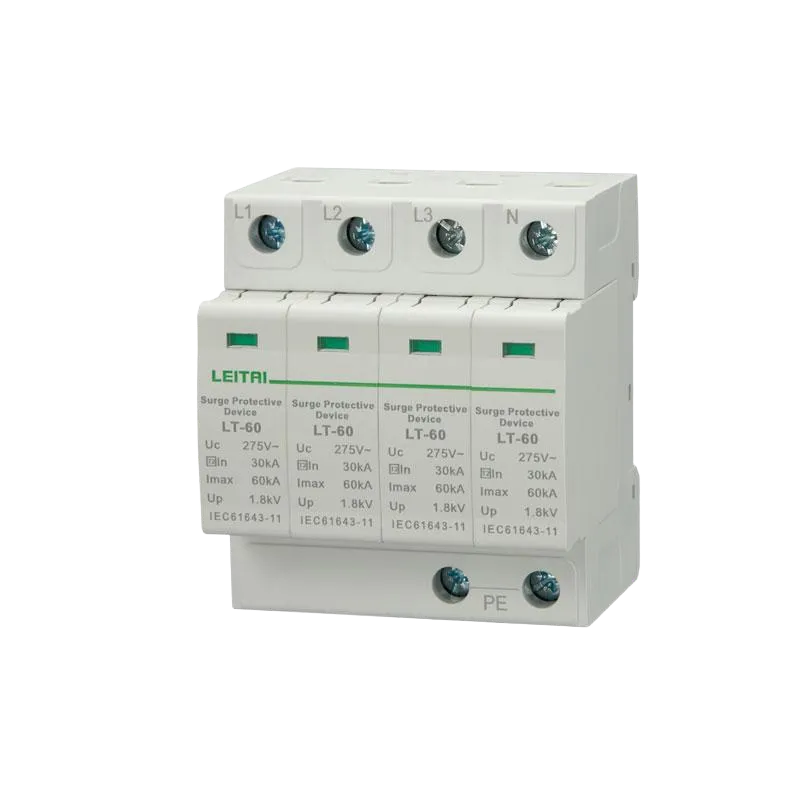
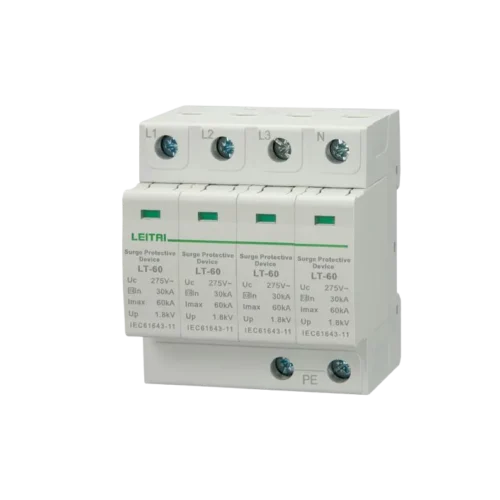
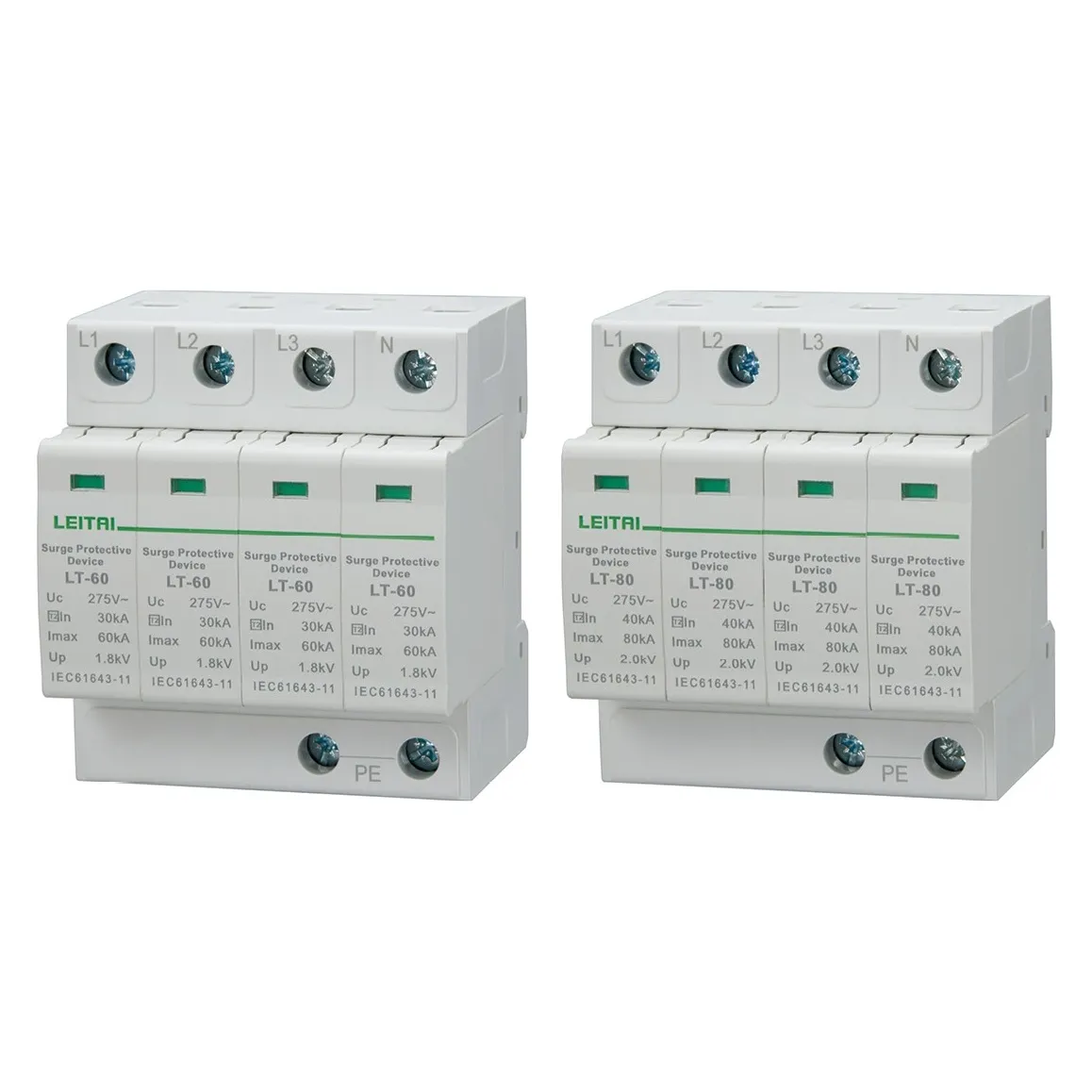
The LT-60 is a 60kA Type 2 surge protection device for panel incomers, rated In 30kA and Imax 60kA at Uc 385 or 440V. It sits between the 40kA devices used at sub-boards and the wide-body 100/160kA units, and it is the rating most often specified where a cabinet feeds a floor rather than a single final circuit.
Type 2 Surge Protection Device 60kA for Panel Incomers
Built for Cabinets That Feed a Floor
When a distribution cabinet supplies an entire floor of a building or a workshop with several motor loads, the surge energy reaching that board is well above what a final-board device is sized for. Thirty kiloamps nominal is the entry point of the heavy-duty group, and it is delivered on the same 18mm-per-pole format.
Width Scales With Poles, Not With Rating
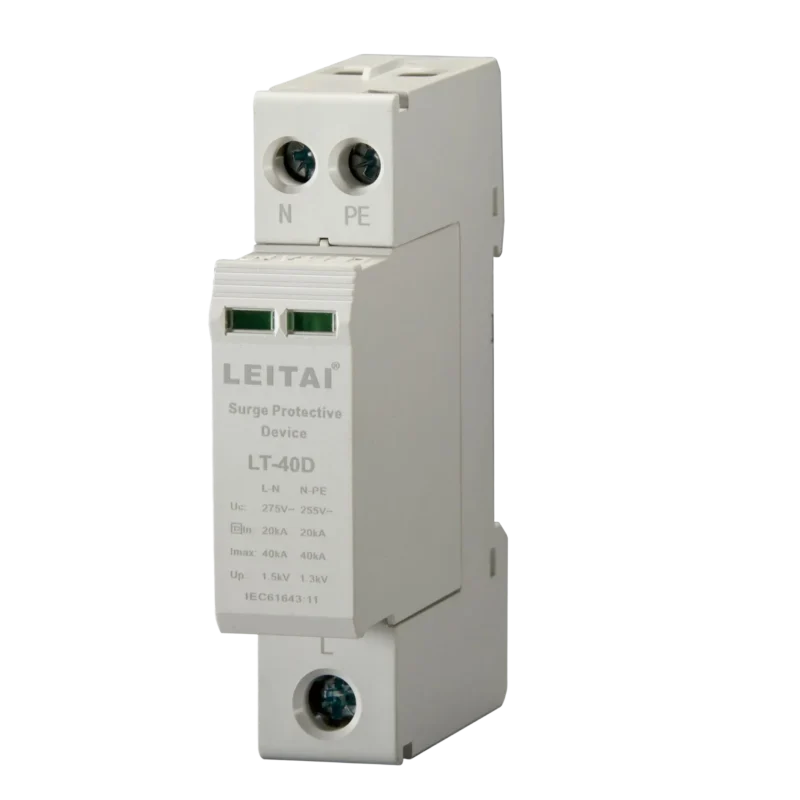
A four-pole LT-60 occupies 72mm, the same as a four-pole LT-40, because the increase in energy handling is achieved inside the cartridge rather than by widening the body. That keeps the panel layout unchanged when a specification moves up a rating step.
Higher Up Means a Wider Up
A larger varistor stack discharges more current but clamps at a higher level, and this device is specified at 2.5kV. It therefore belongs upstream, co-ordinated with a lower-clamping device closer to the load, rather than as the last barrier in front of sensitive electronics.
Suits Retrofits into Existing Cabinets
Many of these units go into cabinets that were built without surge protection and are being brought up to current practice. Because the module is a standard DIN-rail body with front terminals, it can be added to an existing rail section without re-drilling the mounting plate or rearranging the outgoing ways.
Specifications
| Series | LT-60 heavy duty AC surge protective device |
|---|---|
| IEC classification | Type 2 / Class II, tested to IEC 61643-11 |
| Maximum continuous voltage Uc | 385 / 440 VAC |
| Nominal discharge current In | 30 kA (8/20 µs) |
| Maximum discharge current Imax | 60 kA (8/20 µs) |
| Voltage protection level Up | ≤2.5 kV |
| Configurations | 1P, 2P, 3P, 4P |
| Module width | 18mm per pole — 18 / 36 / 54 / 72mm total |
| Mounting | 35mm DIN rail to EN 60715 |
| Status | mechanical indicator per pole, thermal disconnector |
| Positioning | first stage of a two-stage Type 2 arrangement |
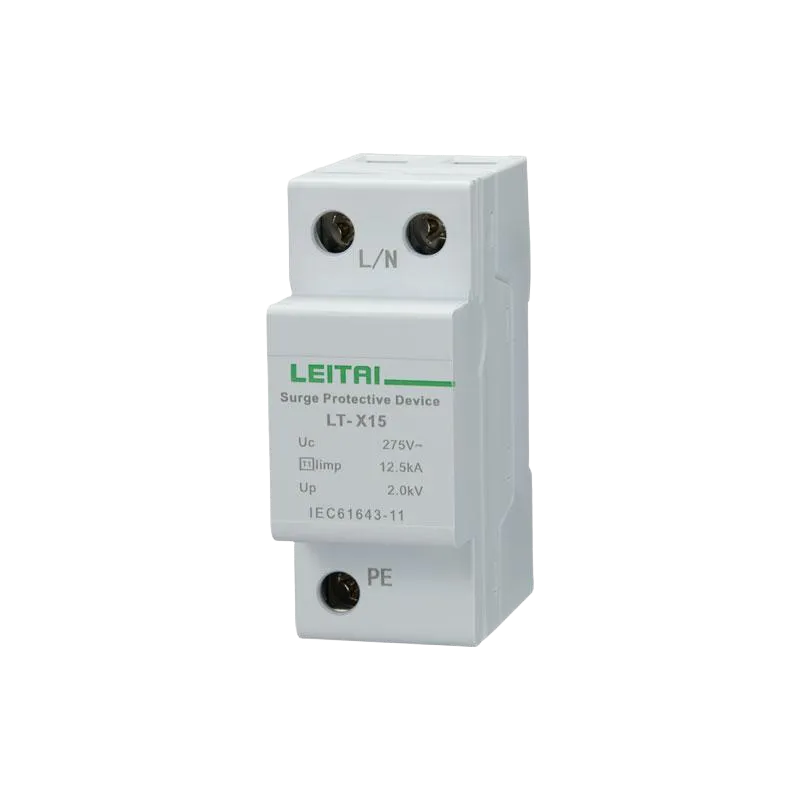
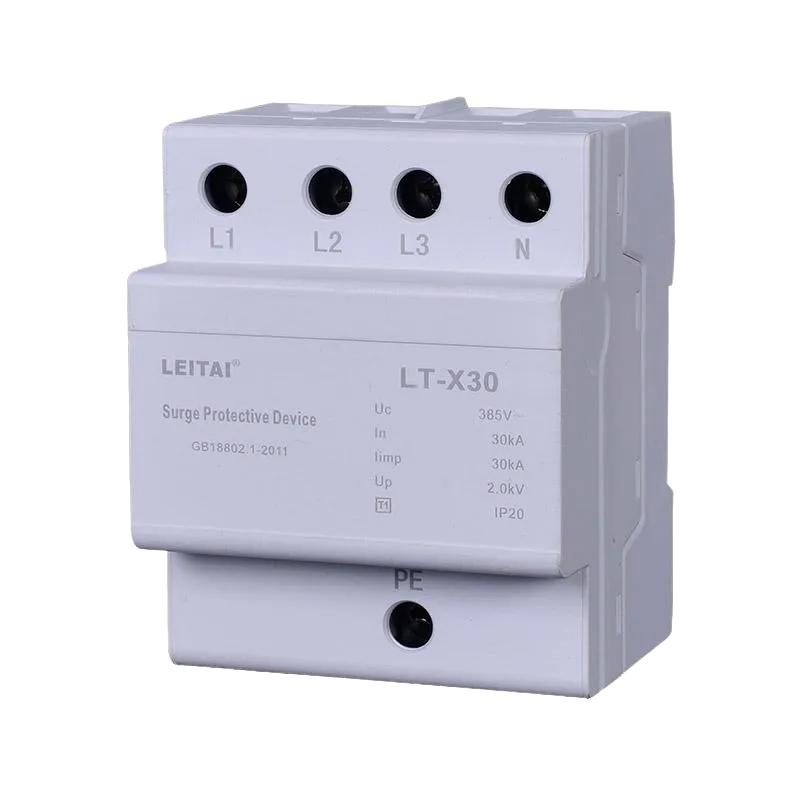
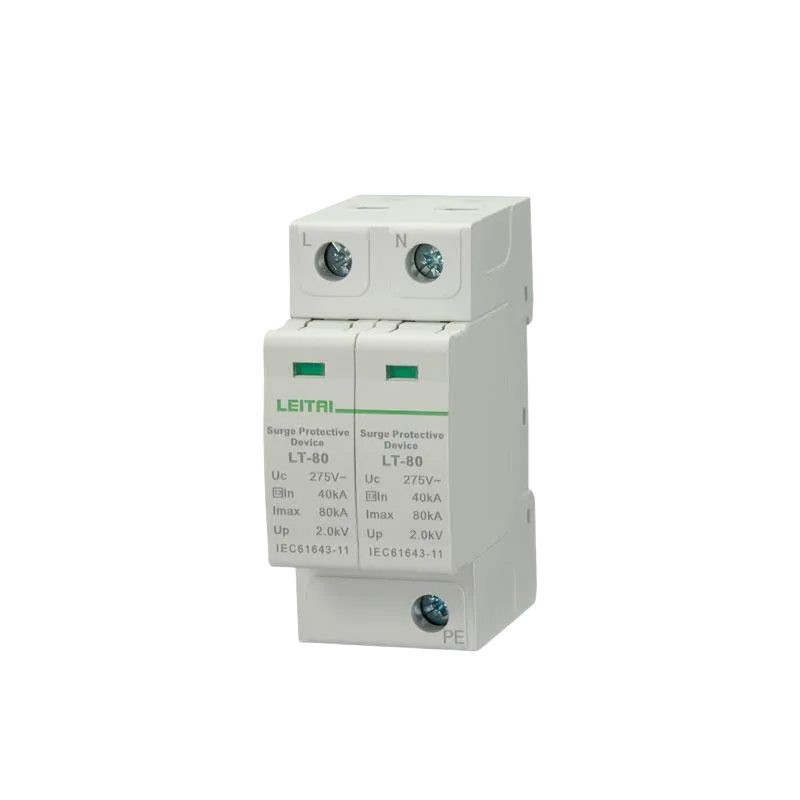
| Related models | LT-80 (same width, 40/80kA), LT-100 and LT-160 (wider body) |
Reading the LT-60 specification
The step from 40kA to 60kA is taken when the feeder length or the transformer size puts more energy at the board than a 40kA element should absorb repeatedly. In is 30kA, which is the figure specifications are written against; Imax 60kA is the single-shot capability.
One trade-off is visible in the table: Up rises to 2.5kV. A higher rating in the same body means a larger element and a higher residual voltage, so where the downstream load is sensitive, the 40kA unit with the lower Up is sometimes the better choice even though it has less capacity.
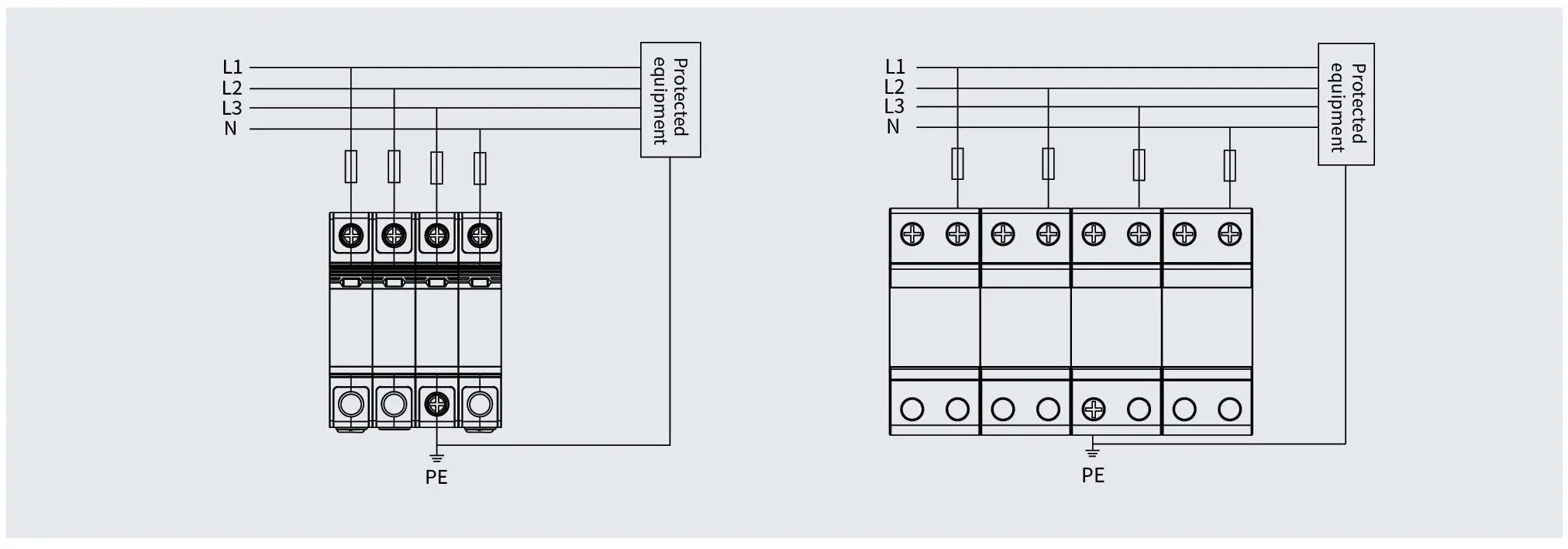
Wiring Diagram & Connection
The LT-60 is the smallest of the wide-body 385/440 V group and is wired across the incoming terminals of a distribution panel. Its 72 mm four-pole width means the unit spans four rail modules, so the feed tails come in from a busbar rather than from an adjacent breaker.
LT-60 — Where Floor Distribution Meets a Realistic Duty
Between a final board feeding sockets and a main switchboard feeding the building there is a band of cabinets that get specified almost by habit: floor distribution boards, workshop panels, small process cabinets. Their exposure is higher than a final board but their fault levels and cable lengths rarely justify the largest device in the catalogue. Thirty kiloamps nominal is what that band actually needs.
The engineering argument for this rating is co-ordination headroom. Because it clamps at 2.5kV and survives 60kA once, it absorbs the bulk of the transient and leaves a residual that a 40kA device further downstream can handle without going into a second conduction phase. Two stages of the right size protect better than one oversized device, and they cost less in rail space.
Factory-Direct OEM / ODM Manufacturer
Your Specification, Our Production Line
Type-tested platform · private-label marking · batch test records
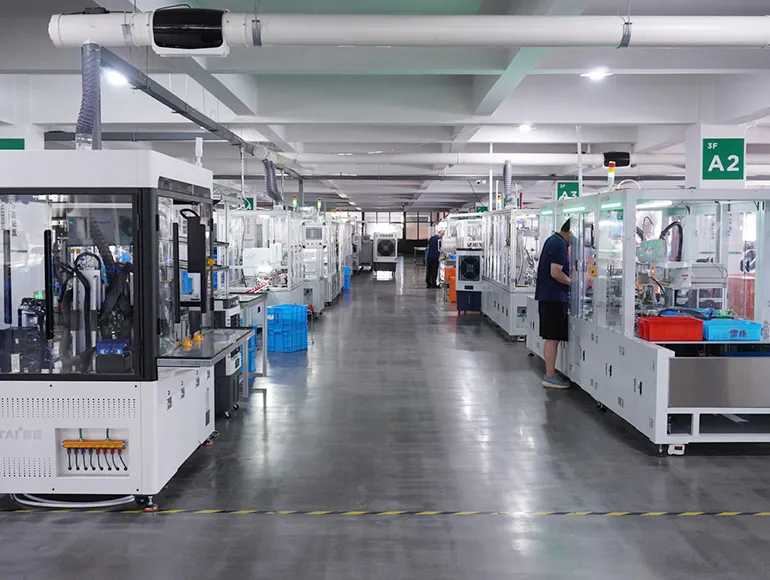
We quote from a real production schedule, not from a stock list, which is why a customer changing from a competitor’s module to ours usually keeps the same panel layout and only changes the label. Everything needed for that switch — drawings, curves and test sheets — is available before the order. The wider family is on Type 2 SPD range.
- Pre-order pack — datasheet, dimension drawing and declaration for your technical file.
- Branding — printed fronts, side references and instruction sheets in your language.
- Consistency — same platform across the range keeps panel stock simple for your customers.
- Support — a named contact for repeat orders and technical questions.
Buying Guide
- Confirm the prospective fault current at the cabinet so the backup fuse or disconnector can be rated properly.
- Choose 385V for a standard 230/400V system, or 440V where a wider continuous window is specified.
- Count the poles: a three-phase four-wire cabinet normally takes the 4P version; a three-wire installation takes 3P.
- Plan the second stage downstream and leave at least a few metres of cable between the two devices for co-ordination.
- Allow rail space for the backup protection next to the SPD; it is part of the same assembly, not an accessory.
Where the LT-60 is the wrong choice
It is not automatically better than the LT-40. Where the board is a sub-distribution point with a normal feeder, the 40kA device gives a lower Up at lower cost. The 60kA rating earns its place at incomers with short, stiff feeders and at retrofits into existing cabinets where the fault level is high.

How We Support Your Business
OEM / ODM
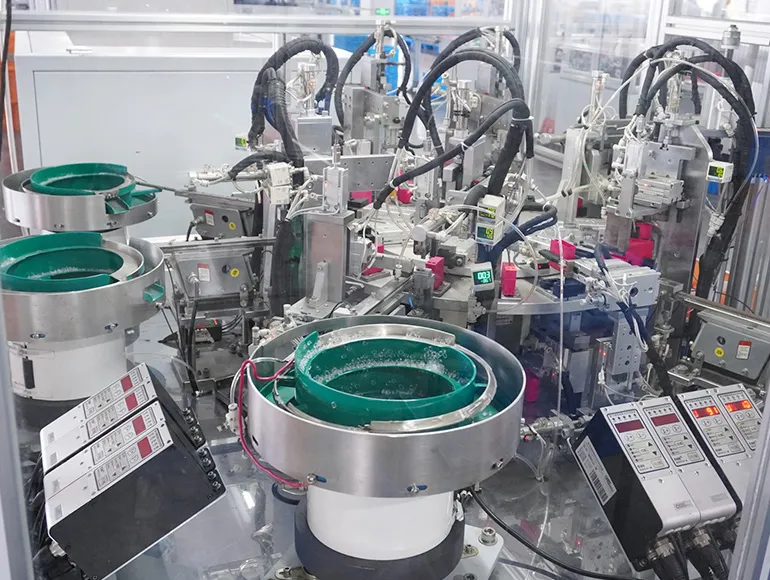
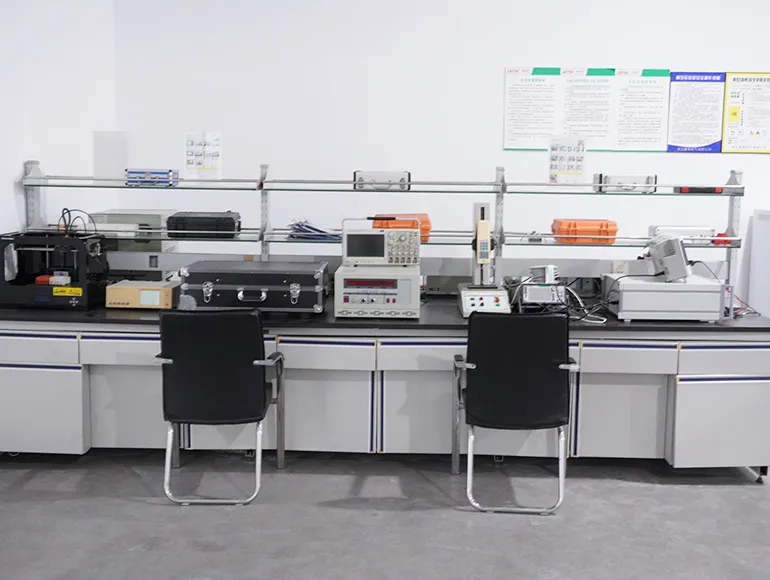
We print your brand on the module front and pack to your carton design; ODM covers new pole layouts, alternative voltage windows and signalling options.
Tooling in house · Branded packing · ODM design
Wholesale
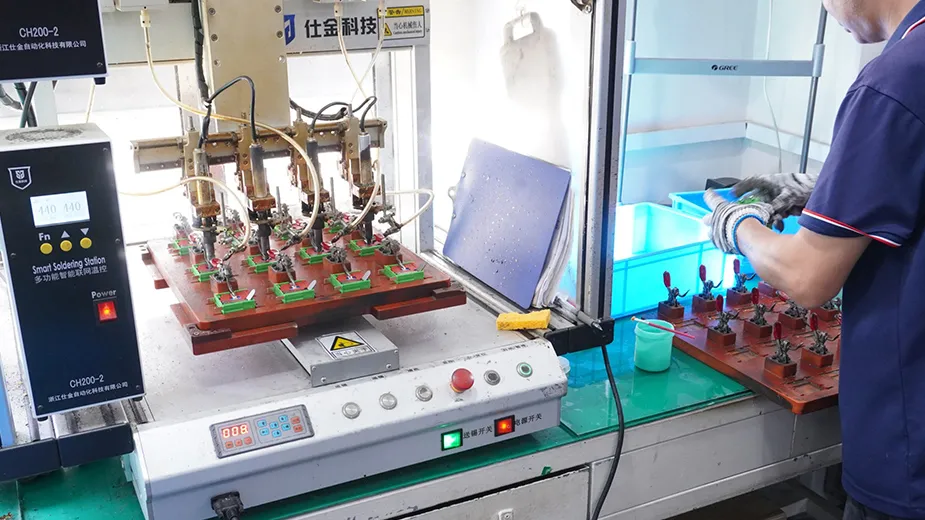
Volume pricing on the whole LT range, with sample lots for tender packages and full containers for stock orders.
Bulk pricing · Samples · Firm lead times
Distributor Support
Technical files, selection curves and local standard guidance so your sales team can specify the right type on the first visit.
Datasheets · Selection help · Training
Ready to Order the LT-60?
Tell us the cabinet fault level, the system voltage and how many poles you need, and we will propose the LT-60 configuration with a co-ordinated second stage and the backup protection rated for your board.
Frequently Asked Questions
When should I use 60kA instead of 40kA?
At panel incomers with short feeders or large upstream transformers, where the energy at the board is higher than a 40kA element should absorb repeatedly. Sub-boards normally stay at 40kA.
Is a higher kA rating always better?
No. Up usually rises with the rating, so a larger device can leave a higher residual voltage. The right choice depends on both the energy at the board and the sensitivity of the load.
What is In 30kA against Imax 60kA?
In is the current the device discharges repeatedly without losing characteristics; Imax is the largest single surge it survives once. Specifications are written against In.
Which backup protection is appropriate?
Either a fuse or MCB rated to the SPD manufacturer’s recommendation for the board’s prospective fault current, or a dedicated SPD disconnector. The disconnector avoids the nuisance tripping that a general-purpose breaker can show under surge conditions.
Is the LT-60 available in a plug-in version?
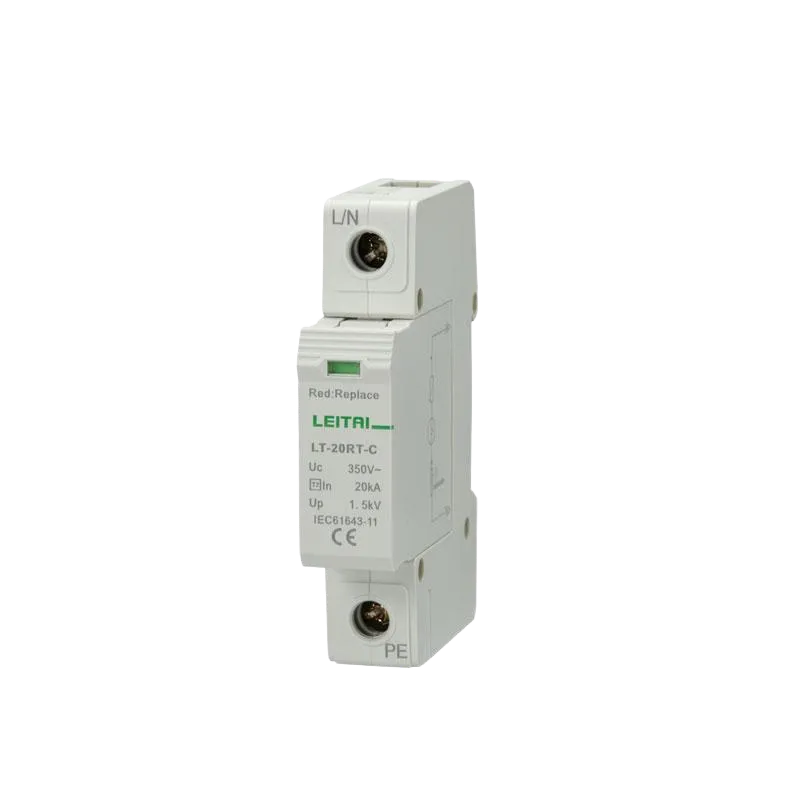
This rating is supplied as a fixed module. For live-replacement maintenance routines, the LT-80RT and LT-100RT use plug-in cartridges on a common base, at the same current class.
Does it need derating at altitude or in a hot cabinet?
Ambient temperature inside an enclosed cabinet reduces the continuous current capability of any SPD. Tell us the expected internal temperature and we will confirm the suitable rating for the installation rather than the catalogue figure.



Reviews
There are no reviews yet.