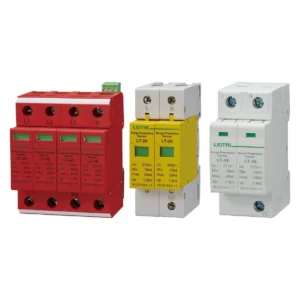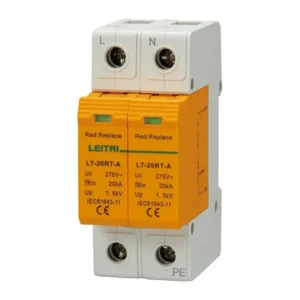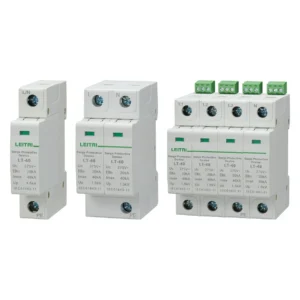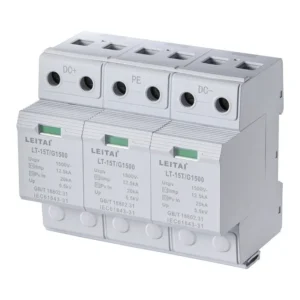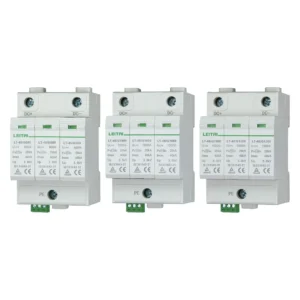

One of the most frequently asked questions regarding surge protection is the distinction between Types 1 and 2 SPDs. The differentiation is not about effectiveness, but rather regarding the surge level of each device and the exact position of its installation in the electrical circuit. Knowing the fundamental differences between a Type 1 SPD and a Type 2 SPD helps avoid a situation of under-protection or over-specification of the product.
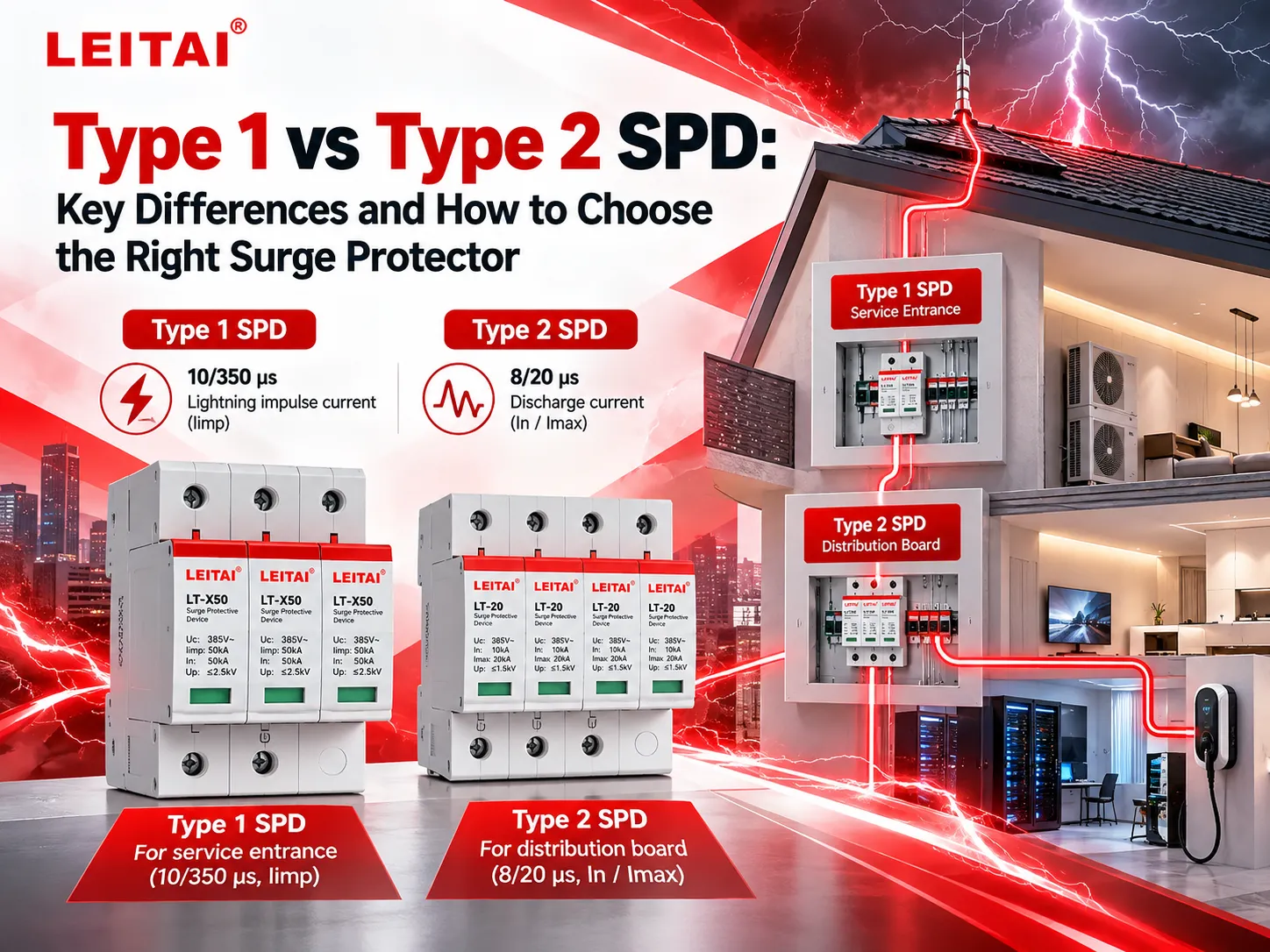
According to IEC 61643-11, the design of a Type 1 SPD (Class I) implies its testing on a 10/350 μs lightning impulse current (Iimp) and its installation at the start of the system where partial lightning current is likely to be seen. In its turn, a Type 2 SPD relies on the 8/20 μs surge current (In/ Imax) for its testing and includes such installation points as distribution boards for preventing residual and switching surges.
What Is a Type 1 SPD?
A Type 1 surge protective device (SPD) is made for the most intense surge events. It is used mainly at the main incoming power location (service entrance), especially where there is an external lightning protection system (LPS) connected to the electrical supply through an overhead line. The main characteristic is the value of impulse current Iimp (which usually varies between 12.5 kA and 50 kA). The charging time of the 10/350 μs waveforms has more energy compared to the waveform used for Type 2 devices. Thus, a Type 1 device is capable of withstanding partial lightning current.
Typical applications include important factories, high-rise buildings, and various places that are more exposed to lightning. The company Leitai manufactures Type 1 and combined Type 1+2 devices, for example, the LT-T25 and LT-X series, intended for these applications.
What Is a Type 2 SPD?
Type 2 SPDs are mainly used in distribution boards and sub panels to protect them against abnormalities like lightning strikes or induced switching surges. They are rated according to nominal discharge current (In) and maximum discharge current (Imax) which varies between 20 and 40 kA (or higher) on the 8/20μs waveform. Given the fact that Type 2 SPDs are installed downstream of the main electrical disconnect, they help reduce the residual voltage that travels through the devices upstream from them.
Typically, a properly selected Type 2 SPD at the main or sub-distribution board is the best and only solution for installations at residential and commercial buildings without actual lightning risk. Good examples of appropriate products include LT-20/LT-40 model series.
Type 1 vs Type 2 SPD: Side-by-Side Comparison
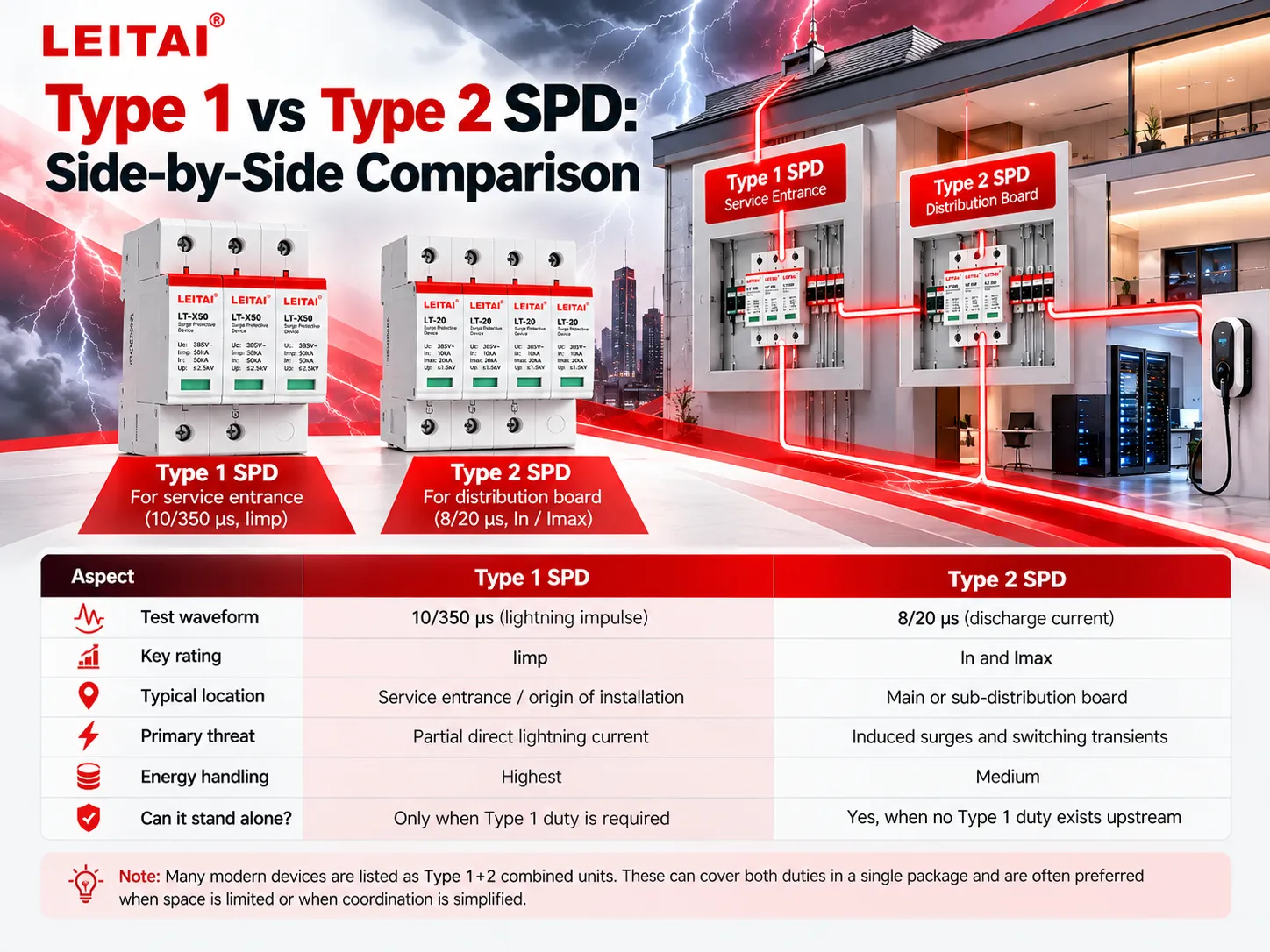
The table below summarizes the practical differences between Type 1 and Type 2 surge protective devices.
| Aspect | Type 1 SPD | Type 2 SPD |
|---|---|---|
| Test waveform | 10/350 μs (lightning impulse) | 8/20 μs (discharge current) |
| Key rating | Iimp | In and Imax |
| Typical location | Service entrance / origin of installation | Main or sub-distribution board |
| Primary threat | Partial direct lightning current | Induced surges and switching transients |
| Energy handling | Highest | Medium |
| Can it stand alone? | Only when Type 1 duty is required | Yes, when no Type 1 duty exists upstream |
Note that many modern devices are listed as Type 1+2 combined units. These can cover both duties in a single package and are often preferred when space is limited or when coordination is simplified.
Do I Need Type 1 or Type 2 SPD?
The decision is based not on the overall “best” type but on installation parameters and exposure.
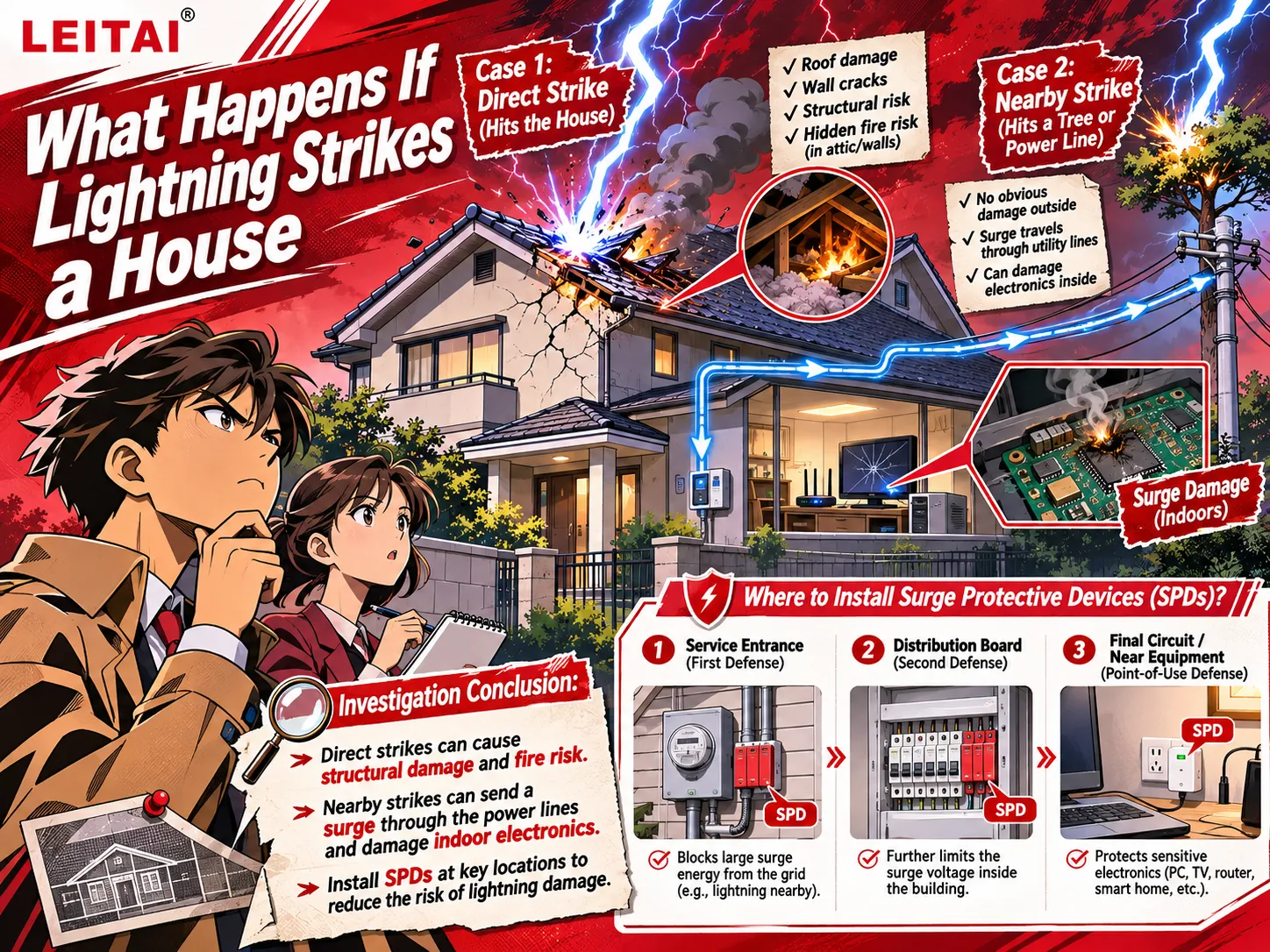
If there is an external lightning protection system in place, if supply is over overhead lines, or if the risk assessment shows some partial lightning current entering a low-voltage network, a Type 1 or Type 1+2 SPD should be used.
A Type 2 SPD can be utilized in distribution boards in most domestic, commercial, and industrial facilities where Type 1 is not required.
The common practice is to use both types in a coordinated system, with Type 1 (or Type 1 and Type 2) at origin and Type 2 further down.
Can a Type 1 SPD Be Used as a Type 2?
A Type 1 device that has been evaluated and recognized for Class II employment can function as a Type 2 SPD. In other words, it is a true Type 1+2 device. However, a standard Type 1 device that has only undergone testing with the 10/350 μs waveform should not be used in place of a Type 2 device wherever only Class II protection is needed. Always rely upon the manufacturer’s listing and the standards for installation (IEC 61643-11 and/or relevant local electrical code).
Which Is Better: Type 1 or Type 2 Surge Protector?
No option is superior to the other. A Type 1 SPD is needed in lightning current applications, while a Type 2 SPD is the typical choice for medium-voltage applications. Putting a Type 2 SPD where a Type 1 SPD is required can cause failure to the device if a direct or close lightning strike occurs. Putting a Type 1 SPD on all applications without coordination can result in the existence of potentially damaging residual voltages. The proper implementation of these two methods is to stage the protection according to the threat at every point of application.
What Is Type 1, 2, and 3 SPD?
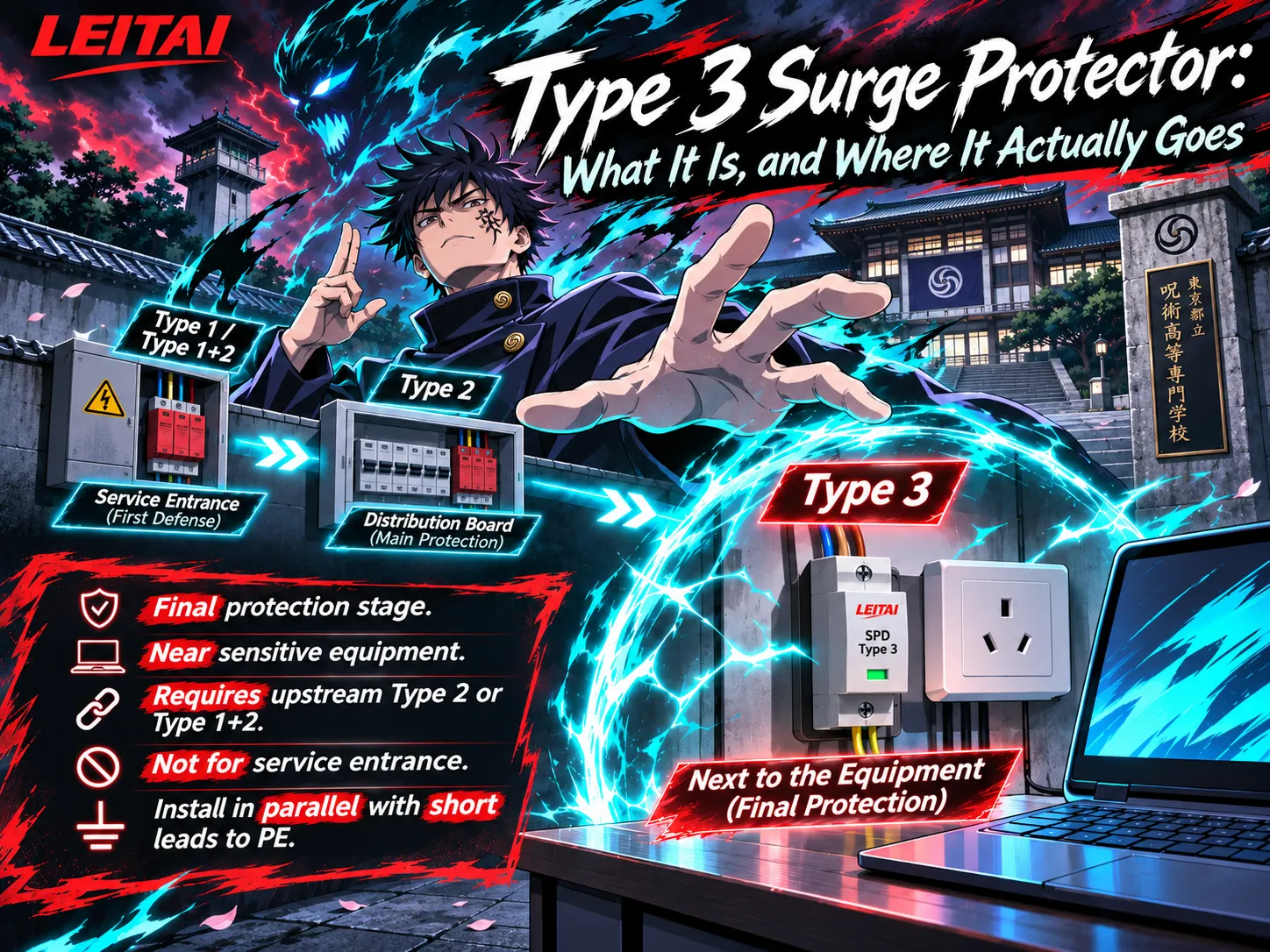
Types 1, 2, and 3 devices create a succession of increasing degrees of protection:
Type 1 SPD – direct lightning current (10/350 μs, Iimp).
Type 2 SPD – lightning protection on distribution voltage level (8/20 μs, In/Imax).
Type 3 SPD – ultimate protection near sensitive apparatus (combined waveform).
In other words, the use of Type 3 SPDs cannot occur independent of Type 2 SPDs because the former devices should always be used after the latter devices in the protection scheme.
Frequently Asked Questions
Do I need Type 1 or 2 SPD?
You need Type 1 (or Type 1+2) when partial lightning current can enter the installation. In all other normal distribution locations a Type 2 SPD is appropriate. Many sites use both in cascade.
Can a type 1 SPD be used as a Type 2?
Only if the device is also certified for Class II duty (Type 1+2). A pure Type 1 unit should not be used as a direct replacement for a Type 2 SPD without verifying coordination and voltage protection level.
Which is better, Type 1 or Type 2 surge protector?
They are not better or worse; they address different surge duties. Match the type to the location and the expected threat.
What is Type 1, 2, and 3 SPD?
Type 1 handles high-energy lightning current at the service entrance, Type 2 limits residual and switching surges at distribution boards, and Type 3 provides final clamping near sensitive loads. They work together as a coordinated system.
References
- International Electrotechnical Commission — IEC 61643-11, Low-voltage surge protective devices
- UL Standards & Engagement — UL 1449, Surge Protective Devices
- NFPA 70, National Electrical Code — Article 242 Overvoltage Protection
- IEC 62305 — Protection against lightning (Lightning Protection Zones and coordination)
Conclusion
W deciding which type to use between Type 1 SPD or Type 2 SPD, it is the threat of surges at each installation boundary that determines the right choice to make, rather than claims made by manufacturers. Use Type 1 or Type 1 + 2 when needed to manage lightning currents, while Type 2 should be used for protection against surges on normal distribution boards. If there is any uncertainty, a coordinated cascade system provides the greatest degree of effectiveness when using SPDs for protection of equipment and maintaining continuity of service. It is also important to use the right devices that meet the necessary specifications and minimize the length of leads used.