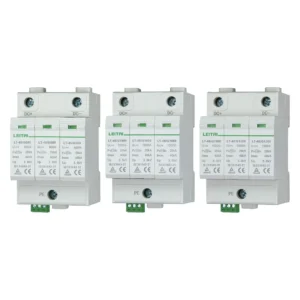

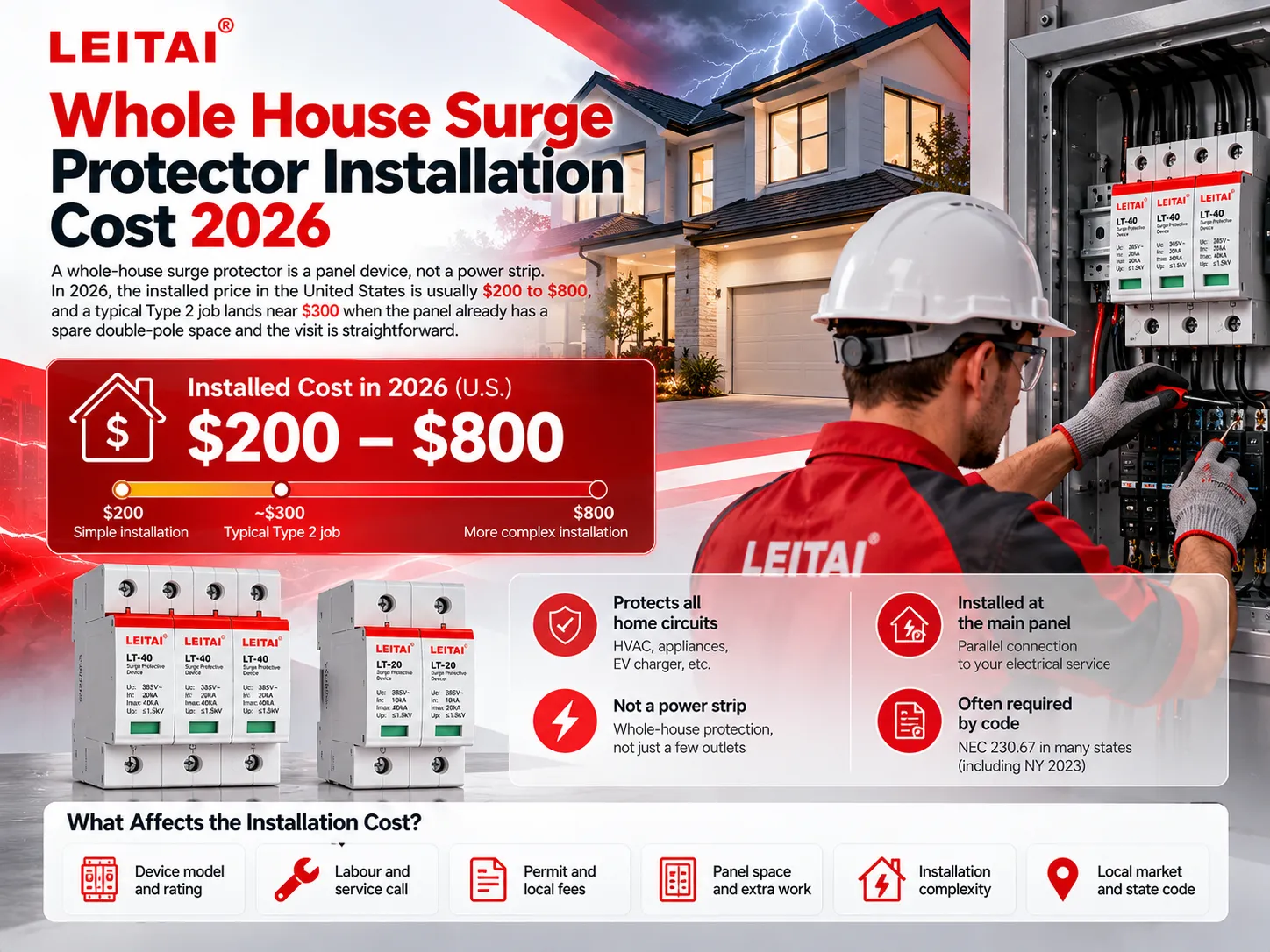
Surge protection for the entire house comes in a panel unit and is not simply a power strip. Estimated installation cost in the USA in 2026 will be from $200 to $800. A typical Type 2 installation will cost around $300 if there are already two empty places in the panel.
When formulating the installation estimates, it is important to remember that it is the labor cost plus the cost of the device itself, the service-call minimum, the permit, and any additional expenses incurred in preparation for the installation that matter, not the price of the equipment. New York started to implement NEC 230.67 on December 31, 2025, thereby increasing the number of installations of the new device, and many other states have begun using it.
Summary for Planned Installation in 2026
Purchase UL 1449 Type 2 surge protection device, making sure that its kA capacity is anywhere between 40 and 80, and its VPR is about 600 to 700 volts. The device has to be installed close to the breaker and connected by straight wires. The project cost should not exceed $300. However, it is advisable to install separate strip protectors on electrical appliances.
If the service is already being changed, regardless of the device, the total service cost will be around $150 to $400.Starting in 2026, consider the add-on item to be part of the service estimate pertaining to any location in regard to the 2023 NEC.
What’s Really Behind the Pricing for 2026
The advertised kA number is not really what pushes the price for the clients. Both the 140 kA and the 80 kA devices will let the same voltage through with the same VPR. In fact, gaining a kA is more about making sure the MOVs do not get much stress from each event.
The things that actually lead to price variations for the quote in 2026 are rather ordinary items:
Having spare breaker space. It’s a full panel, which means it can be either a tiny subpanel or its such like.
How close the Type 1 or Type 2 is to the load center.
Length and placement of the wires. A side-mounted one having long and coiled wires is worse, however, its performance can be great.
Having a permit and inspection. A lot of regions charge from 50 to 200 dollars for this type of paperwork, and the quote not taking this fact into account is incomplete.
Whether the first visit is combined with any other panel job done.
Providing nominal current discharge is more important than how the device is marketed. Under the NEC 230.67 code, the whole-house SPD should have In of at least 10 kA. Contemporary devices do provide this. Sometimes the stock that is old does not meet this demand. Therefore, if a low-price device is proposed from the old stock, check the In first.
What the Law Requires Today
The NEC 230.67 (2020 and still in use in 2023) states that either Type 1 or 2 SPD should be provided for a new service to a residence or during the replacement of the original service. The specifications do not apply to existing service in an old house.
The implementation is done on a state basis. Where the 2023 NEC is used, the 2026 installation should have the device already included. However, it should not be mixed with price for outdoor disconnect according to NEC 230.85 where the price might range from 450 to 1000 dollars.
Another requirement is that the short-circuit current rating of the SPD should conform in value with the fault current of the specified panel. In many residential buildings, the fault current is below 20 kA. However, if a residence is located close to big transformers or has a short service run, the number would be higher. If the marked SCCR is lower than available fault current, it means that it is not meeting NEC standards. The utilities may also provide this number if asked, as electricians are able to count it in every case.
Type 1, Type 2 and Type 3 in Plain Terms
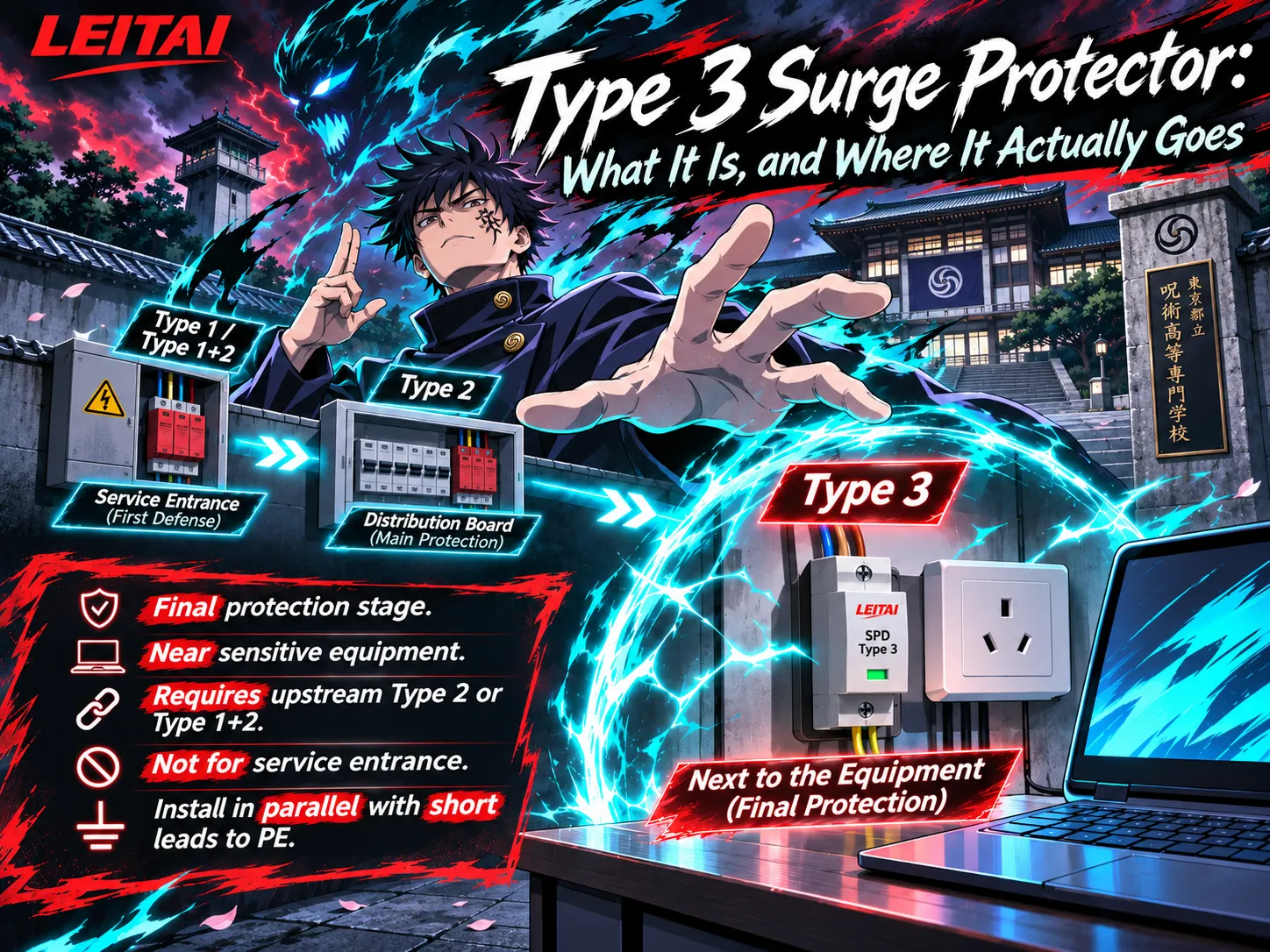
| Type | Where it connects | Needs a breaker? | Typical 2026 use |
| Type 1 | Line side or load side of the service disconnect | Often no dedicated breaker; it carries its own overcurrent protection | Meter or service entrance, including ahead of the main |
| Type 2 | Load side of the main breaker | Yes, usually a double-pole breaker | The normal whole-house install beside the panel |
| Type 3 | At the outlet | No. It plugs in | Computers, TV, network gear, after the panel device |
Amperes are the units for Type 1 and Type 2, while Type 3 is rated using joules, but only covers the devices plugged into them, not hard-wired components like the furnace circuit board, oven, or EV charging station.
A residential panel functions with VPR of 600 V from line to neutral, with most reliable brands having their published ratings equal to this standard. A model with somewhat better performance should provide protection levels of at least 1,000 V rather than damaging it. The kA unit reflects life expectancy.
What a Whole-Home Unit Costs in 2026
| Line item | Typical range | What moves it |
| Type 2 device | $60–$300 | kA rating, VPR, alarm, replaceable cartridge |
| Type 1 device at the meter | $150–$450 | Meter base, utility coordination |
| Labour | $50–$130 per hour, 1–2 hours | Panel access, breaker space, lead routing |
| Service call or minimum | $100–$200 | Whether the visit is combined with other work |
| Installed total, Type 2 | $200–$800, around $300 typical | All of the above |
| Permit | $50–$200 | City or county fee schedule |
| Added during a panel upgrade | $150–$400 incremental | Electrician already at the panel |
Two points lay beneath that table. One point being that permit is an actual line in lots of counties, which varies from town to town. Second, a crowded panel makes it a different job. The absence of a double-pole free spot means tandem, subpanel, or alternative configuration, and the price will exceed $300.
Never double tap an existing breaker to wire the SPD. It jeopardizes the unit, circuit, and listing of the breaker. If you run out of space, it’s a panel issue and needs to be included in the bid.
Size the device to the service before comparing prices. What a 200 A panel actually needs is shorter than most sales conversations suggest, and it is covered in this guide to choosing a surge protector size for a 200 amp service.
The Eighteen Inches That Decide Performance
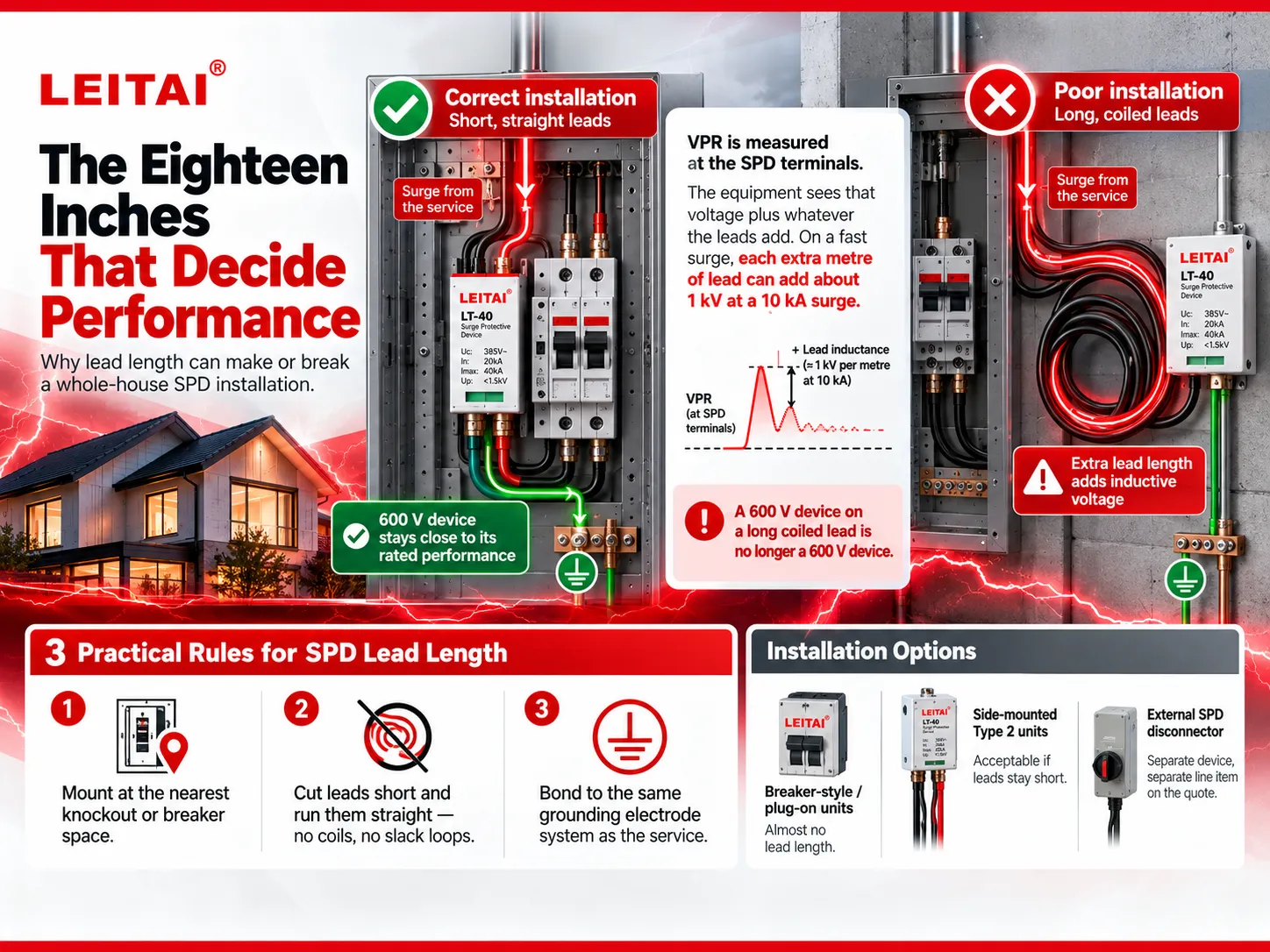
Voltage protection ratings are recorded in the terminal points of the device. The system measures the voltage, in addition to the voltage contributed by the leads. In times of rapid surge, leads behave like inductors, which means that every additional meter of length can theoretically contribute 1 kV for 10 kA surge. Therefore, for example, an electronic device rated for only 600 volts with a long lead might no longer stay 600 volt rated.
When installing the device, electrical engineers should follow some useful regulations:
Install the device in the nearest available receptacle or breaker, instead of doing it on the remote wall of the room.
The leads must be as short as possible and direct. They should not be rolled or bent in order for the signal not to disappear while travelling through the wires.
The device must be grounded through the same grounding connection. The voltage protector is useless if it is poorly grounded.
Devices that connect to the bus bar directly, meaning that they do not use the leads at all, are usually preferred by the electricians working within the panel that allows for this connection. The SPD device’s leads should be short if the device is to be placed in a wall-mounted enclosure, for example, type 2 universal enclosure. Moreover, if the installation of the service requires the installation of the disconnector, the external SPD disconnector should be quoted separately.
Layered Protection: Panel Plus Point of Use
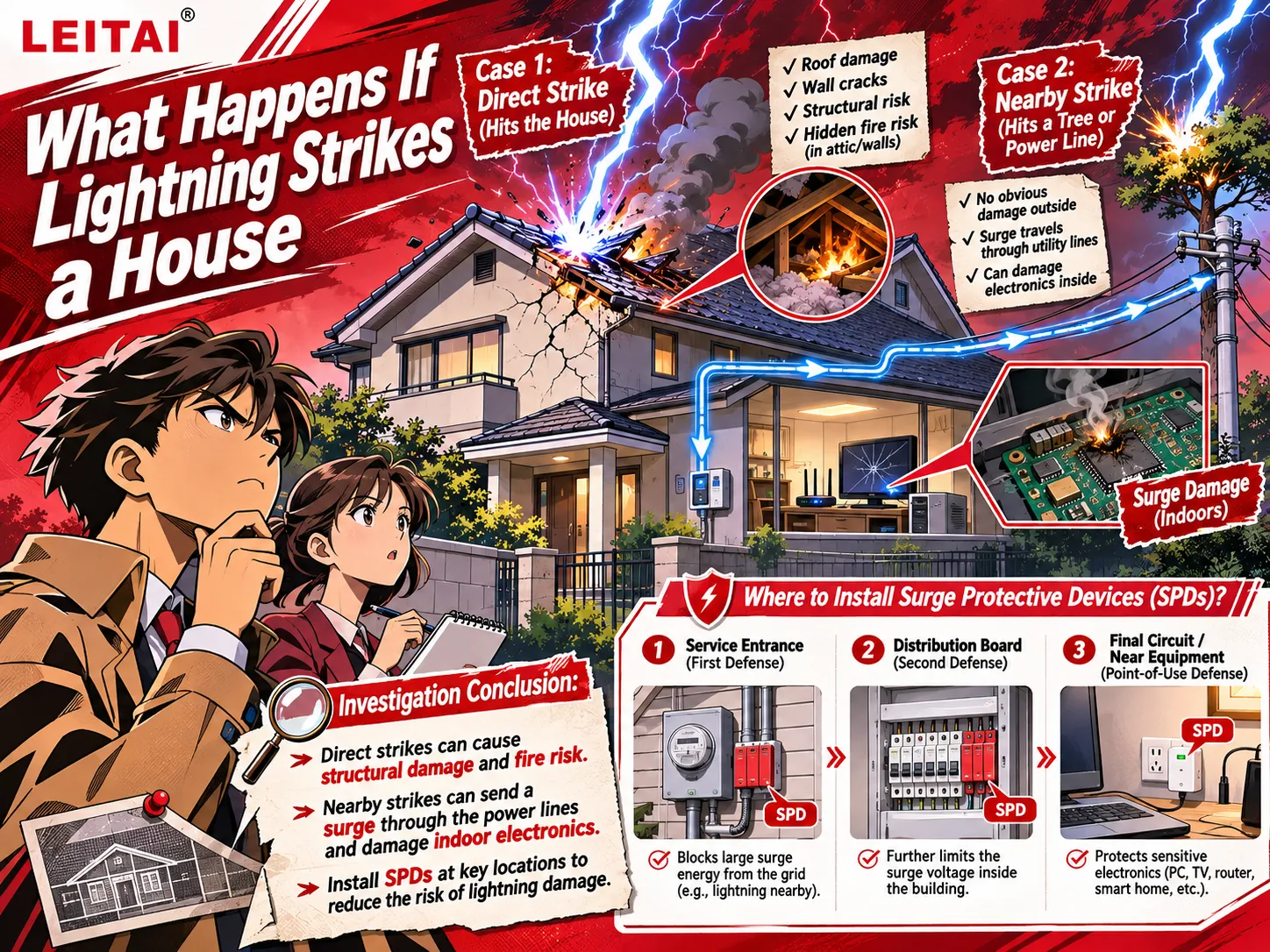
A panel surge protection device works as the initial surge protector device in the set of surge protectors in the circuit; it is not a replacement for the surge protector strips, as many more advanced surge protectors still allow up to 600 to 700 volts to get through to sensitive electrical devices like TV sets, modems, or control panels. Point-of-use protectors are closer to electrical equipment that is being connected, which is why their capability allows them to limit the incoming voltage to a lower limit than that of the panel device.
For a single surge protector strip, the investments should start from $20 up to $150, and $200 to $600 should be spent for purchase of four or five protector devices that will protect the circuits of real importance (the media cabinet, the computer system, the network rack). A garage subpanel feeding an electric vehicle charger should have its type II surge protector if the distance is long enough. The same applies to faraway outdoor equipment that must be equipped with its own surge protector.
A Type 3 protector at the final distribution point is the last stage of that stack, not a substitute for the panel device. The difference between the panel device and a surge protection device strip is that the panel device protects devices that the strip can not cover.
Who Should Do the Work
This is an electrician’s job for any and all jurisdictions with licenses. The panel is energized, and the bonding must be correct, and a permit is also frequently necessary when the dead front is removed.
Request a quote specifying the model, UL type, input, VPR, SCCR, and whether it includes a permit or not. A quotation without any of these cannot be said to be comparable to a quotation that contains all these details. The meter and service drop belong to the utility company. Meter-side work is done in cooperation with the utility company, but load-side work usually is not.
Generator transfers and solar backfeed come into play, but the location differs, even though the function remains. Thus, theSPD must always remain in the original position it was put in before and has to be mounted at the service equipment where the surge is actually entered through shortest possible leads allowed by the case.
How to Select Your Product When Reviews Don’t Help
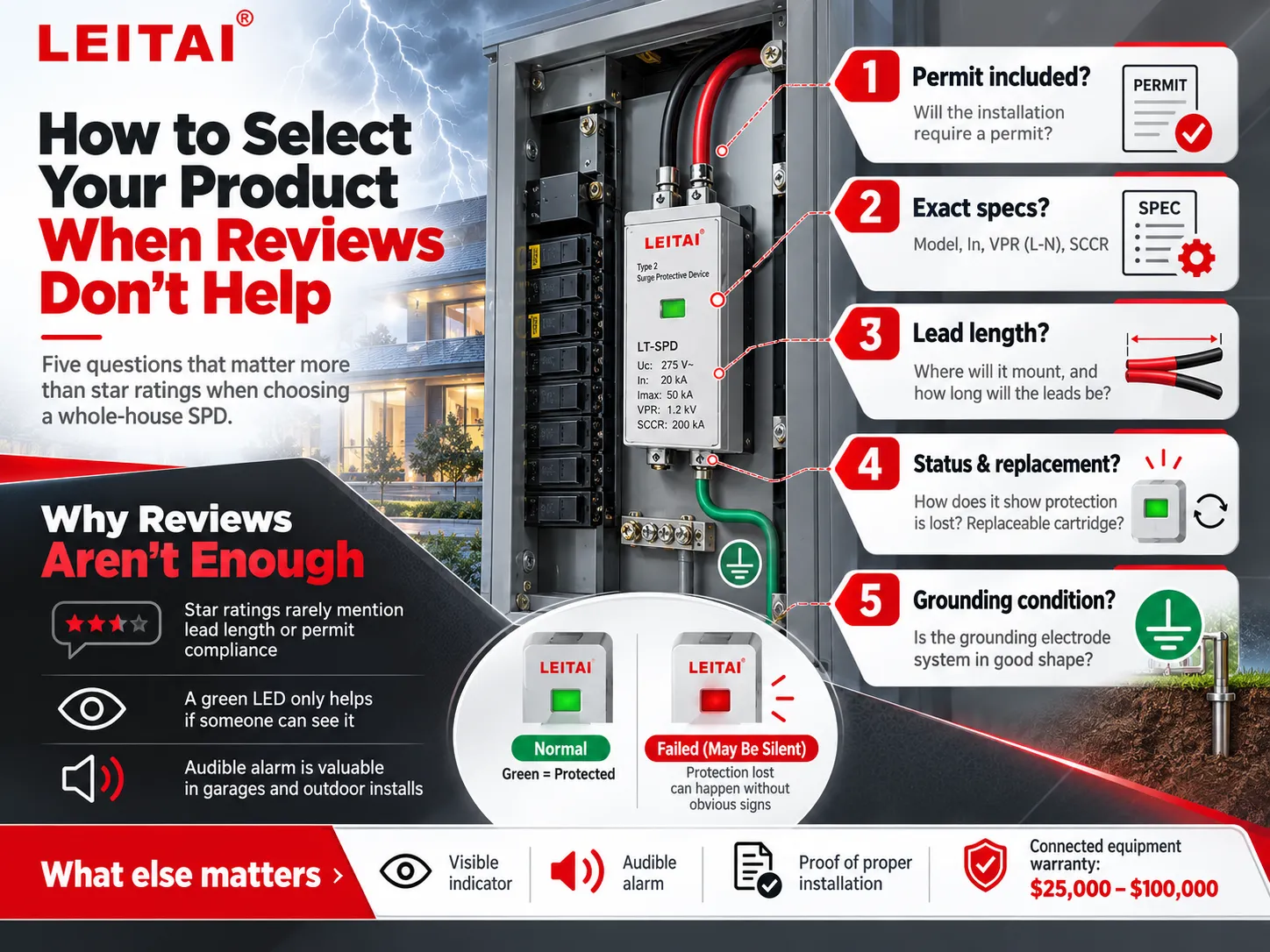
There are five key questions that change a useful device from a mere one:
Will your installation require a permit?
What’s the exact model, its In, its VPR line-to-neutral and its SCCR?
Where will it be located and what will the length of the leads be?
How does it indicate that the protection is lost and can the cartridge be changed?
Is the grounding electrode system good to go or does it need repairs?
Star ratings hardly ever mention lead length, inspection, or whether or not the indicator was placed in a visible area. An SPD will fail quietly: the light on it will be on, but the protection would be lost. A green LED is useful only if someone notices it. There is also a benefit of installing something with an audible alarm if it is used in a garage or outside. The connected equipment warranty is usually set for $25,000 to $100,000 and requires proof of proper installation.
Where Leitai Fits
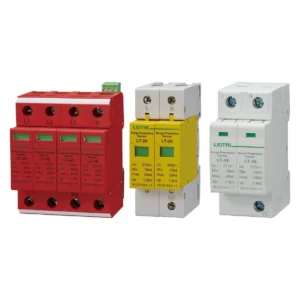
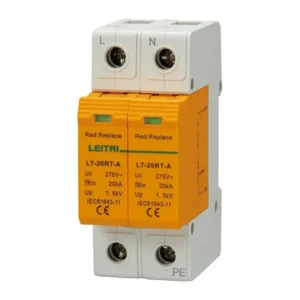
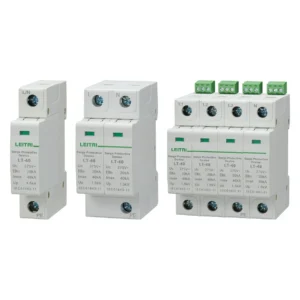
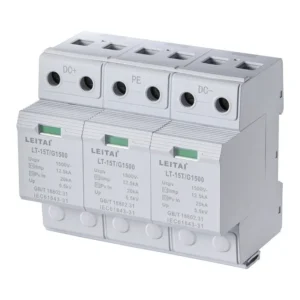
Leitai is engaged in producing devices to protect from surges. It is not engaged in the installation of panel surge protection devices at residences in USA. The company is producing Type 1, Type 2, and Type 3 surge protective devices including replaceable design and it supplies products to its dealers and to its original equipments manufacturers programmes.
For a homeowner, it is still about the specification sheet and installation. For a panel builder or for a private-label company which needs the same rating on large volumes, it is the OEM and ODM programme . Type 1 device rated for lightning impulse current is the service-entrance class surge protective device which is used when the specification requests Iimp, not a plug-on module for residential application.
FAQ
How much does it cost to have an electrician install a whole-home surge protector?
In 2026, the labor cost along with a minimum service call cost is usually in the range of $150 to $400 in addition to the device and in total, the visit usually costs between $200 and $800. The price of the installation of a simple Type 2 device is approximately $300, if there is already enough space for it in the panel. If in the process of installation the electrician is removing and replacing the panel, the operation usually costs only additional $150 to $400. Type 1 type of meters require coordination with the utility company, making installation more expensive. If permits are necessary, additional costs will be from $50 to $200.
What is the best whole-house surge protector for 2026?
There isn’t just one perfect model. The good specification for 2026 is UL 1449 Type 1 and Type 2 with In being more than 10 kA, per phase surge rating 40 to 80 kA, line to neutral VPR in 600 to 700 V area, end of life indicator, and SCCR that is not smaller than current fault available at panel. Additionally, payable cartridges and audible alarm are also useful additions. If the kA is higher but the VPR is worse instead of the appropriate one with long wires, it won’t be a good protection device. Always select the size suitable for the panel you possess and be sure that the device matches NEC 230.67 requirements.
Are whole-home surge protectors worth the money?
In general, this is true for most homes as a one-time expense in the low hundreds of dollars. The panel device protects equipment that a strip cannot, such as the furnace control panel, stove, dishwasher, EV charger, etc. While the device alone cannot prevent a direct lightning strike, point-of-use protection is still needed. The ideal situation is where the overhead is long, the house has a number of electronic appliances, or the device needs to be installed anyway because of a service upgrade in 2026. If it costs between $150 and $400 to replace a panel, that would be the ideal time to install the panel.
What’s the average cost of a whole-house surge protector?
The cost of the device itself can range from $60 to $300 for an individual residential Type 2 as of 2026. Nationally, the average cost of installation is approximately $300, but can vary between $200 and $800. This cost is calculated by assuming one or two hours of labor, that a spare breaker space exists, and that there is no need for replacement of the panel, nor does the cost include the point-of-use strips, which may cost an additional $200 to $600 for four or five strips
The estimated cost of a whole-house installation in 2026 is based on the fact that, provided the enclosure is suitable, it is a simple panel replacement that is less involved than conventional installations. The costs of the device will remain between $60 and $300 and an installation cost of $300 will depend on the length of the leads and the condition of the grounding path rather than the kA rating on the label.