

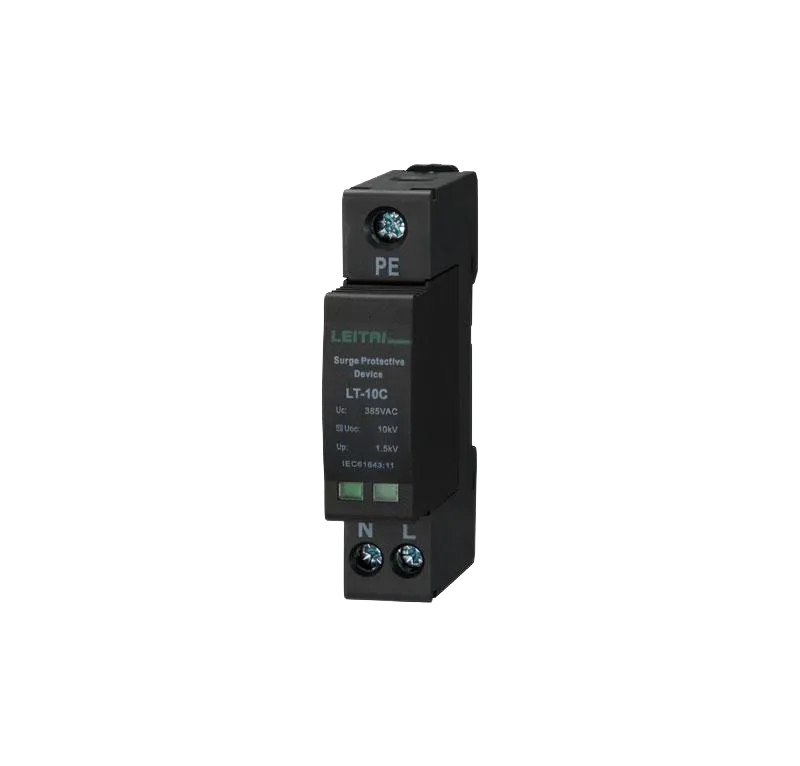
The LT-10C is a Type 3 surge protective device rated 10kA for terminal circuits, with Up ≤1.5kV and a single-module 1P format. It is the last metre of the protection chain: the device that sits at the equipment rather than at the board, and the one that decides what the load actually sees.
Type 3 SPD 10kA Equipment-Level Protector
The Last Metre of the Protection Chain
Between a sub-board Type 2 device and the electronics there is often several metres of cable, and that cable picks up the residual transient the first device left behind. A Type 3 device beside the equipment clamps what remains, which is the only way to guarantee a let-through voltage at the terminals rather than at the panel.
One Module Wide
At 18mm it fits where Type 2 devices would not: inside a control cabinet, next to a terminal block, in a small enclosure on the wall behind the equipment. The narrow body is the point of the product, not a compromise on it.
A Contact, Not Just a Flag
The changeover contact makes the device part of a monitored system. A building management platform or a PLC can read the state over 14-11 or 11-12 and raise an alarm, which converts surge protection from an annual visual check into a monitored asset.
Specified as Part of a Set
The 1.5kV Uoc test level assumes a co-ordinated upstream device. Fitting a Type 3 unit alone at the equipment without a Type 2 stage in front of it exposes the smaller element to energy it was never designed to absorb.
Specifications
| Series | LT-10C Type 3 equipment SPD |
|---|---|
| IEC classification | Type 3 / Class III, tested to IEC 61643-11 |
| Maximum continuous voltage Uc | 385 VAC |
| Open-circuit voltage test Uoc | 1.5 kV with 10 kA test current |
| Voltage protection level Up | ≤1.5 kV |
| Configurations | 1P, single module |
| Module width | 18mm |
| Signal contact | volt-free changeover, 14-11 NO / 11-12 NC |
| Mounting | 35mm DIN rail to EN 60715 |
| Positioning | equipment end, downstream of a Type 2 device |
| Related models | LT-40 for the sub-board stage, LT-40GX where the lowest Up is required |
Reading the LT-10C specification
The 1.5kV clamping level only means something in relation to what precedes it. A Type 3 device is tested with a combination wave and is intended to be installed downstream of a Type 2 stage; fitting one on its own at a board does not give the same result, because the energy it is asked to absorb is beyond its rating.
The 385V Uc covers the common 230/400V supply with tolerance. The module is one pole wide, and a signal contact is available where the installation monitors protection status centrally.
Wiring Diagram & Connection
The LT-10C is wired at the equipment it protects, downstream of a Type 2 device. The diagram shows the single-phase connection plus the changeover contact that reports a failed cartridge to a BMS or an indicator lamp.

LT-10C — Protecting the Equipment Rather Than the Building
Every other device in this range is judged by what it does to a distribution board. This one is judged by what reaches the terminals of the machine behind it. That difference changes the specification: what matters is the residual voltage at the end of the cable, the physical size of the device inside a control cabinet, and whether anyone will know when it has reached end of life.
The monitored contact is the part buyers underestimate. In a plant with forty machines, an SPD that is only checked at the annual shutdown is effectively unprotected for the last few months of its life. A contact wired into the machine’s alarm circuit turns that into a maintenance task on the same schedule as everything else in the panel.
Factory-Direct OEM / ODM Manufacturer
Built Here, Labelled for You
Injection moulding · varistor grading · 100% routine test · private label
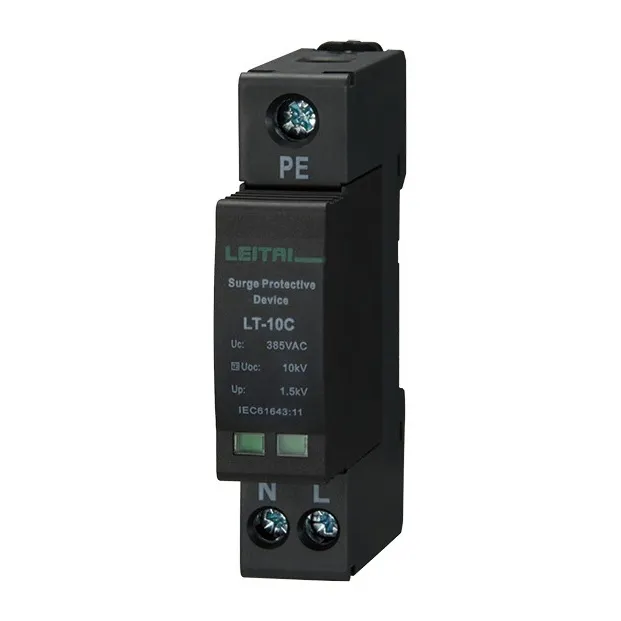
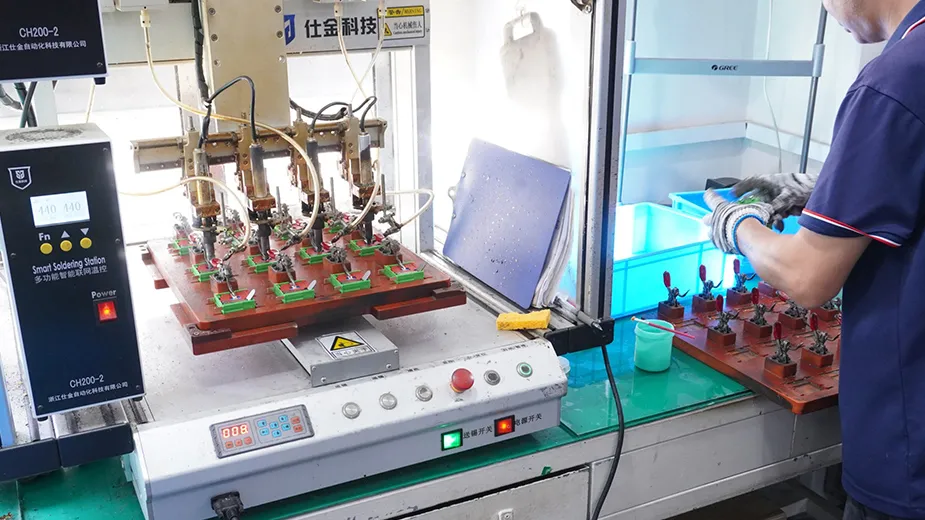
Because the mould, the varistor grading bench and the impulse generator all belong to the same company, a private-label run does not depend on a third party agreeing to change a tool. Tell us the model designation you sell under and we print, pack and test to that name. More configurations are listed under AC SPD range.
- Private label — your brand on the front, your reference on the side, your language in the manual.
- Custom build — voltage window, pole layout, alarm contact and packaging format are open to change.
- Traceability — each carton carries the batch number that links back to its test record.
- Lead time — confirmed against the actual production schedule when the order is placed.
Buying Guide
- Check the impulse withstand of the equipment being protected; that sets the maximum acceptable let-through voltage.
- Confirm the Type 2 stage upstream exists and note its protection level and its distance from the equipment.
- Decide whether the status contact will be wired to the machine alarm, a PLC input or a monitoring gateway.
- Confirm the available rail space inside the enclosure; the device needs 18mm plus terminal clearance.
- Keep the leads to the protected equipment short and run them away from power cables where the layout allows.
Where the LT-10C is the wrong choice
It is not a board-level device and cannot replace a Type 2 SPD — the LT-40 covers that position. Where the run between the Type 2 device and the load exceeds the length the standard allows, a Type 3 unit is required regardless of how good the upstream device is.
How We Support Your Business
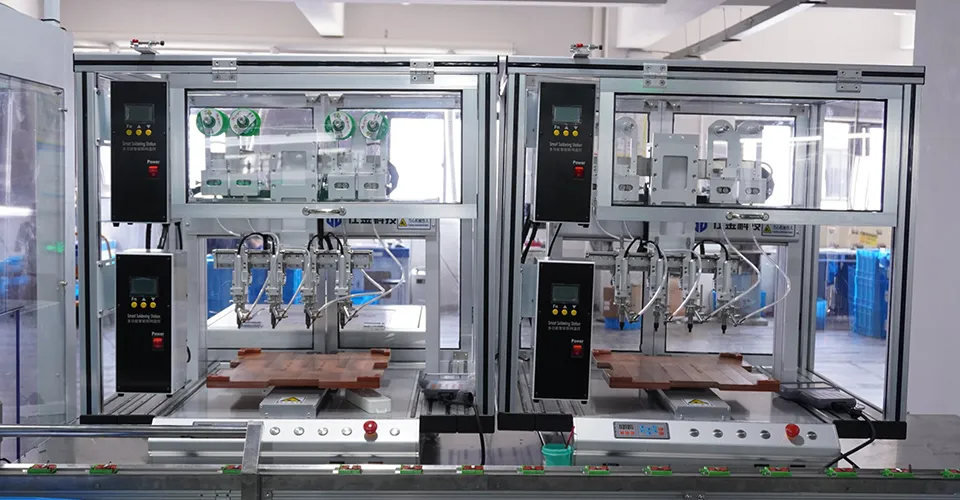
OEM / ODM
Send a drawing and we return a sample: pole count, voltage window, terminal style, marking and packaging are all open to change.
Sample first · Drawing to part · Own marking
Wholesale
Tiered pricing across the SPD range with flexible quantities per model, so a wholesaler can test a market before committing to a container.
Tiered pricing · Flexible qty · Test orders
Distributor Support
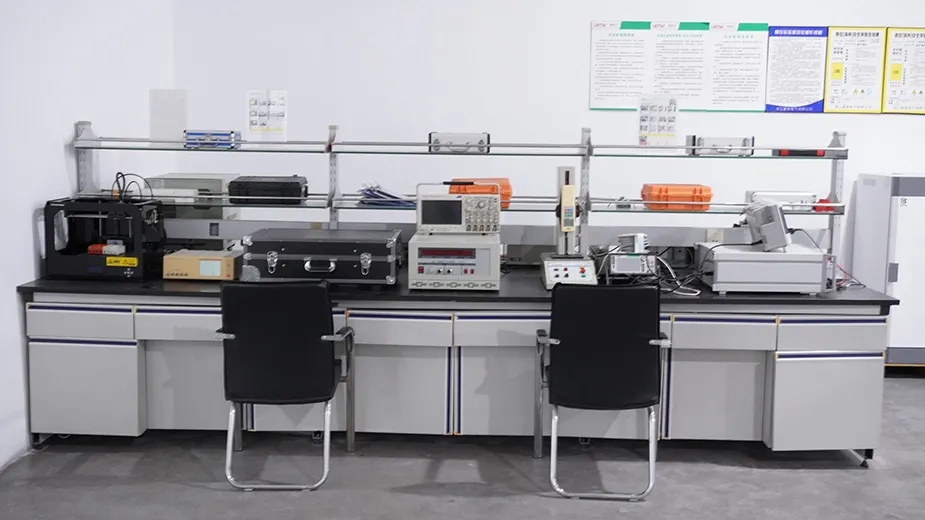
Application advice for local earthing systems, plus the test evidence needed to satisfy inspectors and consultants.
Application help · Test evidence · Inspections
Ready to Order the LT-10C?
Tell us the equipment type, its withstand voltage and the Type 2 device upstream, and we will confirm whether the LT-10C delivers the required let-through level together with a monitored contact.
Frequently Asked Questions
What is a Type 3 SPD used for?
It protects individual equipment or terminal circuits at the end of the installation, downstream of a Type 2 device, and is rated for the combination wave rather than a full induced surge.
Can a Type 3 device be used alone?
No. It is designed to work behind a Type 2 stage; without one, the energy at the point exceeds its rating and the protection level is not achieved.
What does 1.5kV Up mean for equipment?
It is the residual voltage the equipment sees. Whether that is acceptable depends on the equipment’s own surge withstand, which is why the figure is checked rather than assumed.
Is 18mm enough for a Type 3 device?
For equipment-level protection, yes. The energy handled at this stage is small compared with a distribution board device, which is what allows the narrow body and the fitting inside a control cabinet.
What is the difference from a socket-outlet arrester?
A socket arrester protects whatever is plugged into it. This device protects a fixed installation or a machine, is mounted on rail inside the enclosure and provides a remote status signal.
Does it need a backup fuse?
It relies on the upstream protection of the final circuit. Where the circuit is protected by a device larger than the recommended value, a smaller local protection should be provided.


Reviews
There are no reviews yet.