

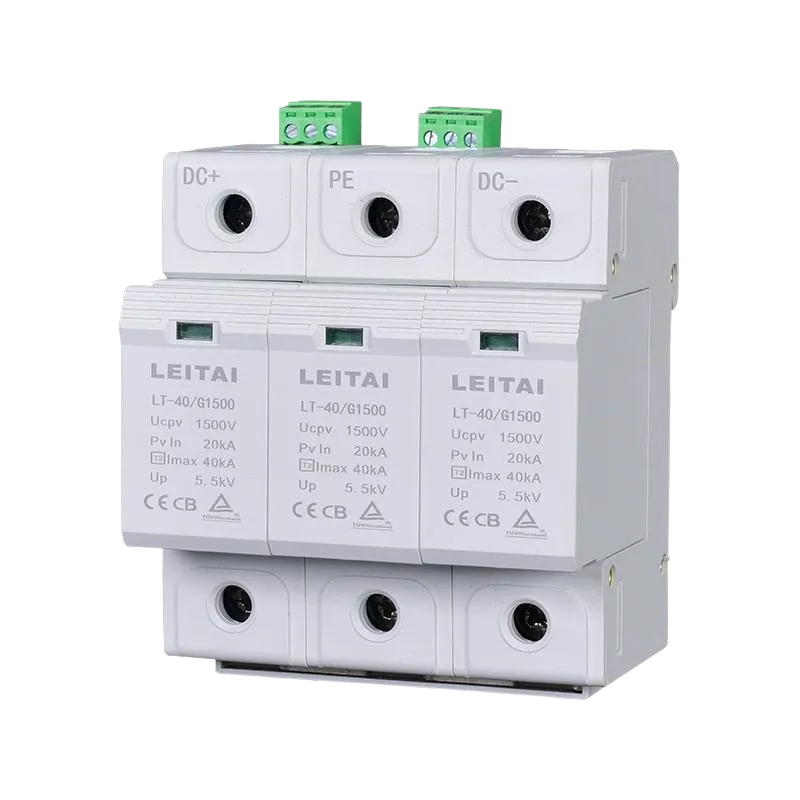
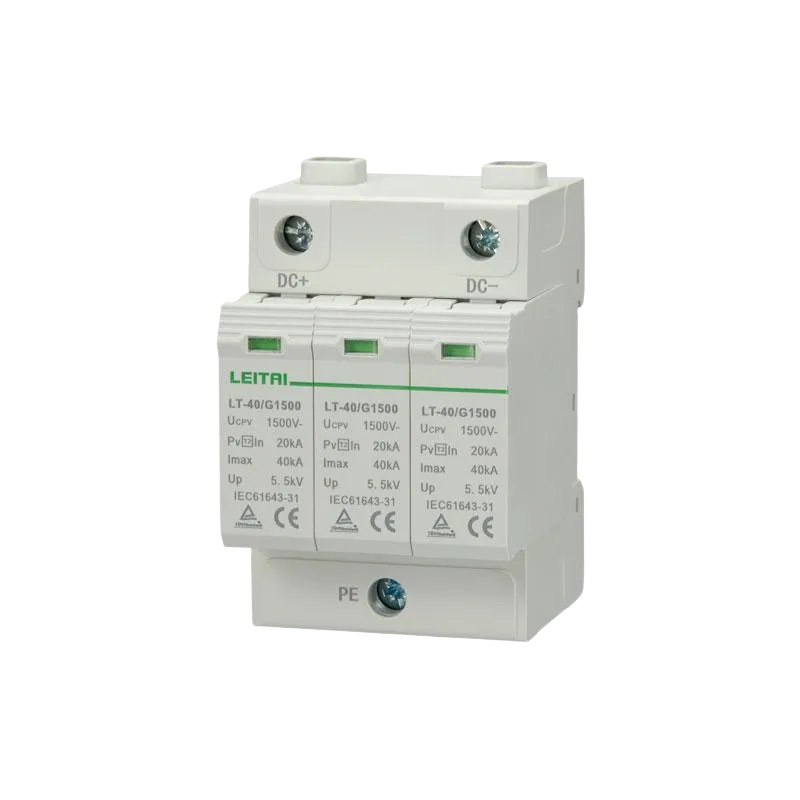
The LT-40/G1500 is a DC SPD for solar string combiners at 1500V, rated In 20kA and Imax 40kA with Up ≤5.5kV. It is built around a three-pole Y arrangement as standard, because at 1500V the earth reference is normally required and the clearances differ from the 1000V unit.
DC SPD for Solar 1500V String Combiners
Built Around the Three-Pole Arrangement
Utility arrays are almost always floating, so both poles need a path to earth and the Y configuration is the standard build here. Offering the device primarily in that arrangement keeps the combiner layout consistent across a plant rather than mixing 2P and 3P devices on the same rail.
Type 2 Duty at Utility Scale
Ground-mount plants have long DC runs and a large conductive structure, but the design of modern utility arrays includes bonding and earthing that limits the lightning current reaching the conductors. Where the risk assessment supports it, a Type 2 device is the appropriate and economic choice.
Protection Level Matched to the Inverter
At 5.5kV the let-through suits the DC input stage of a 1500V central or string inverter. The figure is specified against the inverter’s own withstand rather than in isolation, which is the calculation that should decide the device.
Same Platform as the Rest of the PV Range
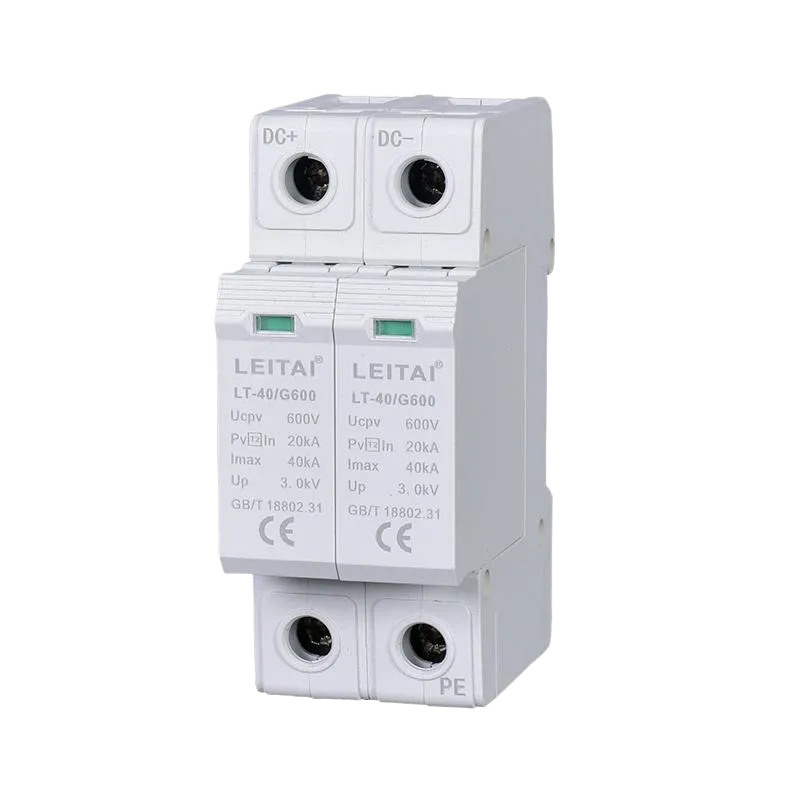
Terminals, mounting and status indication follow the family pattern, so a site using G600 at one point and G1500 at another does not need two installation procedures or two sets of spare parts.
Specifications
| Series | LT-40/G1500 PV Type 2 surge protective device |
|---|---|
| Standard | IEC 61643-31, EN 50539-11 |
| Maximum continuous voltage Ucpv | 1500 VDC |
| Nominal discharge current In | 20 kA (8/20 µs) |
| Maximum discharge current Imax | 40 kA (8/20 µs) |
| Voltage protection level Up | ≤5.5 kV |
| Configurations | Y type 3P standard, U type on request |
| PV short-circuit current Iscpv | 500 A |
| Options | remote signalling version |
| Mounting | 35mm DIN rail in a string combiner |
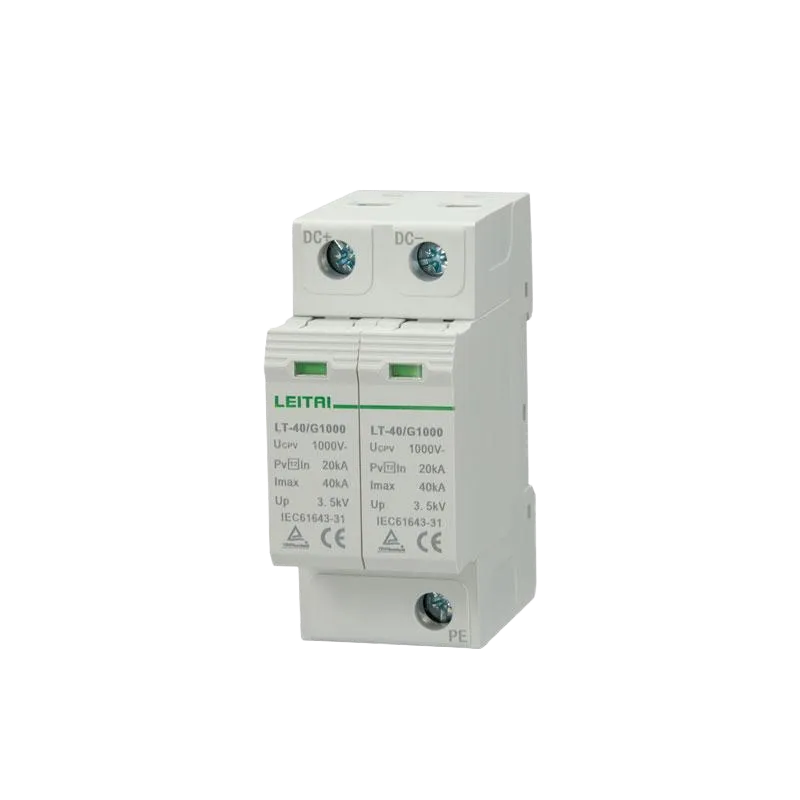
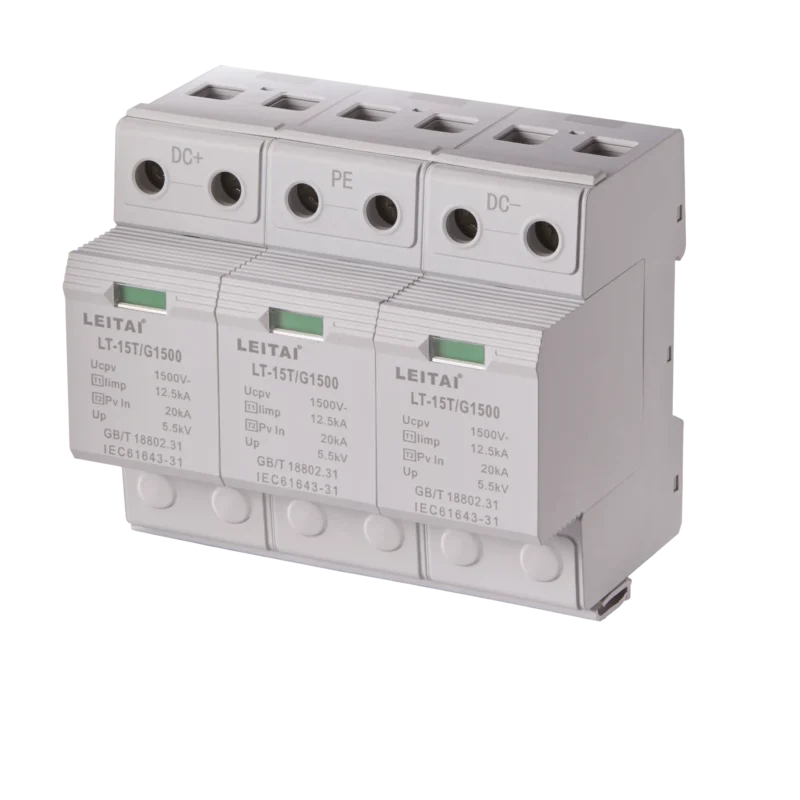
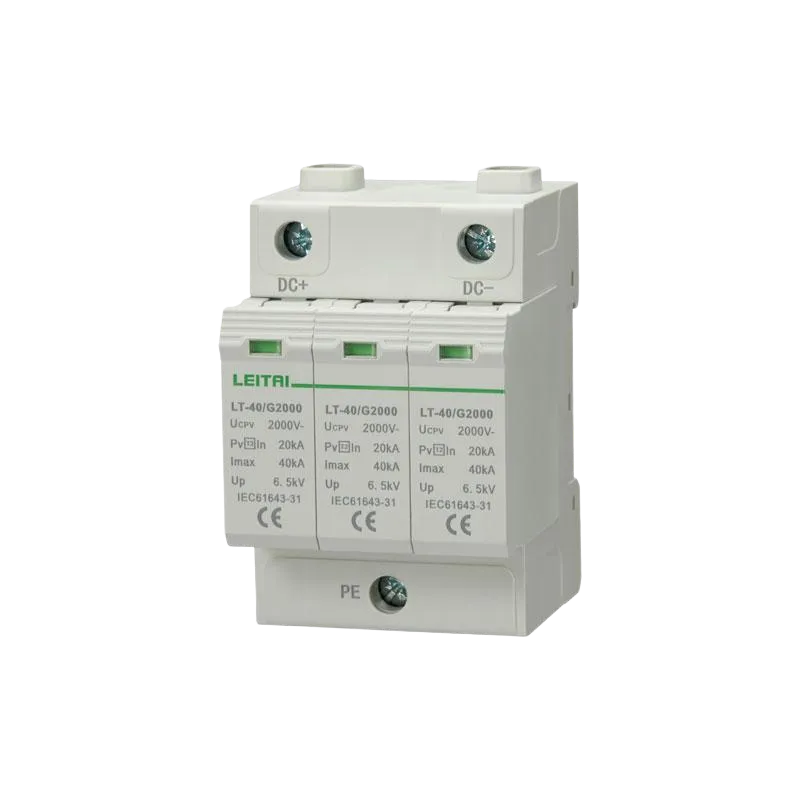
| Related models | LT-40/G1000 and G2000, LT-15T/G1500 (Type 1+2 version) |
Reading the LT-40/G1500 specification
The Y configuration is standard here rather than optional. At 1500V the array is usually referenced to earth through a functional earth connection, and a two-pole device leaves that path unprotected. The third pole adds the reference and the enclosure space that goes with it.
Up is 5.5kV, higher than the 1000V unit’s 3.5kV, and that is expected: the protection level scales with the system voltage. Comparing the two figures directly is meaningless unless the system voltage is taken into account.
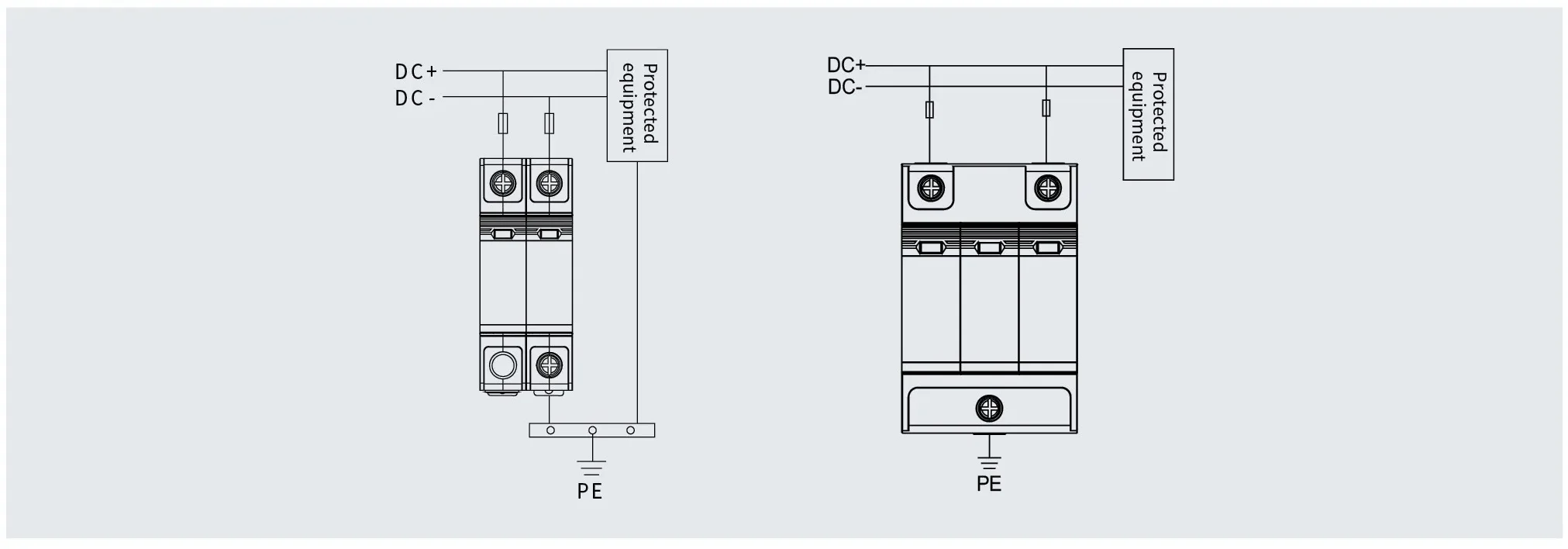
Wiring Diagram & Connection
The 1500 V unit is supplied mainly in the Y configuration because utility-scale arrays reference the DC circuit to earth. The wiring drawing therefore concentrates on the three-pole layout and the clearance between the PE stud and the live terminals.
LT-40/G1500 — Where Exposure and Economics Meet
Ground-mount plants are large, exposed and expensive to maintain, yet the earthing and bonding designed into a modern utility array changes the assessment: the structure provides the lightning path, and the DC conductors see induced transients rather than partial lightning current. That is why a Type 2 device is often the correct and economic specification for these sites.
The counter argument is that a Type 1+2 device costs a modest premium on a plant of this scale and removes the assessment from the discussion. Both positions are defensible; the deciding factor is usually whether the array has a formal lightning risk assessment, because without one the conservative choice is easier to defend after an incident.
Factory-Direct OEM / ODM Manufacturer
Your Specification, Our Production Line
Type-tested platform · private-label marking · batch test records
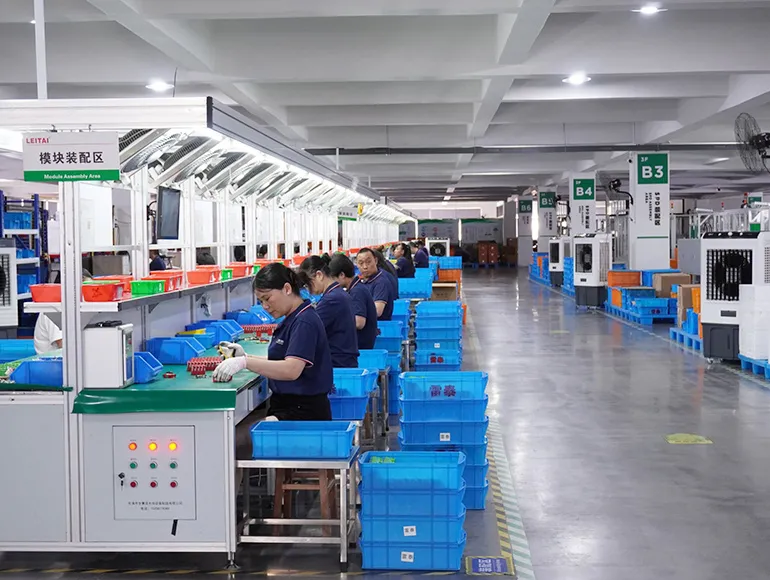
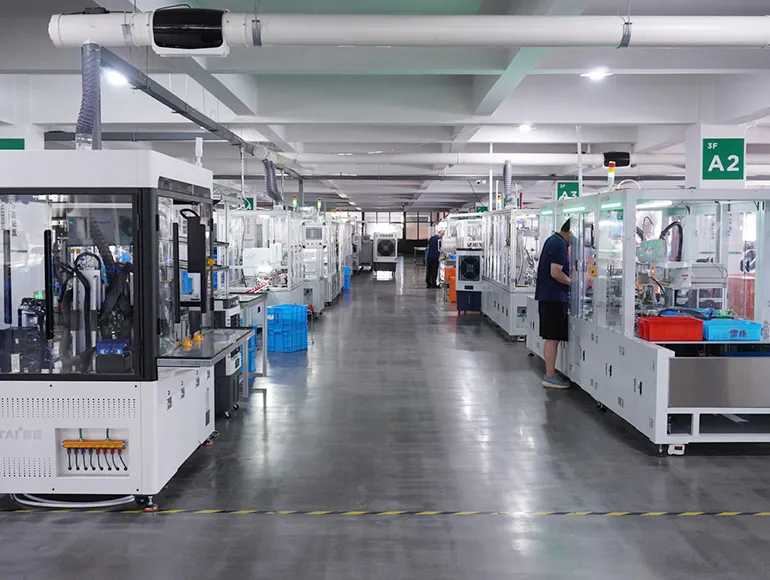
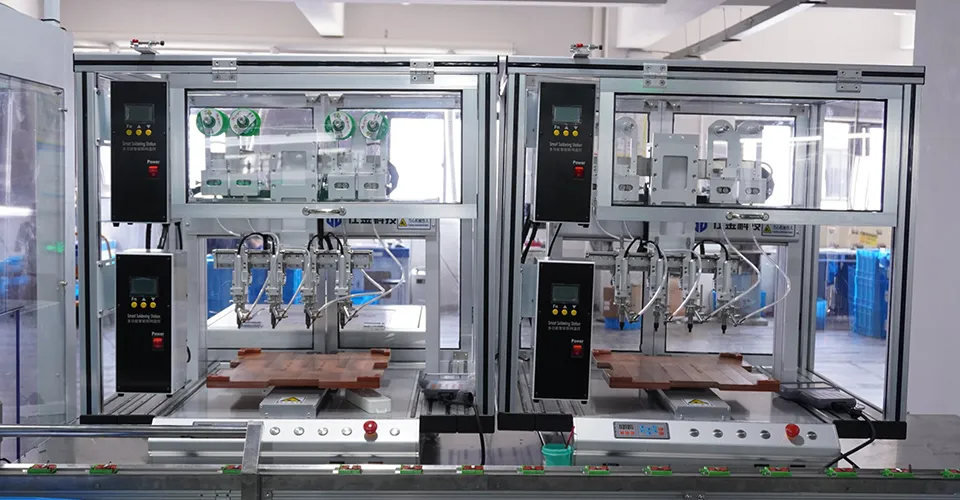
We quote from a real production schedule, not from a stock list, which is why a customer changing from a competitor’s module to ours usually keeps the same panel layout and only changes the label. Everything needed for that switch — drawings, curves and test sheets — is available before the order. The wider family is on DC SPD range.
- Pre-order pack — datasheet, dimension drawing and declaration for your technical file.
- Branding — printed fronts, side references and instruction sheets in your language.
- Consistency — same platform across the range keeps panel stock simple for your customers.
- Support — a named contact for repeat orders and technical questions.
Buying Guide
- Confirm the array maximum voltage at the lowest expected temperature against the 1500V class.
- Check whether a formal lightning risk assessment exists; if it calls for Type 1 capability, use the LT-15T/G1500 instead.
- Confirm the combiner short-circuit current against the 500A Iscpv rating.
- Check the inverter’s DC withstand against the 5.5kV protection level, allowing for cable length.
- Decide on the signalling version according to how the plant is monitored and maintained.
Where the LT-40/G1500 is the wrong choice
A 1000V array does not need this device — the G1000 clamps lower and costs less. Where the array is exposed or forms part of a lightning protection system, the Type 2 rating is insufficient and the LT-15T/G1500 with its 10/350 rating is required.
How We Support Your Business
OEM / ODM
We print your brand on the module front and pack to your carton design; ODM covers new pole layouts, alternative voltage windows and signalling options.
Tooling in house · Branded packing · ODM design
Wholesale
Volume pricing on the whole LT range, with sample lots for tender packages and full containers for stock orders.
Bulk pricing · Samples · Firm lead times
Distributor Support
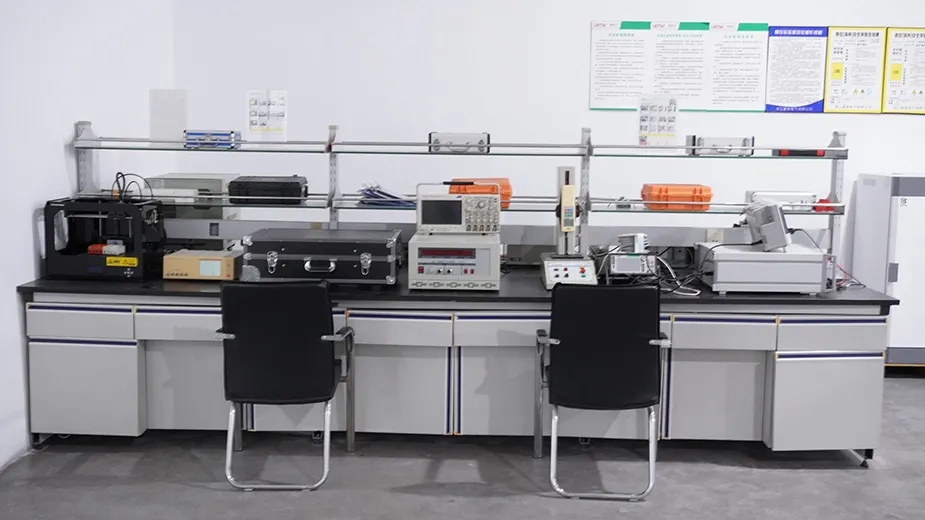
Technical files, selection curves and local standard guidance so your sales team can specify the right type on the first visit.
Datasheets · Selection help · Training
Ready to Order the LT-40/G1500?
Send the plant layout, the risk assessment outcome and the inverter model, and we will confirm whether the Type 2 or Type 1+2 device applies at 1500V for your combiners.
Frequently Asked Questions
Why is Y configuration standard at 1500V?
Because 1500V arrays are normally referenced to earth through a functional earth connection, and a two-pole device would leave that path unprotected.
Is 5.5kV Up too high?
It is proportionate to a 1500V system. The figure scales with voltage class, so it should not be compared directly with a 3.5kV device on a 1000V array.
Can it be used with a 1000V array?
It can, but the clamping level is set for 1500V, so the residual is higher than necessary. The G1000 is the correct device at that voltage.
Is the 5.5kV level acceptable for the inverter?
It is specified against the inverter’s DC withstand, which is designed for a 1500V system. Check the figure in the inverter datasheet and allow for the cable length between device and input.
What maintenance does it need?
Status inspection, plus verification after any significant lightning activity. On plants where signalling is fitted, failures are reported rather than discovered.
Does the device need a DC-rated disconnector?
Yes for isolation. PV circuits do not self-extinguish, so only DC-rated devices should be used for maintenance isolation.



Reviews
There are no reviews yet.