


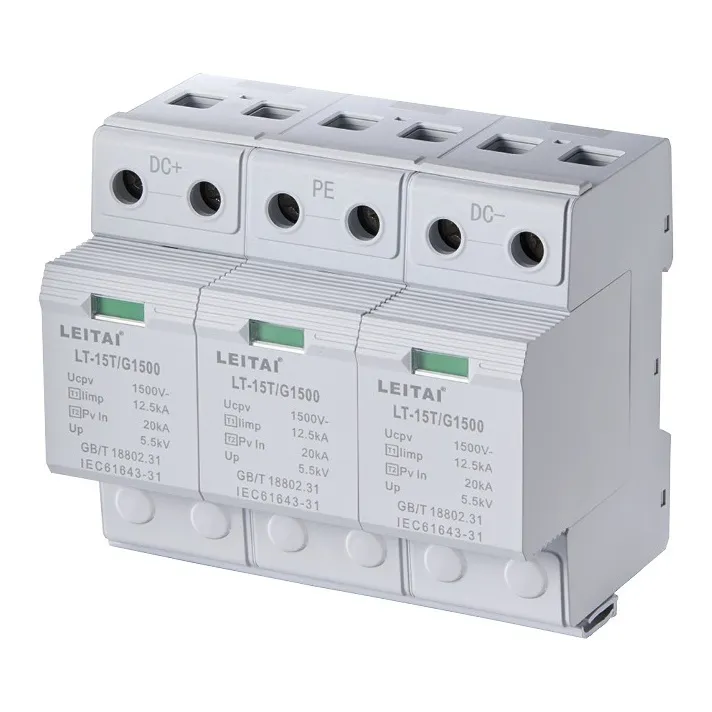
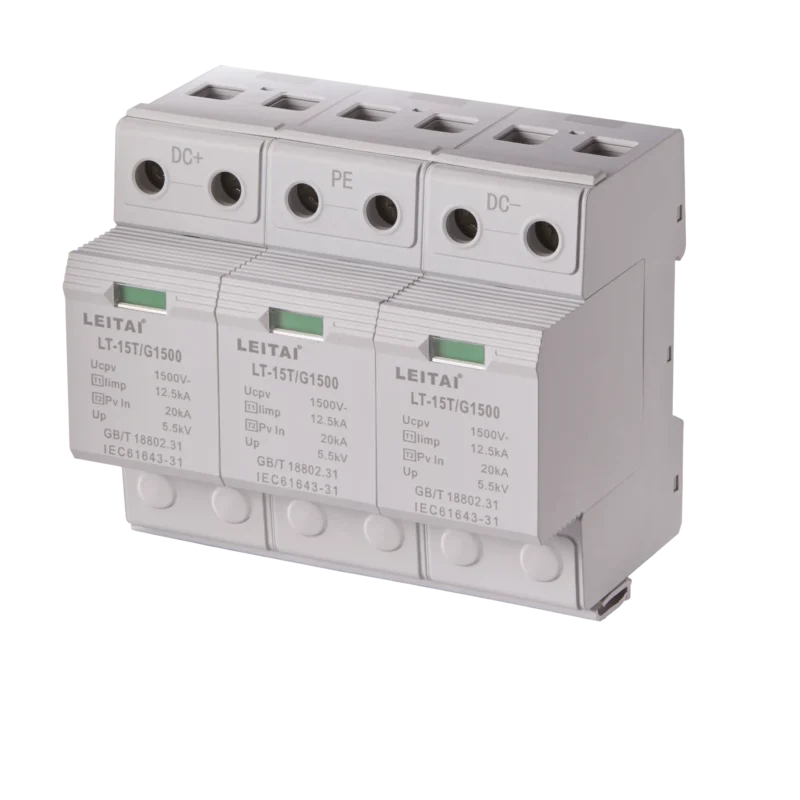
The LT-15T/G1500 is a 1500V DC solar surge protector with a Type 1 rating: Iimp 6.25kA (10/350 µs), In 20kA, Imax 40kA and Up ≤5.5kV. It is the device for utility-scale arrays that cannot be treated as shielded, where the DC side has to carry part of a lightning current.
Solar Surge Protector 1500V DC Type 1 for Utility
1500V Systems, Different Devices
Raising a string voltage from 1000V to 1500V cuts the current for the same power and reduces cable losses across a large array, which is why utility-scale plants use it. It also means every DC component, protection included, has to be rated for the higher continuous voltage, and a 1000V device cannot be used with a note about derating.
Same Physical Format as the 1000V Unit
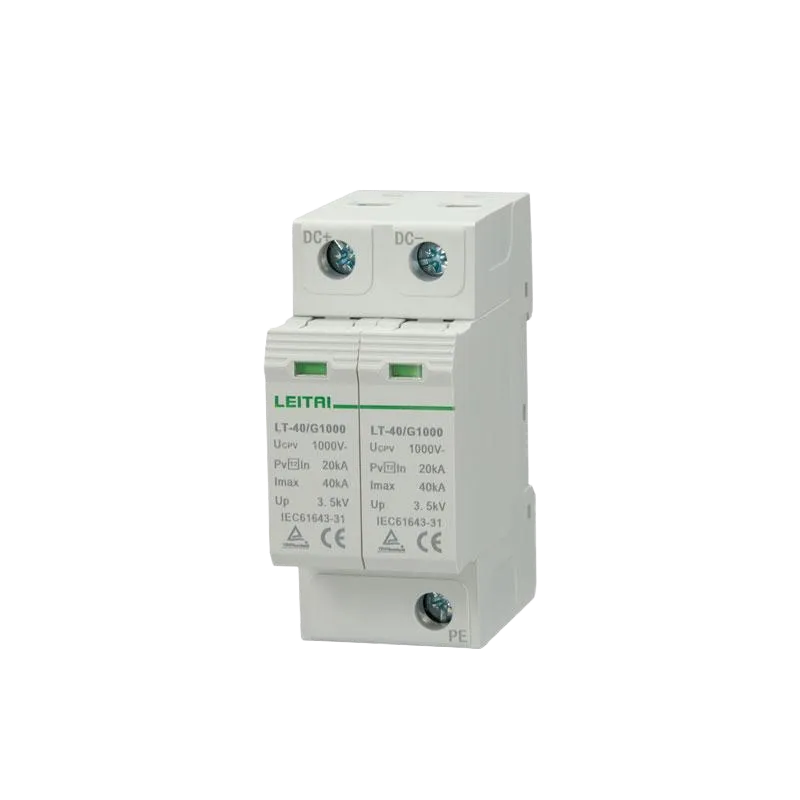
The body, terminal arrangement and Y configuration are shared with the lower-voltage version, so a plant that runs a mixture of array voltages uses one installation method and one spare-parts line. Only the element and the label differ.
Protection Level Scaled to the System
The 5.5kV level looks high next to AC figures, but it is proportionate to a 1500V system and is what the inverter input is designed to withstand. Comparing it with a 230V device’s clamping voltage is a category error.
Combiner Box Duty
The usual installation is inside a DC combiner box, where several strings meet before the run to the inverter. That position protects both the incoming strings and the outgoing DC cable, and it is the point at which a single device covers a group of strings.
Specifications
| Series | LT-15T/G1500 photovoltaic surge protective device |
|---|---|
| Standard | IEC 61643-31, EN 50539-11 |
| Maximum continuous voltage Ucpv | 1500 VDC |
| Impulse discharge current Iimp | 6.25 kA (10/350 µs) |
| Nominal discharge current In | 20 kA (8/20 µs) |
| Maximum discharge current Imax | 40 kA (8/20 µs) |
| Voltage protection level Up | ≤5.5 kV |
| Configuration | Y type, 3 poles, DC+ / PE / DC- |
| PV short-circuit current Iscpv | 100 A |
| Mounting | 35mm DIN rail in a combiner box |
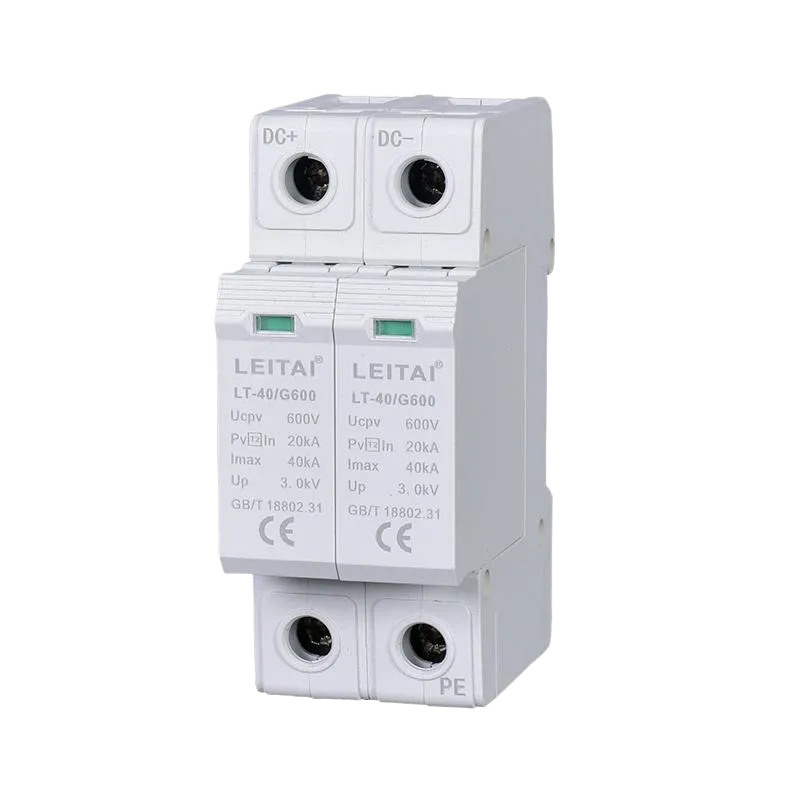
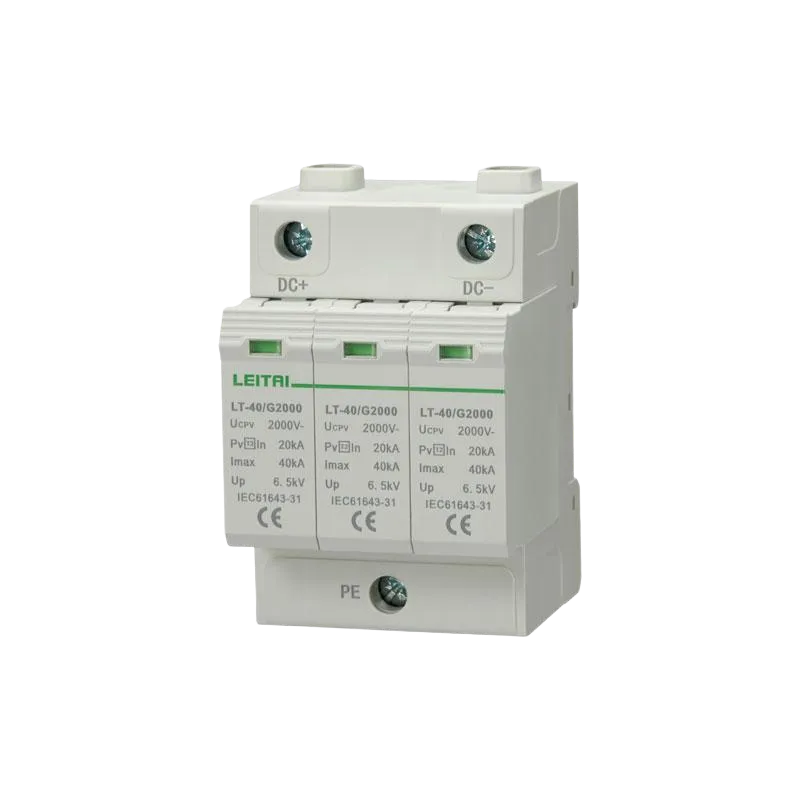
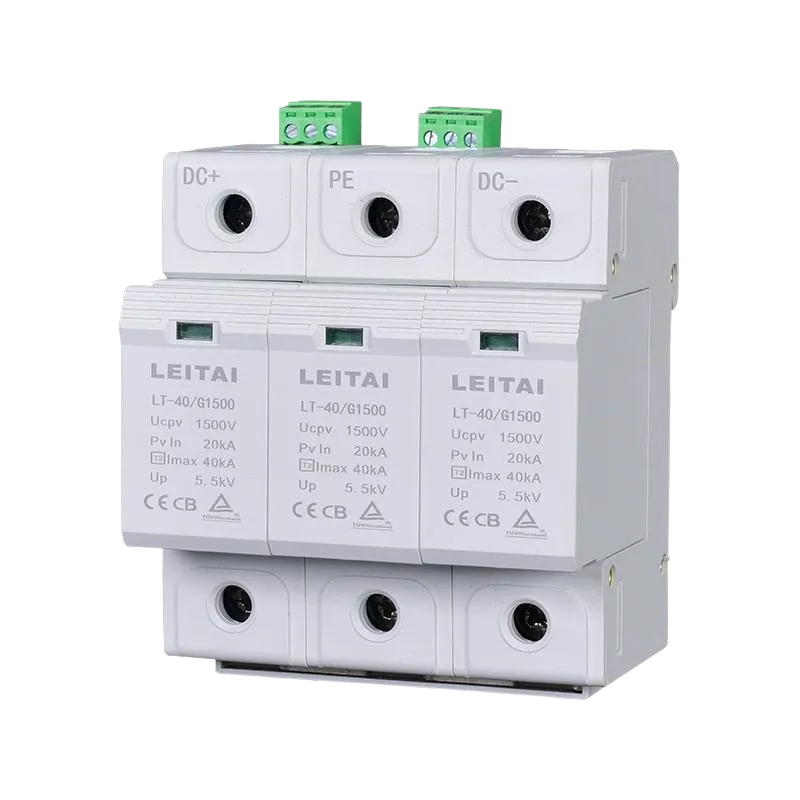
| Related models | LT-15T/G1000 (1000V), LT-40/G1500 (Type 2 only, 1500V) |
Reading the LT-15T/G1500 specification
At 1500V the clearances and creepage change, not the topology. The unit keeps the same Y connection as the 1000V version but widens the separation between the DC terminals and the earth bar, which is why the housing and the wiring detail differ even though the schematic looks identical.
Up of 5.5kV is the figure the inverter’s DC input has to tolerate. It is not comparable with a 1000V device’s 3.5kV without accounting for the system voltage, and it should be checked against the inverter’s surge withstand rather than assumed acceptable.
Wiring Diagram & Connection
At 1500 V the wiring differs from the 1000 V unit in clearances rather than in topology: same Y connection, wider creepage between the DC terminals and the earth bar. Cable glands and separators have to respect the higher voltage class.

LT-15T/G1500 — Utility Scale Means Longer Cables and Higher Stakes
In a utility-scale plant the DC cable runs are measured in hundreds of metres, and the inverter is the single most valuable component on the DC side. A surge that starts at the array has a long path to travel and, without protection at the combiner, arrives at the inverter substantially intact. That is the engineering case for a device in the combiner box rather than only at the inverter.
The 1500V configuration is now the default for new utility plants because it reduces balance-of-system cost. The protection consequence is that every device on that side must be rated for the higher voltage continuously, and the 5.5kV clamping level is the price of operating at that voltage rather than a shortcoming of the product.
Factory-Direct OEM / ODM Manufacturer
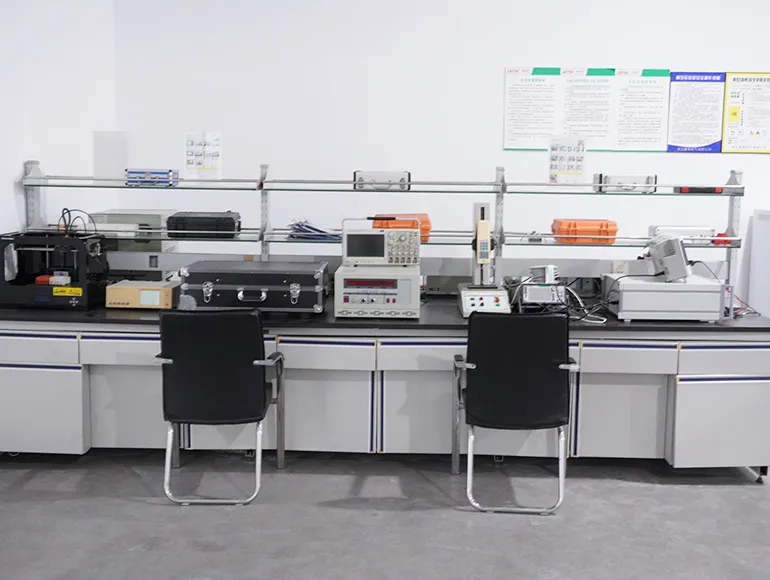
Tooling We Own, Standards We Follow
IEC 61643-11 platform · 250kA test station · OEM and ODM programmes
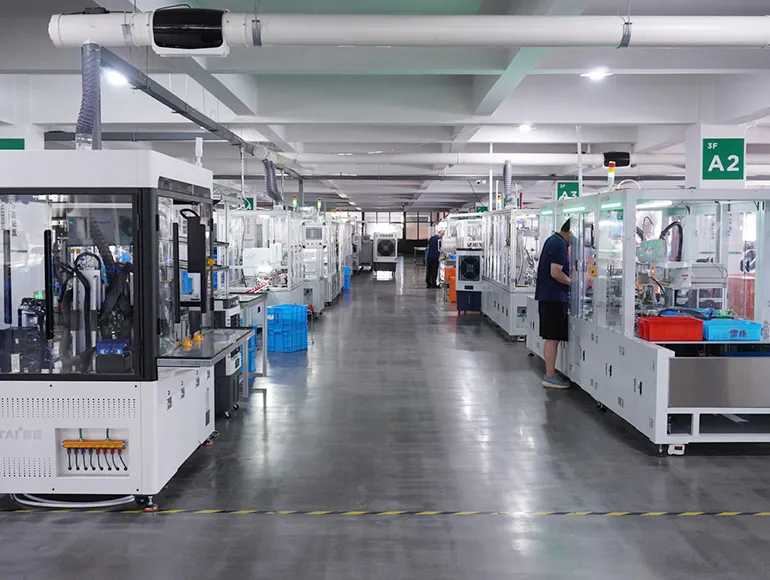
The modules on this page share a platform that has already passed type testing, so a variant order inherits that evidence instead of starting again. Manufacturing sits beside the laboratory, which is how we can verify a change before it enters a customer’s catalogue. Browse the rest of the range on DC SPD range.
- Design control — drawings, BOM and test limits held under one quality system.
- Lab access — impulse and residual-voltage checks run before a variant is released.
- Branding — plate printing, laser marking and carton artwork prepared from your files.
- Order size — sample lots, LCL and full containers all quoted from the same line.
Buying Guide
- Confirm the maximum array voltage under the coldest expected temperature, not just the nominal figure.
- Check the combiner short-circuit current against the Iscpv rating.
- Decide whether protection is needed at the combiner, the inverter, or both ends of the DC run.
- Confirm the array earthing arrangement and whether Y configuration suits the design.
- Specify DC-rated isolation for maintenance, since PV circuits have no natural current zero.
Where the LT-15T/G1500 is the wrong choice
It is not a replacement for a Type 2 device on a shielded 1500V array, where the G1500 is sufficient and costs less. Nor can it be used below its voltage class as a general-purpose device — a 1000V array should use the LT-15T/G1000.

How We Support Your Business
OEM / ODM
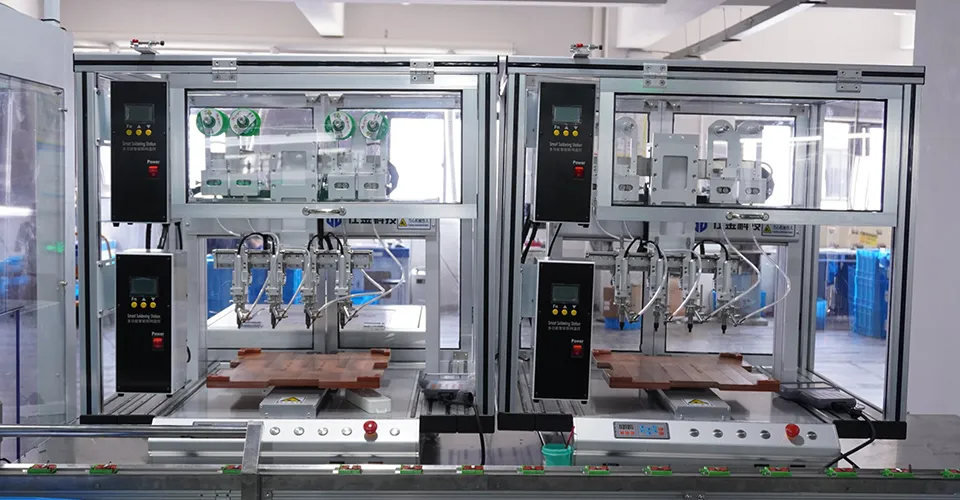
Housing colour, pole count, voltage window, alarm contact and retail packaging built on our standard SPD platform — your logo on the front, your reference on the side.
Custom marking · Private label · Own artwork
Wholesale
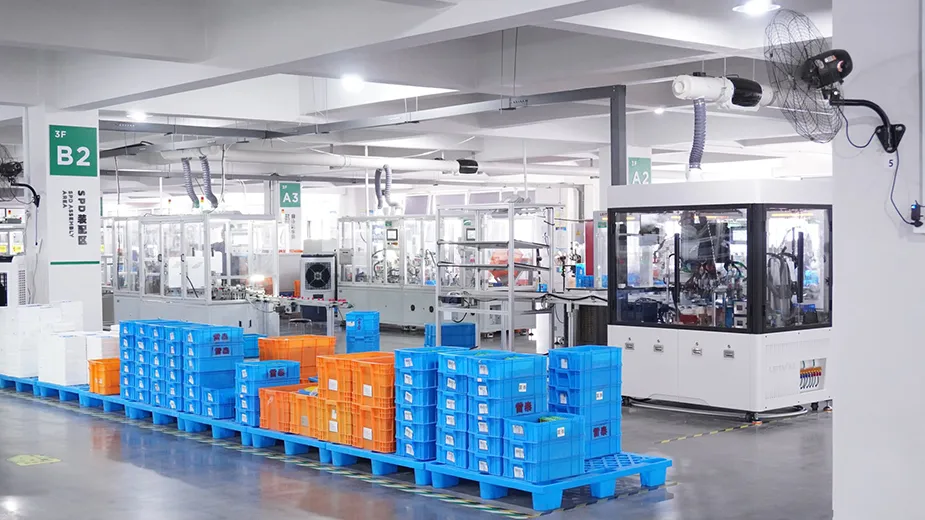
Factory-direct pricing with a per-item MOQ, mixing SPD models and backup protectors in one container for importers, panel builders and catalogue sellers.
Factory pricing · Mixed models · Container loading
Distributor Support
Account management, local voltage and standard advice, plus priority production slots for partners building an SPD range in their market.
Account manager · Market advice · Priority slots
Ready to Order the LT-15T/G1500?
Send the array voltage calculation, the combiner current and the inverter specification, and we will confirm the G1500 device and the installation points for the DC side.
Frequently Asked Questions
What is a 1500V Type 1 DC SPD used for?
It protects utility-scale 1500V arrays that cannot be treated as shielded, carrying part of a lightning current on the DC side as well as induced surges.
Why is Up 5.5kV on this device?
The protection level scales with system voltage. 5.5kV is proportionate for 1500V and must be checked against the inverter’s DC withstand rather than compared with a 1000V device.
What is different from the 1000V version?
Clearances and creepage between the DC terminals and the earth bar, plus the housing detail. The Y topology is the same.
Is a Type 2 only device enough?
Where the array structure is not part of a lightning protection system and is well shielded, a Type 2 device such as the LT-40/G1500 is adequate. Exposed arrays warrant the Type 1+2 rating.
Does bifacial gain affect the rating?
It raises the current the device may see, so the Iscpv calculation should account for it. Tell us the module specification and we will confirm.
Is monitoring available?
The device is available with remote signalling on request, which is common on utility plants where combiners are distributed across a large site.


Reviews
There are no reviews yet.