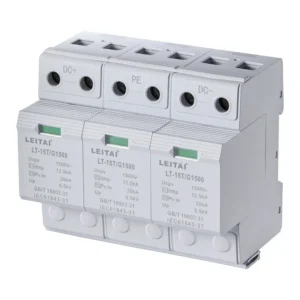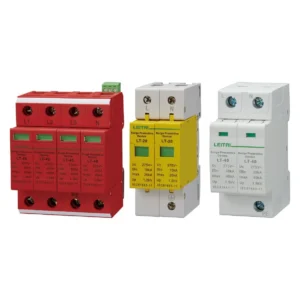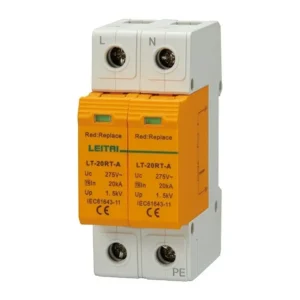

Most of the time, retrofitting surge protection into an old electrical riser does not work simply because there is not enough space rather than because it does not work electrically. Older riser panels were manufactured for the electrical installations of their time, pathways are crowded, depths of enclosures have been fixed and busbars cannot be relocated. All devices that are used in such cases have three characteristics: devices are narrow; all protection modules can be changed without disturbing the wiring; and devices can cooperate with existing overcurrent protection.
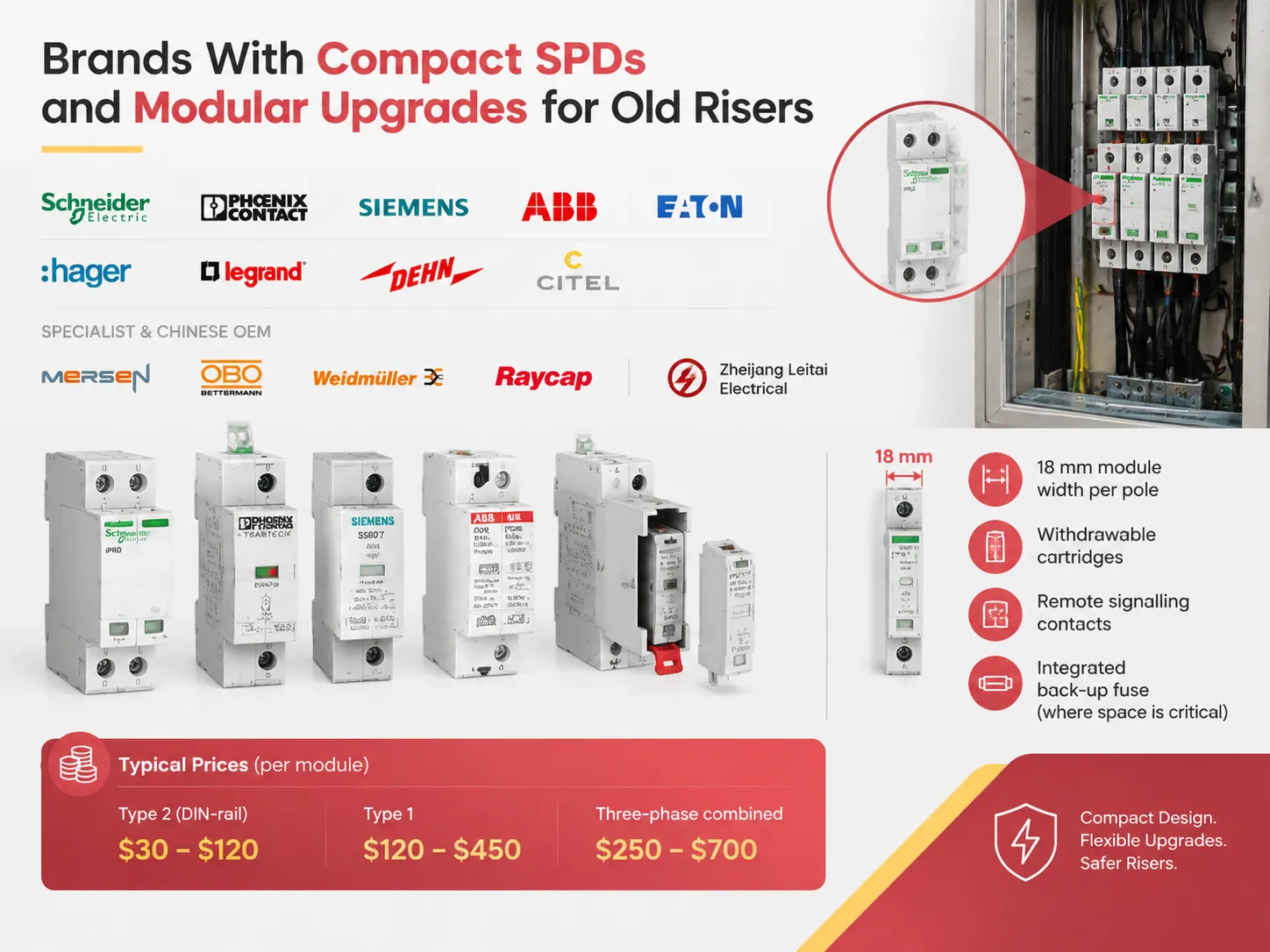
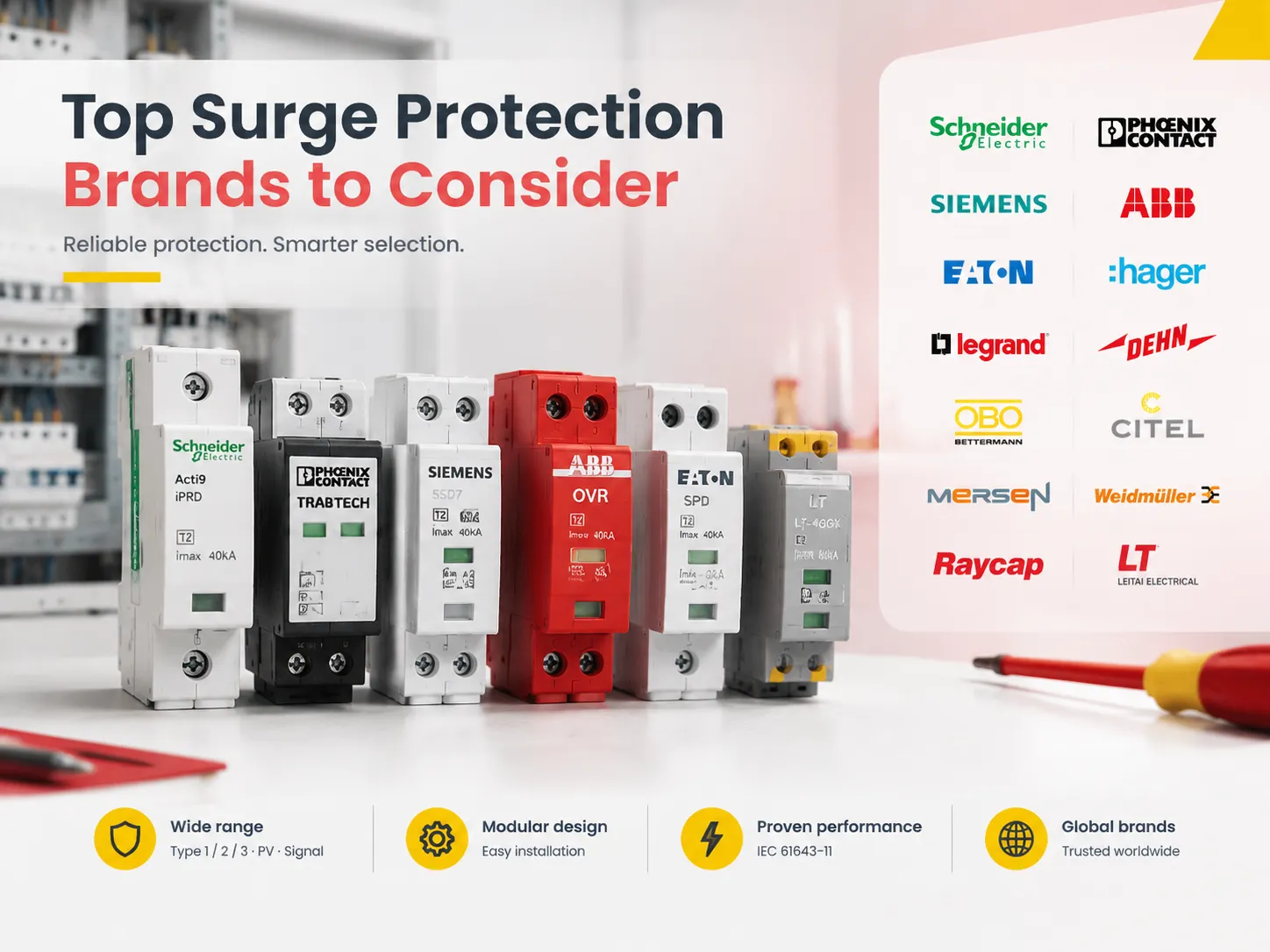
In short, for SPD equipment belonging to small modular devices the main manufacturers are Schneider Electric (Acti9 iPRD – their series of devices can be made in one-modules-per-pole configurations), Phoenix Contact (consider their TRABTECH families allowing installation of devices into sockets), Siemens (5SD7), ABB (OVR), Eaton, Hager, Legrand, DEHN, CITEL, while Mersen, OBO Bettermann, Weidmüller and Raycap are specialized companies having specific roles in the sector, including making similar products for less with the help of the Chinese OEM base, where the Zhejiang Leitai Electrical can be mentioned. The equipment design has to be compact (the devices are usually made with 18mm in width), deliver withdrawable cartridges and offer remote connections, where applicable. The prices vary from $30 to $100 for a regular DIN rail Type 2 module, from $120 to $450 — for a Type 1, and from $250 to $700 — for a 3-phase combined product.
Why Old Risers Are Awkward to Protect
A riser acts as a major conduit in a building’s electrical distribution. This, in turn, connects different floors to a main or sub-main position and has a number of tap-offs on each floor. The retrofitting problem, however, is quite unique in an older building.
- No excess space available. A riser panel that was installed twenty years ago is complete with all components but has no room for equipment that didn’t exist at the time of installation. The SPD that requires three modules per pole cannot fit the current assembly.
- No additional depth or a sealed structure. There are risers that are either busbar systems or sealed structures with no possible way of introducing an internally mounted unit, thus forcing the SPD to be mounted in an external box and modifying the cabinet configuration.
- The fault current equals what it equals. A riser may get a higher fault current value than at the source since the impedance of the circuit has been significantly reduced. Thus, the SPD requires a higher level of short-circuit current than needed in other cases, but it may not be possible to find a suitable device.
- Grounding may become a problem. A newly installed SPD in an older building has different grounding arrangements that were suitable in the past but insufficient in the current design. Therefore, a new SPD installed on a high-impedance ground will divert less amount of reserve current.
- Downtime is an issue. In an operational office building, the riser work is carried out after work hours and in very limited time intervals. Any process involving relinking a current supply line and replacing the worn-out assembly cannot be completed, thus leaving the SPD unserviceable.
That last point is why the commercial retrofit market specifies modular hardware by default rather than as an upgrade, and it is the reasoning behind how surge protection is scoped for commercial buildings where risers, lift supplies and tenant distribution all have to be protected without a shutdown.
Decide the Type Before You Shop
Compactness is a limitation but not a decision-making factor. Decide on the type of the riser location before comparing the widths, since the type will determine the comparative list completely.
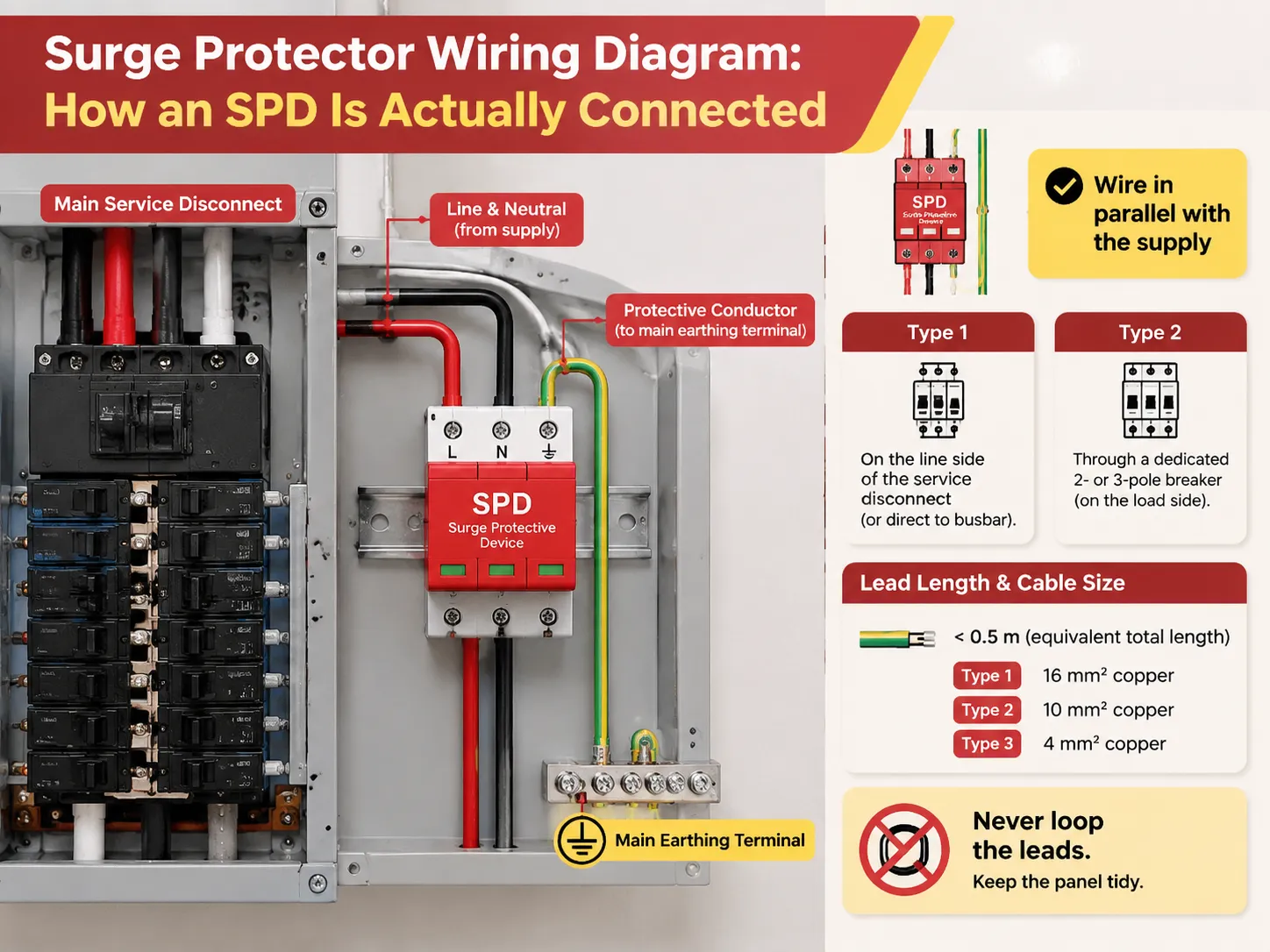
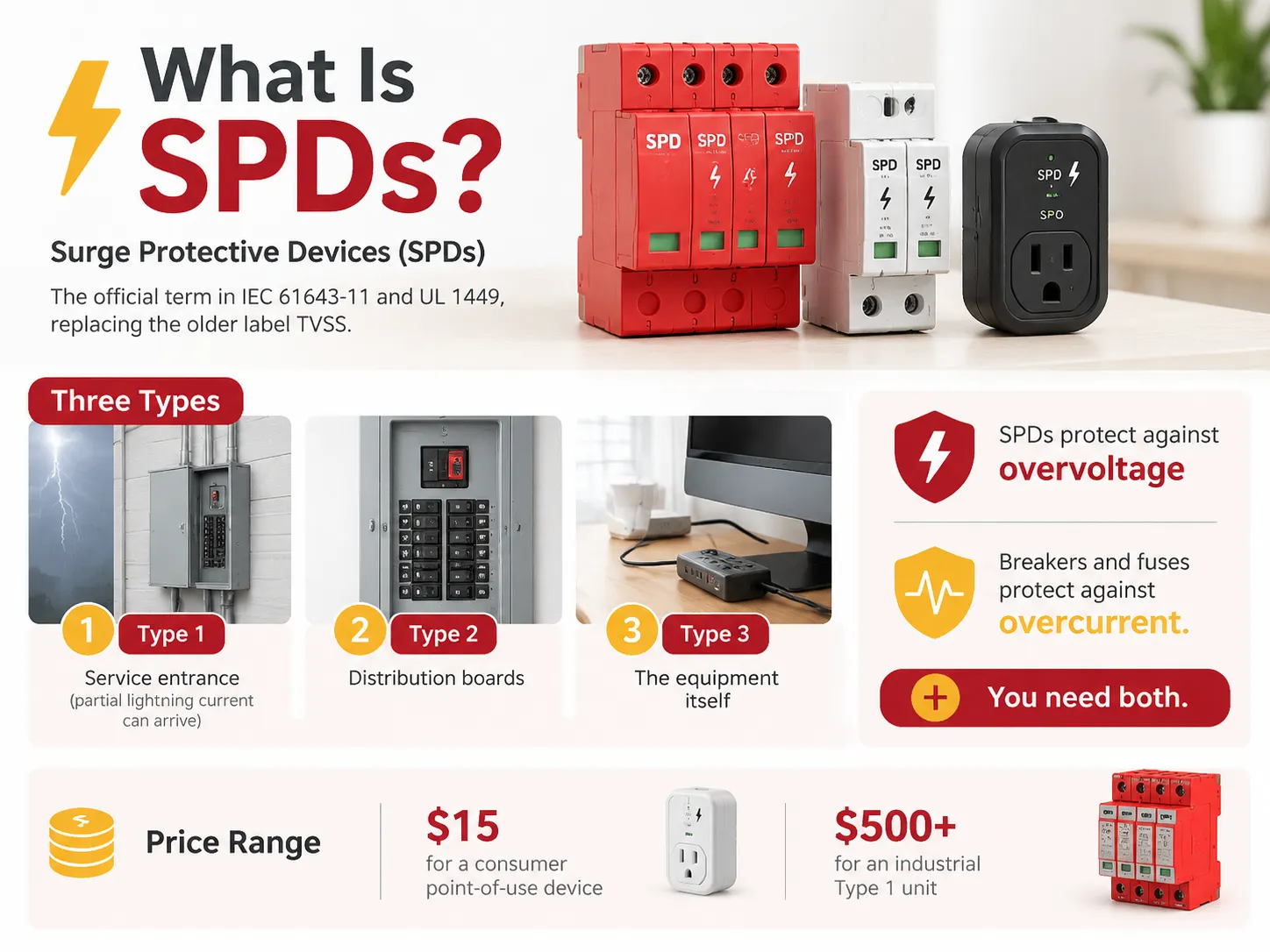
- At or upstream of the origin, on a facility with the external lightning protection device or in a supply line: Type 1, or Type 1 + 2 combined device. This is the location for the partial lightning current arriving and the device will be tested under the 10/350 μs waveform.
- At the riser take-off or floor distribution board downstream of the main overcurrent: Type 2. This is the most common case for retrofitting the risers, which is tested at 8/20 μs and defined by In and Imax.
- At the equipment located at least 10 meters away from the service: Type 3 and only as the last stage.
Getting this wrong is the one mistake compactness cannot compensate for — a Type 2 device in a Type 1 position does not underperform during a direct strike, it fails. The distinction between Type 1 and Type 2 SPDs is a placement rule tied to a test waveform, so the survey of the riser comes before the product comparison every time.
What Retrofit-Friendly Looks Like in Product Terms
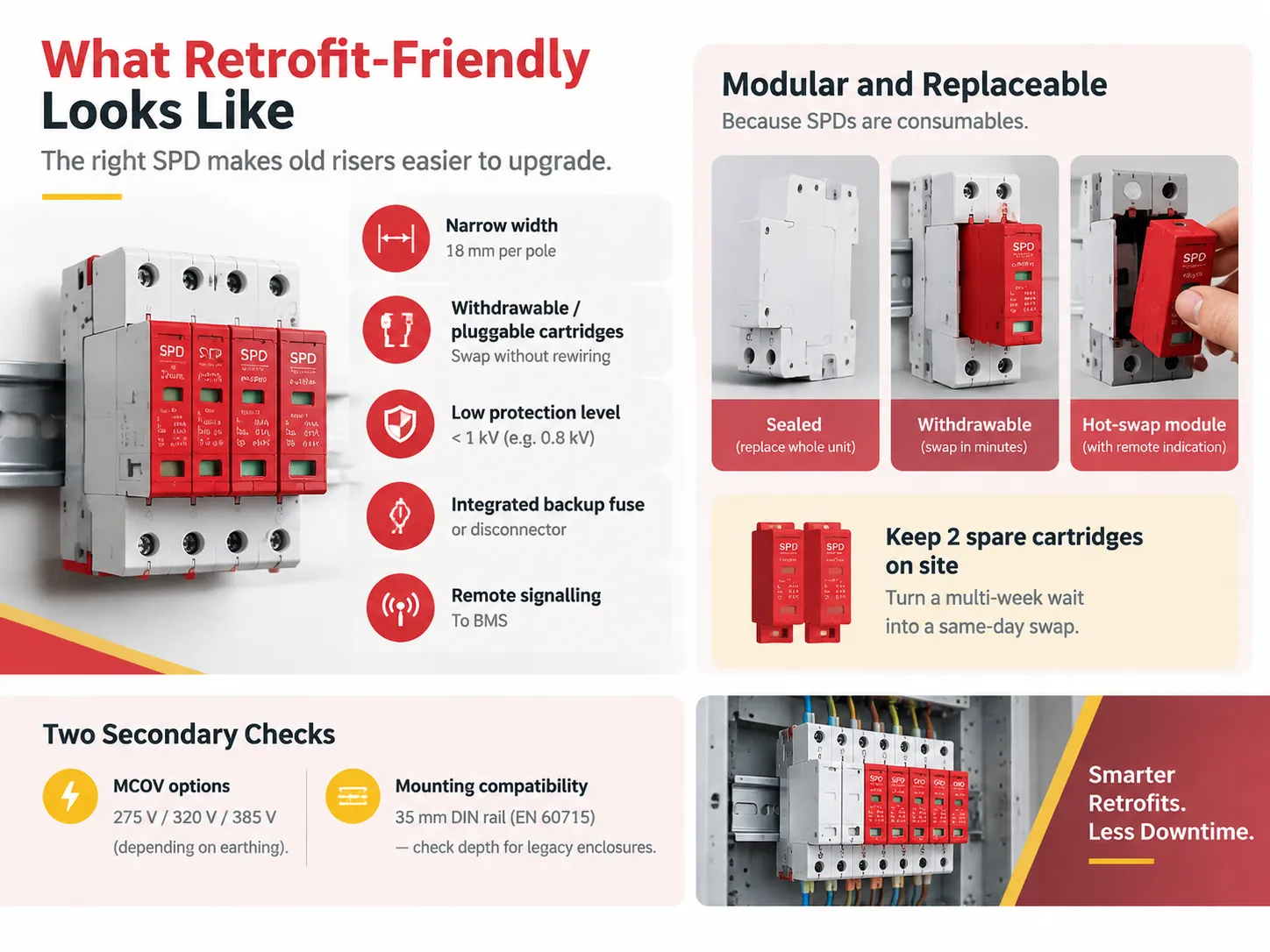
There are five characteristics that differentiate a device that fits neatly into an existing riser from one that turns into a project.
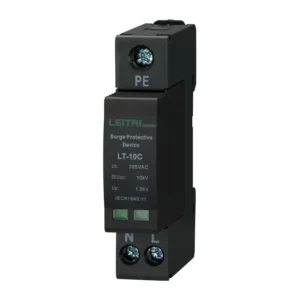
- Slim profile of the module. The practical limit for a module is one that is 18 mm wide or smaller. If it is wider, it means sacrificing that position or having to redesign the enclosure.
- Modular or plug-in cartridges. The device allows you to pull out the device and insert a new one without even touching the cables. This is the most useful feature in terms of allowing retrofitting to be done.
- Low degree of protection at a given footprint. Many legacy devices in old buildings are used under specifications that require low levels of impulse strength so that the degree of insulation in this case matters more than in the case of new equipment. The best compact devices get well under 1 kV, and a device like the Type 2 SPD with an 0.8 kV protection level at In 20 kA and Imax 40 kA exists precisely for boards feeding sensitive equipment where the MCOV still has to sit at 275 V.
- An in-built backup fuse or a specifically designed disconnector. If there is no separate branch on the riser, a device operating properly would save up space as no space is available.
- Remote signalling. A dry contact wired into the BMS makes an invisible end-of-life situation become a job. In a riser that no one visits, this is what prevents protection from dying silently at four years of age.
Two related features should be considered during the investigation. First, MCOV options are important as outdated installations sometimes have non-traditional earthing requirements and there is a need for a 280 V variant instead of the standard 275 V L-N. Another point that is also worth mentioning is the compatibility in installation as nowadays most devices use 35 mm DIN mounting normalized in EN 60715 standards, but older devices sometimes have DIN mountings located deeper than standardized ones, which should be checked beforehand.
Modular and Replaceable: The Maintenance Argument
SPDs are consumables. Every varistor inside degrades slightly with each event absorbed, and in a building with motor loads, lifts, and variable frequency drives, events are constant. Realistic service life in a commercial riser runs three to seven years at most.
That reality turns the maintenance mechanism into a specification requirement rather than convenience. Three approaches exist.
- Sealed single-piece device. Cheaper per unit. When it reaches its end of life, the electrician isolates the circuit, removes the conductors, replaces the entire device, and re-terminates. In a live riser, this means a shutdown window, and it means, in practice, it does not happen.
- Withdrawable cartridge. The module is permanently wired but can be replaced in minutes. This is the commercial solution that most companies have available in their product lines.
- Hot-swap plug-in module with remote indication. This is the fastest option designed for busbars and rail installations where the module is part of the existing infrastructure.A plug-in Type 2 module rated In 20 kA with a 1.2 kV protection level and a remote signalling contact is representative: the base stays bolted, the module comes out by hand, and the BMS knows when.
Any mechanism that needs a retrofit must have a stock decision attached to it. Having extra cartridges available on-site is inexpensive and can turn what would take a few weeks to procure into a same-day process. Without this, the modular feature is merely academic.
The Brands Worth Shortlisting
The compact and modular part of the market is already well-established, and the instructions and connections of the products are the only varies points of competition. Below is a fair overview of the market.
- Schneider Electric (Rueil-Malmaison, France). The Acti9 iPRD family is the benchmark for modular renovation: Type 2, Type 2 +3, and Type 1 +2 versions. Imax varies from 8 kA to 65 kA, comes with removable cartridges and ability of remote monitoring. The product line also includes a version with an internal backup fuse and a very compact version with one module per pole. The advantage of this solution is its compatibility with other products from the Acti9 line. The disadvantage that it is the one with the highest price among the competitors.
- Phoenix Contact (Blomberg, Germany). TRABTECH modular protection device, with a product range that includes also supply of PV, signal and data connections. The strong point of the device is the best in class documentation, and application engineering that allows keeping the protection of both power and signals from a single supplier. The week point is that the depth of the product range instead of its price and difficulty in getting necessary goods without the configurator.
- Siemens (Munich). 5SD7 product is designed to fit Type 1, 1 + 2, 2 and 3 standards as well as to provide protection for sources with PV, measuring and controlling signals. The strong side of the company is the wide range of various types united in one family and high-level integration with Siemens switch devices. The weak side is the price of the product that is in line with Schneider prices and availability ofthe OVR options for Type 1 and 2, as well as OVR PV up to 1500V DC and data line products, are advantageous in terms of electric functioning and extensive distribution. Its disadvantage is that there is no evolution of the modular one than in case of Schneider’s electric in the compact segment.
- Eaton is another contributor through its series of SPD for Type 1, Type 1 + 2, and Type 2, plus PV and data signaling. Its edge is that the brand is extensively present in the market of switchboards and panels on the North American market. However, the downside is that the company deals with integration of panels and switchboards and has less experience in the area of DIN rail retrofitting which makes the company weak in this respect.
- Hager and Legrand are also engaged in the operation of compact modular SPD packets that are connected to their deployers. Its benefit is low-cost prices within the platforms and good access in Europe. Its drawback is limited assortment of electrical ratings comparing to the leaders in the field.
- DEHN and CITEL, and OBO Bettermann are all surge protection experts. Its prominent position is an availability of extensive product range in difficult conditions and a variety of signal protection options along with a developing ability in terms of lightning protection designs. Problem is high cost of solutions in comparison to automation giants.
- Mersen and Weidmuller produce the products allowing for integration of fuses and terminals in the surge protection devices. In addition, Mersen and Weidmuller services support is high enough being also their disadvantage at the same time.
- Raycap works on busbar and Type 1/2 infrastructure technologies for telecommunications and energy. Busbar solutions are designed primarily for busbars, so they fit certain rise arrangements much better in comparison with standard DIN rail solutions. Therefore, they are a less valid option for a single floor panel.
- Zhejiang Leitai Electrical is also qualified as a surge protection specialist rather than a brand working in the field of automation in general. The company offers multiple surge protection devices from Type1 up to Type4 for various sectors. The success of LT on the market is connected with low cost of devices being provided thanks to low-cost production based in China. The company exists on the market as an entity certified by ISO 9001, 14001, and 45001.
Some commonly used model names that you can keyword search for in the image survey include Schneider’s Acti9 iPRD and iQuick PRD, Phoenix Contact’s TRABTECH, Siemens’ 5SD7, ABB’s OVR, Eaton SPD series, Hager and Legrand’s modular ranges, DEHNguard, CITEL DIN-rail ranges, Mersen Surge-Trap, Weidmüllers VARITECTOR, Raycap busbar solutions, and finally, from the LT family the LT-20RT and LT-40GX models.
How to Choose a Supplier for a Riser Retrofit
The brand itself is far less important than the answers given to the following six questions. Hence, if the supplier cannot answer, beware that it might entail costs later.
- Will the supplier confirm the types for each riser position of your survey? For example, if the supplier offers only Type 2 devices for every location because they are cheaper then they create a potential liability.
- Does the supplier provide test results or just brochures? In order for Type 1 claims the supplier should provide limps at 10/350 microseconds, and I and imax at 8/20 microseconds, from a certified laboratory. If the supplier provides only the peak discharge current of a device that is claimed to be Type 1, the supplier has not delivered a Type 1 device.
- What is the coordination chart for the upstream device? In case the surge protective device is not self-protected, then you need the fuse specification or the breaker written down in a formal manner, and ideally the disconnecting device as well.
What is the short-circuit current rating? What about the worst riser? If you can find only one value then that is definitely the one that most probably eliminates the supplier from the selection. - What are the elements included in the retrofit package? The retrofit package should consist of base and cartridge as separate items, availability of cartridges in stock, further details regarding the remote contacts, and a form for the inventory.
- Are they able to test? If the company has an ability to perform internal impulse testing at a level of 250 kA in 8/20 microseconds waveform and 50 kA in 10/350 microseconds plus a high-voltage laboratory, then you can be sure in quality. If you want to see what a manufacturer’s own test floor looks like before you ask, how Leitai structures its manufacturing and testing centre is a fair comparison point, because an automated SPD line and a high-voltage laboratory are not things a trading company can improvise.
Costs for planning rather than quoting: A type 2 module of a DIN-rail design costs $30-$120 for popular European brands and significantly less if purchased as OEM from China when rated the same; A type 1 equipment at 25kA Iimp costs $120-$450; a three-phase hybrid type 1+2 equipment with remote indication will run from $250-$700; and a robust type 2 appliance for installation on a main riser will cost $400-$1200. The cost of installation is simply multiplied by the number of installations, followed by adding in the cost of enclosure if riser has no internals/ mountings. On a multi-building project, the cost of the device will normally be a negligible part of the survey/access/shut-down cost, which means that although its price is higher, it is worth using this modular solution.
Regarding the survey: it is necessary to document the following parameters for each riser: the installation voltage and earthing scheme, fault current available, the free space for mounting in millimeters, the availability of a spare way, the state of the grounding connection, and the impulse withstand of the most sensitive appliance fed from the distribution board. These six figures will provide the market price quote with some specific dating and the same figures will be inquired by reliable suppliers.
Frequently Asked Questions
What does “riser” mean in an SPD retrofit context?
In an electrical distribution system for buildings, the term “riser” denotes the vertical element that transmits electrical energy through busbars, wires or conduits from the main supply to every floor, where there are connectors or distributors. Riser retrofit involves introducing surge protection to locations for which there is no possibility to use either more space for the panel or deeper enclosure, as determined by the original design of the electrical circuit. Despite the fact that the term overlaps with some vocabulary terms used in plumbing and staircases, it is not used in the same meaning.
What module width should I look for in a compact SPD?
The practical limit for retrofitting into a crowded shaft is one module per pole, or 18 mm on a 35 mm standard DIN rail. That is, a single-phase device uses one pole and a three-phase device uses three poles, which is often the difference between making use of existing housing or having to resort to an outside cabinet. Some producers manufacture even more compact versions in their standard range, with the 18 mm narrow-module being a true one-way device by its design.
Are replaceable-cartridge SPDs worth the extra cost?
Yes, for instance, in any installation without regular servicing of panels, you will incur an extra cost that is usually between 20 and 40 percent of what it would cost to obtain a sealed unit and provides a facility to make the replacement operation a cartridge exchange taking only a few minutes rather than a complicated end-of-life process. The fact that SPDs are used up in three to seven years when installed in a commercial building indicates that the maintenance plan is not just an option: it marks the difference between non-operational and functional risers. Include two spare cartridges in your retrofit budget.
Can a compact SPD meet the fault current rating of an old riser?
Not necessarily, as this is the factor that mostly causes the buyer to return to making the shortlist. The SCCR of SPD should be equal to or greater than the value of the fault current at the location of installation of the SPD, where it must be noted that the location of the riser tapping may have a value of the fault current that can be higher than the one that is at the part of the run since part of the run resistance is being consumed. Always try to get the correct number from the fault study or from a label as per NFPA 110.4 instead of relying on the value obtained from the service rating. In case of the SCCR being lower for the compact device, one of the options is to move the SPD to the location where the fault current will be lower or to choose a device with a greater value of SCCR and make allowance for a larger footprint.
References
- International Electrotechnical Commission — IEC 61643-11, surge protective devices connected to low-voltage power systems
- UL Standards & Engagement — UL 1449, Surge Protective Devices
- Schneider Electric — Acti9 iPRD surge protection device range and technical data
- Phoenix Contact — TRABTECH pluggable surge protection for DIN-rail installation
- NFPA 70, National Electrical Code — Article 242 and available fault current marking requirements
Conclusion
In determining whether the old riser is retrofitted successfully or unsuccessfully, three decisions need to be made: what type is appropriate for each location, what module design is the narrow fit for the existing space, and what replacement method the maintenance team will really use. While brand names do not matter much in deciding which vendor to choose from among Schneider Electric, Phoenix Contact, Siemens, ABB, Eaton, Hager and Legrand based on their compatibility with the existing systems; DEHN, CITEL, OBO Bettermann, Mersen, Weidmüller and Raycap that provide professional equipment; or one of the OEMs from China such as Zhejiang Leitai based on price of similar IEC marking.